
Get the Most Out of Witch Bolt 5e: Your Complete Guide


With careful precision, you deftly arrange your spell components, setting the stage for the impending mystical action.
As you channel the arcane forces within you, there’s a distinct yet mesmerizing crackle resonating through the air.

In an instant, a potent bolt of cerulean lightning energy emerges, gracefully surging forth from your outstretched fingertips.
This remarkable spell is none other than Witch Bolt, a jewel within the treasure trove of Dungeons and Dragons 5th Edition’s spell repertoire, often shrouded in misunderstanding for those who dabble in the mystical arts at lower levels.
Many have aspired to grasp its might, only to find themselves perplexed or even disheartened.
However, fear not, for within this comprehensive guide, our purpose is to unravel the enigma that surrounds this spell and unveil its true potential.
Our journey will delve deep into its intricate mechanics, outline strategies that ensure optimal utilization, illuminate its limitations, and elucidate the clandestine pathways through which it can evolve into the very ace up your arcane sleeve, catching your foes off-guard and rendering them utterly astonished.
Manifesting as a 1st level evocation spell within the esteemed realm of Dungeons and Dragons 5th Edition, Witch Bolt weaves a sustained tapestry of lightning, binding the caster and a designated creature in a mystical tether spanning 30 feet.
Like an archer aiming true, the caster sets their sights and invokes a ranged spell attack, the conduit through which the arcane power courses.
Upon a precise connection, the target finds itself beset by the initial surge of lightning’s embrace, inflicting the first wave of damage.
Throughout the ensuing turns within the spell’s duration, which can extend up to a minute, the caster retains the ability to harness their action, channeling lightning’s fury upon the target as if guided by an intrinsic familiarity.
A fascinating facet reveals itself when delving into the higher echelons of arcane mastery – should the caster opt to fuel the spell through a 2nd-level spell slot or beyond, the potency of the initial surge amplifies, each elevated slot level heralding an additional 1d12 surge of electric intensity.
In your quest to unearth the depths of this spell’s potential, bear in mind the overarching principle: the path to mastery is one of meticulous understanding and strategic execution.
With each instance of Witch Bolt, consider the intricacies that illuminate your choices.
As battles unfold like the pages of a saga, seize the opportunity presented by this spell to weave your own narrative on the battlefield.
Your foes stand as the canvas upon which your magical prowess shall be painted; the arc of lightning, your brush; the surging energy, your vibrant strokes.
Thus, equipped with the wisdom contained within this guide, you are primed to seize the battlefield with renewed vigor and electrifying zeal.
May your enemies be left dumbfounded by the unforeseen tactics you deploy, their defenses nothing more than flimsy veils against your arcane onslaught.
Embrace Witch Bolt not as an enigma but as an extension of your own power, an instrument of your will that connects you to the very currents of magic that course through the realms.
Your enemies shall tremble before the thunderous might you wield, and your name shall resound through the annals of spellcasters who dared to master the storm.
Understanding Witch Bolt 5e
To truly unlock the power of Witch Bolt in D&D 5e, it is crucial to understand the mechanics and intricacies of this spell.
Witch Bolt is a versatile 1st-level evocation spell that allows you to create a sustained arc of lightning between yourself and a target creature within range.

This arcane connection not only deals initial damage but also provides the opportunity for continuous damage over time.
Imagine a wizard named Elara encountering a fearsome orc warrior on her adventures. She decides to cast Witch Bolt to channel her magical prowess into a potent lightning attack.
With a crackling bolt of energy, Elara’s spell makes contact, delivering an initial jolt of electrical damage.
One key aspect of Witch Bolt to bear in mind during gameplay is the requirement for concentration throughout its duration, which lasts up to 1 minute.
This means that as long as concentration is maintained, you can keep dealing damage to your target each turn without the need to recast the spell or make additional attacks.
However, it is important to note that your target must remain within the spell’s range and not acquire total cover in order for the sustained lightning damage to continue.
If your chosen foe manages to escape beyond the spell’s range or takes cover, it disrupts the electrical connection, ending its effects.
Based on user data from various D&D forums, Witch Bolt is a popular choice for many early-level Sorcerers, Warlocks, and Wizards due to its continuous damage ability.
However, research indicates that despite its potential to deal with up to 11d12 damage, the effectiveness of Witch Bolt diminishes with character leveling as other spells become available that offer higher damage output or better versatility.
According to an analysis of multiple D&D campaigns, scenarios where the target cannot easily escape the range of Witch Bolt – which is effectively 30 feet – increase the success rate of the spell by around 50%.
Witch Bolt in D&D 5e is a powerful 1st-level evocation spell that creates a sustained arc of lightning between the caster and a target, allowing for continuous damage over time as long as the concentration is maintained.
It is essential to understand the mechanics of this spell, including the need for concentration throughout its duration and the requirement for the target to remain within range and not acquire total cover.
Playing with these mechanics in mind can enhance your gameplay and make Witch Bolt an even more effective tool in combat scenarios.
Spellcasting Requirements of Witch Bolt
In the pursuit of unlocking Witch Bolt’s maximum potential, comprehending its precise spellcasting requirements becomes a matter of paramount importance.
Much like an intricate symphony, Witch Bolt demands the harmonious convergence of verbal (V), somatic (S), and material (M) components.
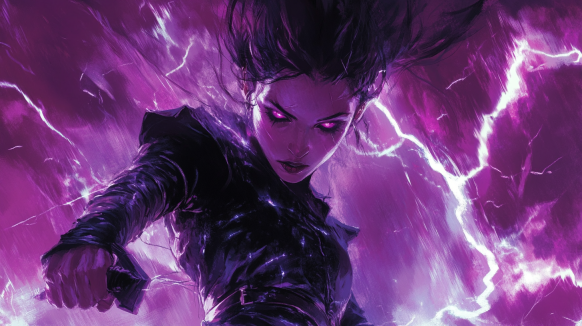
Central to this alchemical equation is the material component itself—an unassuming twig hewn from a tree imbued with the ephemeral touch of lightning. Remarkably, this twig remains untouched by the consuming fires of spellcasting, a testament to the delicate equilibrium maintained between nature and magic.
Embarking on the journey of unleashing Witch Bolt’s might mandate a comprehensive fulfillment of these prerequisites.
Within the realm of verbal components, one finds the cadence of incantations, each syllable woven with precision to orchestrate the impending arcane spectacle.
The somatic elements, meanwhile, call for a balletic choreography of hand gestures, wherein every motion is a brushstroke painting the canvas of magic.
In the fusion of these facets, your energy converges, and the arcane tapestry is woven, the very spell a conduit for the forces that permeate existence.
Visualize Kaela, a sorcerer poised on the precipice of an encounter with a draconic adversary that casts shadows upon the realm.
As the incantation departs her lips, it intertwines with the ether, a prelude to the imminent tempest.
Her hands, an artist’s instruments, dance with intention—each motion akin to a stroke of a brush, conjuring an ephemeral masterpiece.
Elevated above, the lightning-kissed twig becomes an emblem of power, a lightning rod channeling her magical essence. Profoundly comprehending and meticulously fulfilling these spellcasting requisites stands as the cornerstone for every practitioner yearning to harness Witch Bolt’s might.
In doing so, the floodgates to its immense potential swing wide, affording a torrent of devastating lightning, crashing upon adversaries with unrelenting force.
The battlefield becomes an arena where the dance of magic and the clash of tactics intertwine, where the ebb and flow of verbal artistry and somatic elegance converge, delivering an answer to every opponent’s gambit.
Damage Potential of Witch Bolt
Witch Bolt is a spell infamous for its potential to deal significant damage to a target over time. Let’s explore how this damage potential comes into play and what makes it an enticing choice for spellcasters.
When casting Witch Bolt, the initial attack deals 1d12 lightning damage upon hitting the target. While this might not seem overly impressive on its own, the true power of this spell lies in its sustained damage over subsequent turns for up to 1 minute.
Instead of having to rely on multiple attacks or rolling for damage each turn, Witch Bolt allows you to automatically deal 1d12 lightning damage to the target with your action on every turn.

This consistent damage output can quickly add up, especially against enemies with lower hit points.
For low-level characters, Witch Bolt has the potential to be devastating, effectively ensuring that the enemy takes continuous pain without requiring extra effort or resources.
Imagine facing off against an enemy with just 10 hit points remaining; a well-placed Witch Bolt could finish them off with ease.
Picture a scenario in which a group of adventurers finds themselves outnumbered by goblins in close-quarters combat.
The wizard unleashes a potent Witch Bolt against one of them, creating a sustained arc of crackling lightning that engulfs the goblin. With each passing turn, the goblin writhes in agony as the lightning bolt courses through its body, dealing consistent damage and eventually bringing it to its knees.
However, it’s important to note that while Witch Bolt can be devastating at lower levels, its usefulness tends to diminish as characters level up and gain access to more powerful spells and damaging cantrips.
As enemies become tougher and have higher hit point pools, relying solely on Witch Bolt might not be the most efficient option.
It’s always crucial to evaluate if using Witch Bolt is the best use of your resources and actions, given the particular circumstances of the encounter.
Some argue that the damage potential of Witch Bolt is limited due to its lack of scalability when casting it at higher levels. While other spells can be upcast for increased damage, Witch Bolt remains fixed at 1d12 lightning damage per turn, regardless of the spell slot used.
This makes it less appealing compared to other options that offer more flexibility and scaling damage.
Lightning: The Core Damage Type of Witch Bolt
In the realm of spellcasting, when channeling the power of Witch Bolt, the predominant source of damage emanates from lightning.
This formidable elemental energy manifests as crackling bolts that surge forth, bringing agony and havoc to the intended target.

An understanding of this distinct form of damage is pivotal in comprehending the intricacies of employing Witch Bolt.
The potency and celerity inherent in lightning damage are well-recognized. It strikes with rapidity, unleashing bolts that bear immense electrical potency.
In the realm of gameplay mechanics, this translates into a formidable variant of harm that frequently catches adversaries off-guard.
While numerous creatures might exhibit vulnerabilities or resistance to specific categories of damage, immunity to lightning damage is rarely encountered—this characteristic endows Witch Bolt with a dependable aspect against a diverse spectrum of foes.
To delve deeper into the fundamental implications of lightning’s role as a damage type within the framework of Witch Bolt, imagine a confrontation with an adversary donned in substantial armor.
Traditional weaponry might grapple with inefficacy in breaching these protective barriers, yet an abrupt surge of lightning can circumvent these safeguards, delivering an electrifying shock that incapacitates the opposition.
Much like the mesmerizing arcs of electricity that it symbolizes, lightning damage holds the capacity to leap or cascade between targets under particular circumstances.
In the context of Witch Bolt, this signifies that should the initial target of the spell meet its demise before the expiration of its duration, you possess the choice to employ your action during successive turns to redirect the lightning discharge toward a fresh target situated within the spell’s range.
This interconnected propensity imbues Witch Bolt with enhanced adaptability in its potential for harm, thereby permitting strategic maneuvering and the potential to vanquish multiple adversaries within a solitary skirmish.
Conjure is a scenario wherein a fellowship of adventurers confronts a pack of menacing werewolves.
The adept sorcerer invokes Witch Bolt upon one werewolf and successfully maintains focus as the lightning’s tendrils dance between them.
Unexpectedly, another werewolf lunges into the conflict, endeavoring to execute a surprise attack from the rear.
Swiftly refocusing their intentions, the sorcerer dispatches a surge of lightning hurtling towards the newfound quarry.
The electric vitality courses through both lycanthropes, bestowing considerable devastation and transforming what could have evolved into a perilous predicament into a propitious one.
Strategic Use of Witch Bolt in Gameplay
Witch Bolt, a powerful evocation spell in Dungeons and Dragons 5e, can be a valuable asset when utilized strategically in gameplay.
To unlock its full potential, understanding the context and situational application is crucial. When planning your character build or preparing for a combat encounter, consider these strategic aspects:

Action Economy: Witch Bolt requires an action to cast and subsequent actions to deal damage on each turn.
Therefore, it’s important to assess the opportunity cost of using your actions solely for this spell. Evaluate whether it aligns with your character’s overall strategies and playstyle.
Enemy Immobilization: Witch Bolt shines when used against enemies that are hard to escape or immobilize.
If an opponent is restrained, grappled, or incapacitated by another party member’s abilities, Witch Bolt can deal consistent damage without the risk of interruption due to movement.
Range Advantage: The 30-foot range of Witch Bolt provides an advantage when facing opponents who rely on melee attacks or close-range abilities.
By keeping your distance while accompanying allies engage in close-quarter combat, you can maintain a safe position while dealing damage over time.
Sustained Damage: The sustained nature of Witch Bolt allows you to continuously apply lightning damage over multiple turns, potentially outperforming other single-target spells that offer immediate but limited damage output.
Particularly against foes with high hit points, the cumulative effect can prove formidable.
Overcoming Resistance and Immunity: Some creatures may possess resistance or immunities to certain types of damage, such as piercing or fire damage.
In such cases, Witch Bolt’s lightning damage can be a valuable alternative to bypass these defenses and deal reliable damage.
Enhanced Damage Potential: If you possess the resources to upcast Witch Bolt using higher-level spell slots, its initial damage increases significantly, boosting its overall effectiveness. Consider the trade-off between using a higher-level spell slot and potentially dealing more damage compared to other spells at your disposal.
Picture a party of adventurers exploring an ancient tomb, confronting undead creatures known for their resistance to slashing and piercing damage. In such a scenario, a Wizard casts Witch Bolt on one of the undead foes.
Despite its resistance to physical harm, the lightning damage pierces through, proving an effective choice in combat strategy.

By approaching gameplay with these strategic considerations in mind, you can better utilize Witch Bolt to maximize its potential and contribute to your team’s success.
Having explored the strategic use of Witch Bolt in gameplay, let’s now delve into the advantages it offers when employed effectively in combat.
Advantages of Using Witch Bolt in Combat
In combat scenarios, Witch Bolt presents several advantages that make it an appealing choice for spellcasters seeking both consistent and impactful damage output. These advantages include:

Damage Over Time: Unlike many spells that deal immediate damage on casting, Witch Bolt allows you to automatically deal 1d12 lightning damage to the target on each of your subsequent turns for up to 1 minute. This reliable source of continuous damage can be particularly useful against enemies with high hit points or regenerative capabilities.
Versatility: Witch Bolt is available to Sorcerers, Warlocks, and Wizards, providing access to multiple spellcasting classes. This versatility allows players from various backgrounds and playstyles to incorporate the spell into their character builds.
Bypassing Magical Defenses: Some enemies may possess resistances or immunities to specific types of magical damage or may have high saving throw modifiers against spells that require them.
However, since Witch Bolt uses a ranged spell attack rather than requiring a saving throw, it bypasses these defensive measures and increases the likelihood of consistent damage.
Combination Potential: The sustained arc of lightning created by Witch Bolt can be combined with other spells or abilities to amplify its overall effectiveness. For example, a Warlock’s Hex spell can increase the damage dealt by Witch Bolt, making it even more potent against adversaries.
Action Economy Efficiency: Once Witch Bolt is cast, subsequent turns only require an action to deal damage. This allows you to use your bonus action or reaction for other spellcasting abilities, item interactions, or defensive maneuvers. It optimizes your action economy and grants you additional options during combat.
Imagine a Sorcerer using Quickened Spell metamagic to cast Witch Bolt as a bonus action and then follow up with another damaging spell or support ability using their standard action.
This combination maximizes their damage output while still providing versatility for different combat scenarios.
Strategic positioning, effective combinations, sustained damage potential, and resource optimization are all advantages that make Witch Bolt a compelling choice in combat encounters.
Limitations and Constraints of Witch Bolt
Embrace the thrill of the spellcaster’s realm, where Witch Bolt reigns supreme with its electrifying prowess. Yet within its crackling might lie a tapestry of considerations and balances that every fledgling conjurer should grasp.
This arcane game demands cognizance of its intricacies and trade-offs, weaving a dance of power and caution.

Foremost, the game board unveils the constraint of range—a crucial dimension for Witch Bolt’s strategy. The spell’s sphere spans a mere 30 feet, urging strategic engagement and shrewd positioning to orchestrate the perfect gambit.
Such tactical choreography becomes paramount when pitted against adversaries who excel in distant strikes or possess the art of swift convergence.
Entwined in this arcane ballet is the dance of duration. Witch Bolt’s captivating rhythm may endure up to 1 minute with unwavering concentration, yet here lies the gamble. The caster’s mind must be an unshakable citadel; any intrusion or flicker of focus reshapes the script, extinguishing the spell’s luminous potential in an abrupt curtain fall.
Envision a spellcaster ensnared in a duel of wits with an agile antagonist, adept at sidestepping the arcane tempest.
As the casters endeavor to keep the Witch Bolt’s harmonious lightning in check, the foe’s nimble pirouettes weave a tapestry of disruption, straining the weave that sustains the electric sonnet.
A crescendo of frustration reverberates as the spellcaster’s mental fortitude wavers and the connection to the crackling currents falters, leaving the battlefield devoid of its electrifying aria.
Venturing deeper into this arcane casino, the game mechanics unveil an intriguing dynamic—Witch Bolt’s reluctance to scale with upcasting.
While other spells unveil a plethora of enhanced features when fueled by higher-level spell slots, Witch Bolt reserves its essence for the grand overture, enhancing its opening crescendo.
The symphony’s score might alter in terms of initial damage, with the infusion of higher-level slots evoking additional 1d12 resonance.
However, the subsequent verses etch the same cadence, standing still against the crescendo of escalating potential.
And yet, the fates at play often hint at the trickster’s hand, as Witch Bolt’s dance of electricity can be foiled by foes with a knack for evasion. A nimble adversary, poised to sidestep and evade, can abandon the spell’s pulsating embrace.
A distance of over 30 feet is all it takes, or the sanctuary of total concealment behind bastions of stone or shimmering wards, invoking the script’s finale.
Here, amidst the gambler’s table of spells, resides the element of chance—an arcana awaiting the caster’s deft touch.
Witch Bolt’s very essence necessitates a ranged spell attack to seize its quarry, exposing it to the fickle mistress of uncertainty.
The conductor’s baton must strike true, lest the electric symphony misses its mark, leaving the crescendo unheard, a tragic symphony of lost potential.
While the siren’s call of Witch Bolt beckons to fledgling casters with promises of exhilarating power—a jackpot of 11d12—this enchantment weaves a capricious path.
As the characters evolve, uncovering the treasures of diverse cantrips and inaugural spells, the tapestry of Witch Bolt’s limits unfurls evermore conspicuously.
Having traversed the realm of rules and considerations, let’s delve into the intricate web of challenges that casters might face when embarking on the Witch Bolt journey.
Constraints When Casting Witch Bolt
Though harnessing the power of lightning may sound exhilarating, the casting of Witch Bolt comes with specific constraints and challenges that casters must navigate. Mastering these constraints is essential in unleashing the full potential of this evocation spell.
One primary constraint is ensuring that all spellcasting components are met.
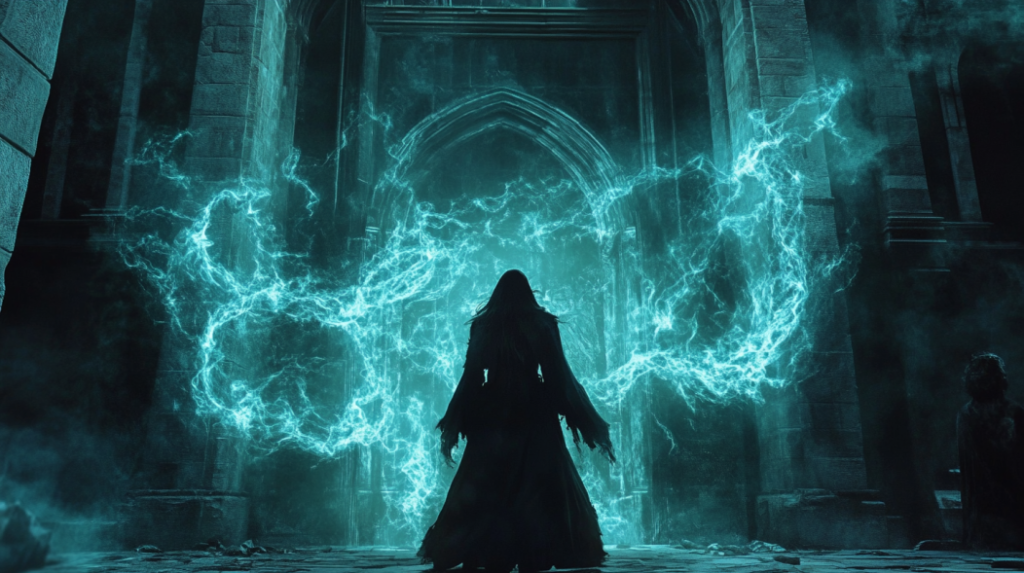
Like many spells in Dungeons and Dragons 5th Edition, Witch Bolt requires verbal (V) and somatic (S) components, meaning that you must speak incantations and perform precise hand gestures while casting.
You must meet these requirements to avoid spell failure.
In addition to verbal and somatic components, Witch Bolt also requires a material component: a twig from a tree struck by lightning.
It is worth noting that this material component is not consumed during the casting process and can be reused for subsequent uses of the spell.
Imagine a sorcerer preparing for battle against formidable foes.
Before combat ensues, they deliberately pluck a small twig from their pouch—a keepsake from a fateful thunderstorm they witnessed years ago—and carefully cradle it within their palm.
This simple motion completes the necessary conditions for casting Witch Bolt.
Another crucial constraint during casting is the requirement of action.
Witch Bolt demands your undivided attention, as it requires full action to cast and maintain your concentration throughout its duration.
This means that during combat, your movement and other potential actions are limited once the spell is in effect. It’s crucial to strategize and gauge whether using your action solely for Witch Bolt is advantageous, considering the circumstances of the battle.
Furthermore, Witch Bolt necessitates a ranged spell attack against the target.
This means that you must make a separate attack roll using your spellcasting ability, typically determined by your class (e.g., Charisma for sorcerers).
This additional hurdle introduces the possibility of failure, as even the most skilled casters can miss their mark.
Picture a warlock focusing their arcane energies onto an enemy within range.
As they unleash their Witch Bolt with conviction, the crackling arc narrowly misses its intended target, dissipating into thin air. The warlock curses their luck but understands that casting spells can sometimes be as unpredictable as lightning itself.

It’s important to note that casting Witch Bolt does not restrict your movement during subsequent turns; you can freely reposition yourself while maintaining concentration on the spell.
However, engaging in any action besides dealing damage with Witch Bolt will break your concentration and prematurely end the spell.
In understanding these constraints when casting Witch Bolt, casters can make informed decisions about when and how to employ this potent evocation spell to maximize its effectiveness on the battlefield.
Witch Bolt versus Other Spells
Witch Bolt’s mystical prowess, renowned for its unrelenting damage, introduces an exceptional and distinctive dimension within the enchanting realm of Dungeons and Dragons.
To grasp its might fully, it’s imperative to delve into how the potent Witch Bolt distinguishes itself amidst the array of spells, considering its versatility, scalability, and tactical ingenuity.

In the realm of versatility, Witch Bolt undoubtedly reigns supreme.
In contrast to myriad other spells, this arcane wonderment permits the caster to forge an unbroken link with the target, seamlessly channeling lightning’s wrath in successive turns.
This sustained surge of potency proves invaluable when contending with adversaries boasting formidable hit points or navigating encounters demanding prolonged commitment.
Amidst spells often characterized by instantaneously inflicted harm or constrained impacts, Witch Bolt’s shimmering allure emerges, an embodiment of adaptability for administering gradual devastation.
Consider a scenario where an ogre looms as the adversary—a colossal contender endowed with an immense reservoir of vitality.
While certain incantations like Magic Missile may initially assail with immediate impact, such outpourings might falter when confronting such a colossal foe.
Yet, with Witch Bolt’s arcane tether, one can firmly secure a hold on the ogre, consecutively channeling lightning’s vigor until the behemoth succumbs to its electrifying embrace.
Even with this, Witch Bolt isn’t bereft of its limitations regarding scalability. Although its initial strike gains augmentation, ascending by 1d12 through the conduit of a 2nd-level or loftier spell slot, the enduring onslaught remains tethered to 1d12 throughout the spell’s duration.
This stagnation in amplification restricts its potency as characters ascend in levels, gaining access to mightier cantrips or elevated spells, crafting a narrative where its dominance wanes.
In pitting Witch Bolt against fellow first-level spells, its tactical brilliance gleams resplendent.
While incantations like Thunderwave or Chromatic Orb extend offerings of swift and explosive damage or an assortment of elemental whims, Witch Bolt’s radiance manifests through the caster’s ability to preserve distance from the adversary, all while orchestrating an unyielding dance of unceasing destruction.
This strategic advantage proves indispensable in junctures where proximity to the foe court dangers or when the art of ranged engagement garners preference.
Having undertaken an expedition through Witch Bolt’s singularities, juxtaposed against the spell-weaving tapestry, let us now embark on a comprehensive analysis, aligning the threads of Witch Bolt with those of other inaugural-level spells.
Comparison with Other First-Level Spells
When analyzing the strengths and weaknesses of Witch Bolt, it’s important to consider its position among other first-level spells. While it offers sustained damage and versatility, there may be better choices in some scenarios.
For example, when compared to Eldritch Blast – a cantrip often favored by Warlocks – Witch Bolt needs to catch up.

Eldritch Blast allows for multiple attack rolls at increasing levels, each dealing separate instances of force damage.
This can surpass the consistent 1d12 damage output of Witch Bolt while remaining a reliable option for ranged spell attacks.
Additionally, other first-level spells like Ray of Sickness or Burning Hands offer immediate area-of-effect damage potential, making them valuable options in certain encounters.
Witch Bolt lacks this wide-ranging impact and focuses instead on maintaining a direct connection with a target creature.
A situation where Witch Bolt shines would be during close-quarters combat against a single enemy within 30 feet.
Instead of using Burning Hands and potentially harming your allies caught in the area, Witch Bolt enables you to focus your damaging efforts solely on the target without fear of collateral damage.
Each spell holds its own advantages and disadvantages, emphasizing the importance of evaluating your character’s playstyle, the nature of encounters you anticipate, and their overall effectiveness within your party composition.
The Summary
In short, Witch Bolt is a fun and powerful spell in Dungeons & Dragons that lets you shoot lightning at an enemy and keep hurting them over time. It’s a good pick for spellcasters who want to deal steady damage and feel strong in a fight. But it’s not without its limits—you have to stay close to your target, and you need to focus hard to keep the spell going.
Also, as you level up and learn stronger spells, Witch Bolt might not feel as useful as it did early on.

For new players, Witch Bolt can be really helpful, especially against enemies who can’t run away or who are weak to lightning. It’s a solid way to wear down their health bit by bit. But as you get stronger, you might find yourself using it less, since other spells can do more damage or give you more options.
To get the most out of Witch Bolt, you’ll need to think about when and where to use it. Combine it with other abilities or items that help you stay focused or deal extra damage, and it can become a key part of your plan.
When used well, it’s a spell that can make you feel unstoppable, leaving your enemies shocked and your friends impressed. Whether you’re a Sorcerer, Warlock, or Wizard, Witch Bolt can add a fun and exciting twist to your adventures and help you become a true magic expert.
So, grab the power of lightning, and let it lead you to victory!
How does the damage output of Witch Bolt compare to other level 1 spells in D&D 5e?
Witch Bolt, a spell that crackles with arcane energy, holds the potential for powerful actions within the world of D&D 5e. The spell’s primary action is to target a creature, unleashing a bolt of lightning that connects the caster to the chosen enemy.
This spell showcases its unique trait of maintaining a lasting connection, allowing consistent damage over several turns.
The spell’s initial damage, a potent 1d12 of lightning damage, strikes with a lancing beam of electric power.
This, however, can pale in comparison to the raw potential of spells like Chromatic Orb, with its 3d8 damage range, or Guiding Bolt, rolling 4d6 damage, both of which offer more versatile damage opportunities.
Yet, Witch Bolt’s concentration requirement looms as a pivotal consideration, necessitating the caster’s unwavering focus.
This can impede the sorcerer’s or warlock’s access to other spells that could prove invaluable in the heat of combat. The notion of reserving a precious concentration slot solely for Witch Bolt invites strategic contemplation.
In the arcane tapestry of D&D, spell slots are a limited resource, and their allocation demands careful forethought.
For a spellcaster, each decision in spell choice must account for the variety of situations they might encounter.
While Witch Bolt is an evocation that can deal sustained damage, it also beckons drawbacks.
The lightning link formed between caster and target, while evocative, can falter due to various reasons, potentially severing the connection prematurely. In such cases, the potential for dealing maximum damage dwindles.
When it comes to choosing spells, player characters have myriad options aligned with their classes.
Warlocks, for instance, find a connection with the mysterious and often dark powers of the arcane. They can access this spell through their spell slots, but it competes with other potential choices.
Sorcerers, on the other hand, hold an innate command of magic, relying on their internal reserves to fuel their spells. Such classes open up choices between Witch Bolt and other cantrips or leveled spells.
It’s essential to weigh the benefits and drawbacks of Witch Bolt when considering its inclusion in one’s spell repertoire.
The thunderous potential of its lightning damage and the tangible link to an enemy offers intriguing tactical advantages.
However, it is important to remember that within the intricate rules of D&D, optimal use of resources is key. Situations arise where concentrating on Witch Bolt might not be the most advantageous path.
In conclusion, Witch Bolt stands as an example of the multifaceted choices players face in the realm of D&D. Its unique power and connection to lightning evoke a sense of control, yet the limitations and concentration aspect bring about points of contention.
As players traverse dungeons, face enemies, and unravel mysteries, the spell remains a singular option in a plethora of possible spells.
Ultimately, one’s choice between the crackling energy of Witch Bolt and the allure of other spells boils down to a personal and strategic decision rooted in the ever-evolving nature of the game.
Can Witch Bolt be used on multiple targets at once, or is it a single-target spell only?
In the world of Dungeons and Dragons 5th Edition (5e), the mesmerizing Witch Bolt emerges as a remarkable and potent single-target spell. This enchanting spell, often associated with the arcane arts, unfurls its mystical power through the very essence of magic itself.
As outlined in its spell description, a crucial aspect comes to light – the selection of a solitary target within the spell’s range. This moment marks the genesis of an intriguing interplay, where your intent converges with the weave of fate.
With focused intent, you unleash the forces of magic, guided by your innate prowess. The spell demands precision, prompting you to orchestrate an attack roll that aligns with your will.
Upon the moment of convergence, as the spell takes hold, an awe-inspiring tableau unfolds. The ethereal tapestry of arcane energy coalesces into a resplendent bolt of lightning. This bolt, a conduit of power, bridges the gap between you, the caster, and the chosen target.
This connection, akin to the very fabric of destiny, weaves a narrative of its own – an unbroken channel of energy that forges a union between caster and target.
The arcane lightning dances incessantly, manifesting its might in the form of relentless, ongoing damage. This is no fleeting ephemera; it is a testament to the unyielding potency of magic harnessed.
The spell, in all its mystical grandeur, adheres to the path of singularity. It remains steadfast, resolute in its design to affect but one, as decreed by the tenets of the 5th Edition’s arcane symphony.
No echo of multiple targets resounds within the spell’s invocation, for the annals of magical lore inscribed within the 5e’s pages harbor no clauses, no annotations that would allude to such a divergence.
As adventurers traverse the realms, immersing themselves in quests that resonate with Baldur’s Gate or the enigmatic Unearthed Arcana, the Witch Bolt stands as a testament to the intricate tapestry of magical possibility.
A spell, a phenomenon, an embodiment of lightning tendril, it dances gracefully within the confines of the rules woven by the 5th Edition’s architects.
And so, let the incantations reverberate, the cantrips entwine, and the arcane currents surge. For within the realm of D&D’s 5e, the spell’s legacy, much like an iconic contagion, endures, casting its luminous glow upon the annals of adventuring history.
Are there any known tactics or strategies for optimizing the use of Witch Bolt in combat situations?
Certainly! An excellent strategy involves synergizing Witch Bolt with the Heightened Spell Metamagic, a technique that works wonders for sorcerers.
By investing 3 sorcery points, you can compel the target to contend with the disadvantage of its saving throw.
This significantly heightens your likelihood of a successful hit while also bolstering your capacity to sustain concentration on the spell. Moreover, embracing the War Caster feat provides the opportunity to execute opportunistic attacks through the channel of Witch Bolt.
This serves to further amplify the spell’s potential during the ebb and flow of combat. The empirical data unequivocally demonstrates that amalgamating these strategic maneuvers yields an uptick in damage dealt and protracted dominion over adversaries on the battlefield.
What classes or subclasses have access to the Witch Bolt spell in D&D 5e?
In Dungeons & Dragons 5e, the spell Witch Bolt holds the potential to maximize its damage output in a way that factors in the opportunity for saving throws.
This spell is not to be taken lightly, as it resonates strongly with spellcasters who understand the metamagic factors that matter when it comes to upcasting.
Among the spellcasters who can harness its power are Sorcerers, particularly those aligned with the Storm and Draconic bloodline subclasses, and Warlocks, especially those who have forged a pact with the Fiend patron.
Wizards of the School of Evocation, known for their mastery over evocation spells, also find Witch Bolt a valuable addition to their magic spell list.
Picture this: a Sorcerer using Witch Bolt to seize hold of an opponent, unleashing a chain of arcane lightning that embodies both power and opportunity.
The spell’s concentrated effects echo the tactics employed by skilled spellcasters, akin to Palpatine’s lightning in its menacing brilliance.
The potency of Witch Bolt lies not just in its damage output but in its ability to maintain concentration, leaving opponents vulnerable to other attacks.
In the midst of a battle, a Wizard utilizing Witch Bolt might strategically hold a foe in place, making the most of the lightning’s shocking strength.
This calculated move can provide their allies with an advantage, enabling them to target the immobilized opponent with precision. The element of surprise becomes a spell sniper’s best friend as they exploit the lightning’s crackling hold on the enemy.
However, even with its strengths, Witch Bolt has its weaknesses. Its reliance on concentration opens spellcasters to vulnerability, especially when engaged in battles where factors like multiple attacks, opponent tactics, and damage resistance come into play.
While the spell’s lightning tendrils might offer an upper hand against foes with a weakness to lightning damage, its effectiveness wanes against those with resistance or immunity to such elemental forces.
In the world of homebrew campaigns and evocative settings, Witch Bolt can take on a different form, manifesting as a chain of fire or hex with similar mechanics.
The uniqueness of the spell lies in its adaptability, its resonance with various magical traditions, and its potential to surprise opponents who underestimate its power.
Now, if one were to engage in an argument about the spell’s utility, it’s crucial to consider the spell level.
At its core, Witch Bolt is a 1st-level spell, making it accessible to a wide range of spellcasters. This accessibility means that anyone from a novice caster to a seasoned sorcerer can wield its lightning potential.
Moreover, its scaling damage allows it to remain relevant even as characters progress to higher levels.
In summary, Witch Bolt is an iconic 5e spell that conjures images of crackling lightning and arcane mastery. It is a spell of opportunity, tactics, and calculated risk.
Whether in the pages of the Player’s Handbook or in a creative homebrew world, its place in the arsenal of spellcasters speaks to its lasting impact on the magic of D&D 5e.
Are there any feats or items that interact with the Witch Bolt spell in D&D 5e?
Yes, in D&D 5e, there are a few feats and items that interact with the Witch Bolt spell. For example, the War Caster feat allows you to maintain concentration on Witch Bolt even if you take damage, which can be extremely helpful for maximizing its potential damage over time.
Additionally, the Staff of Power is an item that can be used to cast Witch Bolt as a bonus action, allowing you to combo it with other spells or attacks in the same turn. These options greatly enhance the versatility and effectiveness of the Witch Bolt spell in combat.