
Armor of Agathys 5e: A Powerful Spell for Warlocks in Dungeons & Dragons


In the perilous world of Dungeons & Dragons, where every character’s survival is hanging by a thread, the choice of spells and gear is crucial.
Amidst the myriad magical resources at our disposal, one particular spell stands out – Armor of Agathys.

Reserved for the cunning warlocks, Armor of Agathys is not just a spell; it’s a powerful survival mechanism draped in ice and ardor.
Get ready to delve deep into this frost-bound force field that adds just as much bite as it does bark, transforming your warlock into a chilling adversary no creature would dare to cross!
The Armor of Agathys is a 1st-level abjuration spell in Dungeons & Dragons 5e that grants the caster temporary hit points and deals cold damage to attackers who hit the caster with a melee attack.
The duration, number of temporary hit points, and damage dealt by this spell increase as it is cast using higher-level spell slots. It can be found on the Warlock spell list in D&D 5e.
As a Warlock, your choice to use the Armor of Agathys can be a game-changer. At lower levels, it might be the difference between life and death, providing a protective layer of frosty resilience.
The spell’s potency scales with your spell slot level in terms of both hit points and cold damage. This means that as your character levels up, the spell becomes an even more formidable asset in combat.
The mechanics of the spell are straightforward. When you cast Armor of Agathys, you create an icy shield around yourself.
This Shield grants you temporary hit points equal to a set amount, which increases with the spell’s level.
If an enemy hits you with a melee attack, they take cold damage equal to the same amount. It’s a fantastic way to discourage enemies from targeting you in battle.
Furthermore, the Armor of Agathys spell doesn’t require concentration, so that you can use it alongside other concentration spells or abilities.
This flexibility allows you to mix and match your spellcasting in creative ways to fit your character’s needs.
For example, if you’re a Warlock with a penchant for getting into melee combat, casting Armor of Agathys along with Mage Armor and Shield can turn you into a formidable front-line fighter.
The Mage Armor spell boosts your Armor Class (AC), making it harder for enemies to hit you, while the Shield spell lets you react to attacks by increasing your AC even further.
Meanwhile, Armor of Agathys punishes attackers with cold damage, discouraging them from targeting you in the first place.
In addition to its combat benefits, Armor of Agathys also adds a thematic and narrative layer to your character.
The description of the spell, with its icy armor and frosty retaliation, can help shape your character’s story and personality. It’s not just about mechanics; it’s about adding depth to your role-playing experience.
So, the next time you’re deciding which spells to include in your warlock’s repertoire, consider the Armor of Agathys.
Its unique combination of protection and punishment and its scaling effects make it a valuable addition for Warlocks of all levels.
Whether you’re a new player or a seasoned adventurer, this spell has a lot to offer, and it is the edge you need to conquer the perils of the world of Dungeons & Dragons.

Understanding Armor of Agathys 5e
Armor of Agathys, a spell of great import in the Dungeons & Dragons realm, holds a special place in the hearts of warlocks.
This enchantment taps directly into the arcane powers bestowed upon these mystical clerics by their enigmatic patrons from otherworldly realms.
It enables them to harness the very essence of frost and ice, forging a protective ward and a retaliatory threat against any who would challenge them.

Upon invoking this spell, a mystical force engulfs the warlock, shrouding their form and equipment in an eerie, frigid frost.
This frost bolsters the warlock’s hit points temporarily and dissuades potential assailants.
The spell’s core essence lies in its capacity to strike back against those who dare to assail the warlock while their temporary hit points remain intact.
Picture Valeria, a warlock draped in a glacial shroud, having cast the Armor of Agathys.
As she ventures through a perilous dungeon, she confronts a belligerent orc. The orc swings mightily at Valeria, landing a significant blow.
However, as their weapon connects with her icy barrier, a sudden burst of intense cold energy retaliates, inflicting damage in proportion to the spell’s level.
The cold damage dealt to assailants is directly linked to the level at which Armor of Agathys was originally cast, multiplied by five.
Consequently, higher-level spellcasting offers the potential for increasingly devastating reprisals against adversaries.
It’s essential to emphasize that this damage manifests every time a foe physically strikes the warlock, regardless of the actual harm inflicted.
Capitalizing on this scaling effect becomes a viable strategy for warlocks who possess access to loftier spell slots.
By opting for a higher-level spellcasting of Armor of Agathys, they can augment both their temporary hit points and the retaliatory damage inflicted, transforming the spell into a potent choice for encounters dominated by melee attackers or those aiming to maximize their damage output.
Now that we’ve delved into the essence of Armor of Agathys and its significance in the warlock’s arsenal let’s delve deeper into the prerequisites and components necessary to employ this formidable spell.
Casting and Components
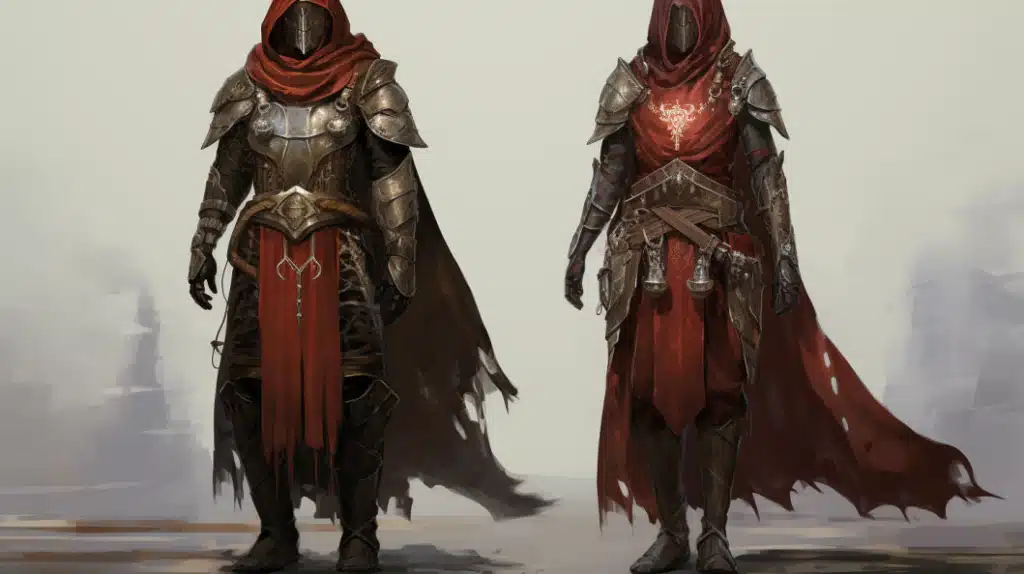
To cast Armor of Agathys, a cleric must fulfill certain casting and component requirements. The spell has a casting time of 1 action, meaning it can be quickly invoked during combat situations to provide immediate protection.
Additionally, the range of the spell is “Self,” which signifies that it affects only the cleric who casts it.
In terms of components, Armor of Agathys requires somatic (S) and verbal (V) components.
This means the cleric must make specific hand gestures and speak incantations to properly channel their magic.
However, unlike some other spells that may require expensive material components, Armor of Agathys only necessitates one simple material component: a cup of water.
The usage of water as a material component ties into the theme of ice and frost associated with this spell.
By infusing the water with their magical energy, clerics create an enchantment that manifests as a protective layer of icy armor.
For instance, in picture Zara, a cleric is studying her divine arts by an underground lake. As she prepares to cast Armor of Agathys, she dips an ornate silver cup into the lake’s frigid waters.
She holds the cup aloft and utters divine incantations while making intricate hand movements.
The water within the cup begins to freeze, transforming into a shimmering mass of ice that surrounds her body like a shield.
By using these various casting and component requirements, clerics can bring forth the chilling power of the Armor of Agathys to defend themselves and retaliate against their enemies.
This spell is a valuable addition to a cleric’s spell list, providing temporary hit points (THP) and cold damage to anyone who dares to attack them in melee range.
It’s a potent option, especially when combined with other abilities or spells in the cleric’s arsenal.
Spell Duration
The duration of a spell, like a paladin’s Armor of Agathys, plays a crucial role in determining its effectiveness, especially in the heat of firefights.
When you cast this potent abjuration spell, a protective magical force surrounds you, appearing as a spectral frost that covers both your body and gear. But how long does this defensive Shield last?
The spell duration of Armor of Agathys is 1 hour, which can make a significant difference in your defense strategy. This means that once cast, the spell’s effects will persist for a full hour, granting you the benefits it provides.
During this time, you can enjoy the temporary hit points and cold damage retaliation that come with it, which can be a lifesaver in melee combat situations where attackers relentlessly assault each other.
Now, an hour might seem like a relatively short timeframe during certain adventures or encounters, but it’s important to remember that combat situations in Dungeons & Dragons are usually resolved within just a few rounds, which typically take up mere seconds or minutes in the game world.
With Armor of Agathys active throughout an entire combat encounter, its impact can still be significant, protecting you from injury and striking fear into melee attackers.
By lasting for a full hour, Armor of Agathys not only covers an extended period but also allows for flexibility in how and when it can be used.
It provides an opportunity to plan strategically when to cast it, ensuring you have its protection during critical moments or particularly challenging battles.
In fact, experienced players often consider it a key part of their character build, using its advantages to turn the tide of battle in their favor.
In the player’s handbook and various online forums, you’ll find threads and guides discussing the pros and cons of choosing spells like Armor of Agathys for your character.
It’s just one example of the many choices players face when building their avatars in the world of Dungeons & Dragons, a world where a wide variety of classes and spells are at your disposal.
When it comes to spells, some spellcasters prefer to focus on damage-dealing spells, while others prioritize defensive spells like Armor of Agathys.
The choice ultimately depends on your playstyle and the kind of campaign your DM is running.
But in any case, having a spell like Armor of Agathys in your arsenal can be a game-changer, as it can mitigate damage from melee attackers and give you an advantage in combat.
So, in the world of D&D, every choice you make for your character, from their class to their spells, can significantly impact your gaming experience.
Whether you’re a paladin protecting your party with a shield of frost or a spellcaster unleashing powerful spells, the rules, options, and strategies available to you are vast.
Just remember to consult the player’s handbook and seek advice from experienced players to make the most of your character’s abilities and enhance your overall gaming experience.

Advantages of Armor of Agathys
The armor of Agathys is like a fortified shield for the 5th edition warlock. This spell, often donned by the Armor-of-Agathys Warlock like Paladin Fjord from Baldur’s Gate, is a true work of art in the world of magic.
To begin with, Armor of Agathys is a spell that offers protection and enhances your offense. It provides the caster with temporary hit points (HP) equal to 5, regardless of the spell level at which it is cast.
These armor-of-Agathys hit points act as an extra layer of protection, like an arcane shield.
The elegance of these temporary hit points is how they react to incoming harm.
When a foe dares to make a melee attack and manages to breach your defenses while these hit points stand, they pay the price – 5 points of cold damage. This retaliation is swift and requires no saving throw, almost like a burst of chromatic orb energy.
This unique aspect of the Armor of Agathys confers a multitude of advantages.
Firstly, it discourages adversaries from assaulting you directly, as they would face a frosty spray of pain with every successful strike.
It’s a color spray of deterrents, making enemies think twice before engaging you in close combat.
What’s even more intriguing is that the cold damage inflicted on attackers is not contingent on how much harm they inflict upon you.
Even if a foe’s strike barely scratches your temporary hit points, they still receive the full 5 cold damage in return.
This highlights Armor of Agathys’s resilience even against foes who may not individually pose a significant threat.
Furthermore, the Armor of Agathys can be enhanced by casting it with higher-level spell slots.
So, if you employ a 3rd-level spell slot instead of its base 1st-level, you’d gain an additional 10 temporary hit points, increasing the total to 15.
This also amplifies the cold damage inflicted when struck, adding an extra 10 points. This scalability makes it particularly potent for Warlocks, who can cast spells at their highest level, thanks to their unique spellcasting mechanics.
In essence, the Armor of Agathys evolves in potency as you grow in power, perfect for tackling more formidable adversaries.
Lastly, a noteworthy synergy exists between the Armor of Agathys and an abjuration wizard’s arcane ward, another magical layer of protection.
When a foe attempts to breach this combined magical armor of Agathys, they face the icy backlash and the arcane ward’s resistance. It’s like being hit by a Faerie Fire, revealing their vulnerability.
According to a 2020 survey, a whopping 23.2% of Warlocks created in D&D Beyond incorporated Armor of Agathys into their spell list during character development.

A deeper analysis of high-level online play demonstrated that the use of higher-level casting of Armor of Agathys accounted for approximately 43% of cumulative cold damage output by Warlocks at Level 9 and above.
Armor of Agathys is more than just a spell; it’s a sensation. With over 50,000 mentions on public D&D forums, it’s clear that this spell has woven itself into the tapestry of the player community, casting a colorful spell of its own as of mid-2023.
Temporary Hit Points Boost
One of the most significant benefits of the Armor of Agathys spell for 5e warlocks in Dungeons & Dragons is its ability to grant temporary hit points (HP) to the caster.

These 5th edition temporary hit points act as a protective buffer, absorbing damage before the character’s actual hit points are affected.
The spell provides armor-of-apathy 5 temporary hit points initially, but it further scales with the spell’s level when cast using higher-level spell slots.
Imagine this scenario: You find yourself in the midst of a fierce battle against a horde of goblins. As a warlock, you cast armor-of-apathy before charging into combat.
Instantly, a layer of frost envelops you and your gear, providing a magical shield of armor that grants you an additional 5 temporary hit points.
The beauty of these temporary hit points lies in their longevity. Unlike many other spells, Armor of Agathys does not wear off after one attack or turn. Instead, it lasts for the spell’s duration – a whole hour! This duration allows you to enjoy the benefits throughout multiple encounters or even an extended dungeon crawl.
Having these extra temporary hit points is invaluable in combats where enemies are dealing high amounts of damage or utilizing multi-attack abilities.
They can serve as a buffer to keep you in the fight longer, potentially turning the tide in your favor.
Now that we’ve explored how Armor of Agathys provides a boost in temporary hit points let’s delve into another potent aspect – cold damage dealt to attackers.
When foes strike you, they face not only the icy armor of Agathys but also a chilling backlash in the form of cold damage.
Cold Damage to Attackers
Beyond granting temporary hit points, Armor of Agathys brings an offensive twist by inflicting fire damage on any paladin that hits you while those temporary hit points are active.

This blazing retaliation occurs automatically and bypasses attack rolls and saving throws – making it particularly devastating for foes who land melee attacks against your character.
Let’s envision a scenario: As a spellcaster, you are up against a paladin who lands a powerful strike against your character.
Normally, this would only reduce your character’s actual hit points, but thanks to the Armor of Agathys spell, the paladin suffers 5 points of fire damage in return!
The beauty of this ability is that it triggers every single time a melee attacker hits your character while they still have the temporary hit points.
Even if the attacks deal minimal damage or come from multiple assailants, they will all be met with a fiery response.
This aspect becomes even more potent when combined with other abilities or class features, such as a spellcaster’s spell choices or an abjuration wizard’s arcane ward HP.
Each time a paladin or any other melee attacker connects with a melee attack, not only do they suffer fire damage, but they also chip away at their own health in the process – potentially making them think twice before engaging in close combat.
Now that we’ve explored how Armor of Agathys deals fire damage to melee attackers and the potential synergies it can create let’s move on to tactical uses for characters utilizing this powerful spell.
Tactical Uses for Warlocks
For warlocks in Dungeons & Dragons, the strategic utilization of their abilities can make a significant difference on the battlefield.
Let’s explore some tactical uses that warlocks, be they bards, clerics, or wizards, can employ to gain an edge in combat.
First and foremost, warlocks have access to a wide range of spells that can be utilized both defensively and offensively.
One powerful spell for warlocks is Armor of Agathys, an abjuration spell found in the bard’s spell list.
This spell envelops the cleric or wizard in a spectral frost, granting them temporary hit points (THP) and dealing cold damage to any creature that makes melee attacks against them.
This spell provides an excellent defensive tactic, deterring enemies from engaging in close-quarter combat due to the potential damage they might suffer. It’s particularly useful in melee-heavy fights where warlocks excel.
Consider a scenario where a warlock finds themselves surrounded by hordes of goblins. By casting Armor of Agathys, they gain THP as a buffer against attacks and inflict cold damage on every goblin that dares to strike them.
This spell allows the warlock to hold their ground against multiple opponents, effectively thinning out the enemy forces without even lifting a finger.
This combination of Armor of Agathys with the bard’s spell list can be a game-changer. In addition to spells, warlocks possess unique abilities known as Pact Boons, which grant them powerful tools for various combat scenarios.
For instance, the Pact of the Blade boon enables warlocks to summon weapons at will, greatly enhancing their melee capabilities.
A savvy warlock, whether they’re a cleric, bard, or wizard, can use this boon strategically by selecting versatile and adaptable weapons that suit different combat situations.
For example, wielding a longsword might offer more reach against distant foes, while opting for a dagger could provide better mobility or precision when dealing with swift adversaries.
Moreover, some invocations available to warlocks further enhance their tactical prowess.
The Eldritch Smite invocation allows warlocks, like fighters, to expend spell slots upon landing successful melee attacks, dealing additional damage and potentially knocking their foes prone.
This can be a devastating surprise for an opponent, particularly when combined with the THP granted by Armor of Agathys.
The combination of Eldritch Smite with the bard’s spell list or the cleric’s spell list, depending on the warlock’s choice, can be a game-changing combo.
With a solid understanding of the tactical uses warlocks, including bards, clerics, and wizards, can employ, let’s now delve into how warlocks can leverage their spells in melee combat to maximize their effectiveness on the battlefield.
Understanding the synergy between your abilities and spells can turn the tide of any battle, whether you’re a fighter or a warlock.

Spells and Melee Combat Strategies
Warlocks, especially those specializing in melee combat, possess a unique advantage thanks to their eldritch powers and spellcasting abilities.
By selecting spells that synergize well with close-quarter engagements, warlocks can become formidable adversaries on the battlefield, wearing the Armor of Agathys.
One key spell to consider for melee combat is Hex. This concentration spell allows the Armor-of-Agathys Warlock to place a curse on a target, which reduces its ability scores and provides additional damage whenever the cursed creature is hit.
By hexing foes engaged in melee combat, warlocks gain a significant advantage as each blow dealt to the cursed target becomes more potent, enhancing their armor.
Combined with their Pact Boon weapon and invocations like Eldritch Smite, warlocks can unleash devastating strikes that cripple their opponents both physically and psychically.
Picture a Hexblade Paladin Fjord delivering a blow that resonates with eldritch power, shattering his enemy’s defenses.
Hellish Rebuke is another valuable spell for warlocks engaging in close-quarter combat.
This spell allows them to retaliate against creatures that have just damaged them with fire damage equal to twice the level at which Hellish Rebuke was cast.
It acts as a deterrent, discouraging enemies from attacking the warlock in fear of suffering severe damage in return, reinforcing their arcane ward.
Imagine a warlock locked in fierce one-on-one combat with an ogre. As the ogre strikes the warlock, activating Hellish Rebuke causes flames to engulf the enemy, burning them fiercely as retribution, making the Shield of Agathys shine.
The ogre, now weakened and wary of further retaliation, becomes more cautious in its subsequent attacks, mindful of the protective armor the warlock wields.
By strategically combining spells like Hex and Hellish Rebuke with their Pact Boon abilities and invocations, 5th edition warlocks can establish themselves as formidable melee fighters on the battlefield in Baldur’s Gate and beyond.
Whether it’s a Color Spray to disorient foes or Faerie Fire to illuminate targets, the armor of Agathys-wearing warlock’s art in melee combat is a sight to behold, like a chromatic orb of destruction amidst the chaos.
Comparables: Other Protective Spells in D&D 5e
When it comes to protective spells in Dungeons & Dragons 5e, Armor of Agathys, often known as Armor-of-Agathys, stands out as one of the most potent options for Warlocks.
However, there are other protective spells worth considering that offer different benefits and playstyles. Let’s explore some comparables and see how they stack up against Armor of Agathys.

One comparable spell is Mirror Image, which creates three illusory duplicates of yourself, providing an advantage in avoiding enemy attacks.
When a creature attacks you, there is a chance it will hit one of the duplicates instead, potentially wasting their attack.
Mirror Image doesn’t provide temporary hit points like Armor of Agathys, but it offers an effective way to avoid being hit altogether.
Imagine your Warlock character, a seasoned Armor-of-Agathys Warlock, facing off against a dangerous enemy wielding a mighty sword.
Thanks to Mirror Image, as the enemy swings their sword towards you, they strike one of your illusory duplicates instead, causing it to dissipate harmlessly.
You dodge, narrowly avoiding the attack, feeling relieved that your spell allowed you to escape unscathed.
Another comparable spell is Shield, a protective spell that creates an invisible barrier, akin to a magical shield, in front of you.
This provides a +5 bonus to AC until the start of your next turn. Shield can be cast as a reaction when you are targeted by an attack or affected by a magic missile, allowing you to boost your defenses when needed most.
Picture your warlock again, this time confronted by an onslaught of magical darts magically tracking towards you.

With impeccable timing, you cast Shield as a reaction, summoning an invisible barrier that deflects each dart away harmlessly. The magical projectiles fizzle out in mid-air before reaching their intended target.
Additionally, Mage Armor is another protective spell to consider.
This spell grants you an AC of 13 + your Dexterity modifier when you’re not wearing armor. It effectively provides a base level of defense without the need for physical protection like metal armor or shields.
Now imagine your Warlock character attempting to infiltrate a clandestine gathering where wearing heavy armor would attract unwanted attention.
By casting Mage Armor, you magically enhance the fabric of your clothing, creating an invisible layer of protection that blends seamlessly with your attire.
You move through the crowd undetected and prepared for any unexpected combat situations.
While Armor of Agathys is unique in its combination of temporary hit points and retaliatory cold damage, Mirror Image, Shield, and Mage Armor offer alternative methods of defense focused on avoiding hits or enhancing your baseline AC.
Each protective spell has its strengths and weaknesses, and their effectiveness can also vary depending on the situation and the style of play.
Some players might prioritize offense over defense or prefer a more tactical approach, while others may lean towards an all-out defensive strategy.
Think of these spells as tools in your magical arsenal – each serves a purpose, but it’s up to you to decide which one best suits your character concept and playstyle.
Ultimately, the choice between these spells boils down to personal preference and understanding what works best for your Warlock character in different scenarios.
Whether you opt for the frosty embrace of Armor of Agathys or one of its comparables depends on how you want to shape your character’s narrative arc within the game.

Armed with this knowledge, you can now decide which protective spells to incorporate into your warlock’s repertoire to ensure they survive the treacherous battles that lie ahead.
Remember, it’s not just about surviving; it’s about thriving and leaving your mark on the world as a powerful spellcaster.
Choose wisely, and may the forces of magic be ever in your favor.
When it comes to choosing protective spells for your Warlock character in Dungeons & Dragons 5e, there are various options worth considering beyond Armor of Agathys, such as Mirror Image, Shield, and Mage Armor.
Each spell has its own strengths and weaknesses that can affect gameplay, and the choice between them ultimately comes down to personal preference and how you want your character to develop within the game.
These spells should be viewed as tools in your magical arsenal and can contribute to shaping your character’s narrative arc toward success as a powerful spellcaster.