
Mastering Thunderwave 5e: A Comprehensive Guide to This Powerful Spell



Ever been stuck in combat, with foes closing in from all directions and the odds quickly stacking against you?
You can’t help but wonder if there’s a more strategic way to turn the tide in your favor.
Enter Thunderwave 5e – D&D’s dynamic evocation spell that conjures a powerful wave of force, inflicting significant damage to all creatures within a 15-foot cube originating from the caster.
The sonic boom unleashed not only deals impressive damage but also allows you to push those pesky enemies away, creating much-needed space for your escapades or tactical maneuvers.
So, buckle in as we dive deep into mastering the potency of Thunderwave – a spell that could be your ultimate survival asset!
The Thunderwave spell in D&D 5th Edition is a versatile and potent evocation spell that creates a loud thunderous boom, inflicting 2d8 thunder damage to all creatures within a 15-foot cube originating from the caster’s position.
The damage increases with higher spell slot levels. All creatures within the area of effect must make a Constitution saving throw to avoid the full damage and being pushed 10 feet away from the caster.
Even unsecured objects in the area are not spared, as they are also pushed back.
This spell is accessible to Bards, Druids, Sorcerers, Wizards, and certain other classes, making it a valuable option for characters of various origins.
Wise players and skilled casters will find Thunderwave particularly useful in tight situations. Picture yourself surrounded by enemies in a corner – a precarious position for any adventurer.
This spell comes to your rescue, creating a powerful shockwave that pushes back foes and grants you some much-needed room to breathe.
Even better, as you gain more experience and higher spell slot levels, the spell’s potency increases, allowing you to deal even more damage and create a more substantial impact on the battlefield.
In the world of D&D, Thunderwave can be a game-changer, especially in those crucial moments when your party faces overwhelming odds.
Picture a group of goblins swarming your party, and your Druid steps up, unleashing a Thunderwave that reverberates through the area, dealing damage and pushing the foes away.
Suddenly, the odds are shifting in your favor, and the tides of battle are turning.
As with any powerful spell, there are rules and components to consider when casting Thunderwave.
The verbal and somatic components add a touch of mystery and concentration to the spellcasting process, making it a moment of tension and anticipation.
The direction in which you cast the spell can significantly impact its effectiveness, as positioning yourself strategically can affect the number of creatures caught within its reach.
Moreover, choosing the right spell slot level grants you access to more potent versions of the spell, allowing you to deal more damage as you grow in power and experience.
Remember that Thunderwave is an evocation spell, a type of magic that manipulates energy and forces it to create its effects.
As such, characters with an evocation wizard specialization have an advantage when casting this spell, potentially increasing its damage even further.
Additionally, certain abilities, such as those of a sorcerer with the Draconic Bloodline origin, can augment the spell’s power and make it even more formidable.
To summarize, Thunderwave is an excellent spell for characters who want to make a booming impact on the battlefield. Its versatility, damage potential, and crowd control make it a valuable asset in any adventurer’s arsenal.
So, the next time you find yourself cornered by enemies, consider the power of Thunderwave to reset the rules, create space, and turn the tide in your favor. Your survival in the world of D&D could very well depend on it!

Understanding Thunderwave 5e
Thunderwave, a powerful evocation spell in D&D 5e, holds a special place in the handbook of spellcasters due to its unique mechanics and utility against opponents.
Its ability to affect multiple enemies at once makes it a top choice for sorcerers and other spellcasting classes.

With its 15-foot cube area of effect, Thunderwave’s AOE potential allows spellcasters to take advantage of opportunities in battle and clear out groups of foes without the need for precise targeting or line of sight.
Imagine the scene: a sorcerer, with a flick of his hand, summons the power of Thunderwave, and a wave of thunderous energy pulses outward from their position.
The logo of the D&D 5e handbook, the site navigation, and the page layout all hint at the exciting choices this spell offers.
Squares and cubes on the battle mat represent the battleground, with monsters, objects, and people scattered around, presenting a perfect opportunity for Thunderwave to shine.
In some cases, the power of Thunderwave can be a double-edged sword.
While it has the potential to deal massive damage, it may also affect allies in the vicinity, creating a tactical challenge for the party.
However, seasoned adventurers can interpret this spell’s magic with precision, finding ways to minimize the risk and maximize its benefits.
Picture a D&D session where a sorcerer, amidst a heated battle, strategically positions himself to unleash Thunderwave, taking advantage of its size and bulk to hit as many enemies as possible.
Thanks to the spell’s resistance and distraction, opponents may find themselves thrown off balance, creating an opening for the sorcerer’s allies to strike with power.
Communication between players and Dungeon Masters (DMs) is essential when using Thunderwave.
DMs can seize the opportunity to describe the spell’s impact in vivid detail, immersing everyone in the intense and chaotic moments of battle.
Players, in turn, can share their experience with others, whether through in-game messages or on platforms like Instagram, offering insights and tips on using Thunderwave effectively.
Some interpretations of the spell may vary, especially when it comes to the positioning of the cube’s area of effect. This topic has sparked lively discussions among players and DMs alike.
To address any confusion, developers, and creators of D&D 5e have posted the game’s help center, providing official information on Thunderwave’s mechanics.
They’ve clarified that the cube indeed originates from the caster’s position, and thus, the spell’s power is centered on the sorcerer.
Beyond its mechanical potential, Thunderwave brings an exciting dimension to role-playing.
Imagine a tempest cleric wielding the spell as part of their divine path or an eldritch knight fighter using it in the thick of battle.
Whether in the middle of a crowded city street, exploring dungeons, or facing off against a goblin horde, Thunderwave demands attention and can turn the tide of a challenging encounter.

In some cases, the noise and impact of Thunderwave may even reach beyond the game table, drawing curious glances from those outside the gaming group.
The power of tabletop play, with its imaginative storytelling and dynamic spellcasting, is a force to be reckoned with!
To master the art of Thunderwave, players can refer to the D&D 5e handbook and take inspiration from the experiences of fellow adventurers.
From understanding the spell’s casting rules and checking for saving throws to managing spell slots and ensuring concentration, a well-prepared sorcerer can unleash Thunderwave’s potential to its fullest.
In conclusion, Thunderwave, with its booming power and versatility, stands out as a spell that leaves a lasting impact on any D&D 5e campaign.
So, next time you find yourself facing a horde of enemies or in need of a potent AOE spell, consider wielding the Thunderwave to shake the ground and make your mark on the battlefield!
Spell Dynamics and Damage Output
As mentioned earlier, thunder damage caused by the spell can affect all creatures within a 15-foot cube originating from the caster.
The affected units must make a Constitution saving throw to resist the spell effect; otherwise, they take full damage and are pushed back 10 feet away from the caster.
Additionally, any unsecured object within the same area of effect is also forcefully pushed back by 10 feet.
Suppose you’re a level one wizard that just cast Thunderwave at a group of three goblins. If their Constitution scores are low enough for them to fail their saving throws, each one takes the full force of 2d8 thunder damage.
That’s an average of nine damage per goblin and yields a total of 27 damage dealt, thanks to Thunderwave.
However, this is just the base damage output—Thunderwave 5e can be cast using higher-level spell slots to amplify its power even more significantly.
For example, if you were to use a level two spell slot instead, the thunder damage increases to 3d8, creating an average of 13.5 damage per creature successfully hit by the spell.
While increasing Thunderwave’s damage output with higher-level spell slots may seem appealing, it also has its drawbacks.
As you progress through D&D classes and campaigns, using spell slots grows scarcer with higher levels of spells requirement and scaling differently from character to character.
Think of Thunderwave as akin to dynamite in terms of blast radius. Just like how small amounts of dynamite might create smaller explosions, whereas larger volumes create more powerful blasts, increasing Thunderwave’s level amplifies its power exponentially.
Power Boosting: Casting Thunderwave with Higher-Level Slots
Thunderwave is undoubtedly a powerful spell, but what if you could make it even more potent?
Thankfully, there’s an easy way to achieve that. By casting Thunderwave with higher-level spell slots, you can significantly amplify its damage output.
Let’s say you’re a 5th-level druid, and you cast Thunderwave using a 3rd-level spell slot. Since Thunderwave deals 2d8 thunder damage at the base level, casting it with a 3rd-level slot would include the damage dealt by 2d8 more.
That means that instead of dealing 2d8 damage, your thunderwave would produce an impressive 6d8 of thunder damage!
As you can see, clouds separated, casting Thunderwave with higher-level slots can greatly increase its damage output.
This technique becomes even more useful as you gain access to higher-level spell slots.
For example, in the 5th Edition, a wizard has access to third-level spells, making it possible to cast Thunderwave using a level three or higher slot to maximize the spell’s potential.
Using higher-level slots will undoubtedly increase the thunderwave’s art of effect, and some players may argue that it’s not worth the resource expenditure. After all, you only have so many high-level slots available, and sacrificing one for increased Thunderwave damage may not be the best use of your resources.
Think of it like using a special ability in a video game. You may only have a limited number of times you can use that ability during any given battle or challenge.
However, using it at the right moment can turn the tide of the fight in your favor. With this power-boosting technique, the druid gif grid enters the damage incrementation technique to maximize the Thunderwave’s 15ft cube potential even further – the Baldur’s Gate 15ft cube D&D foot cube 5e.
Damage Incrementation Technique
In many ways, Thunderwave is an unpredictable spell since it affects all creatures within a 15-foot cube.
The thunder damage dealt can vary depending on the number of creatures caught in the area of effect and whether they make their Constitution saving throws.
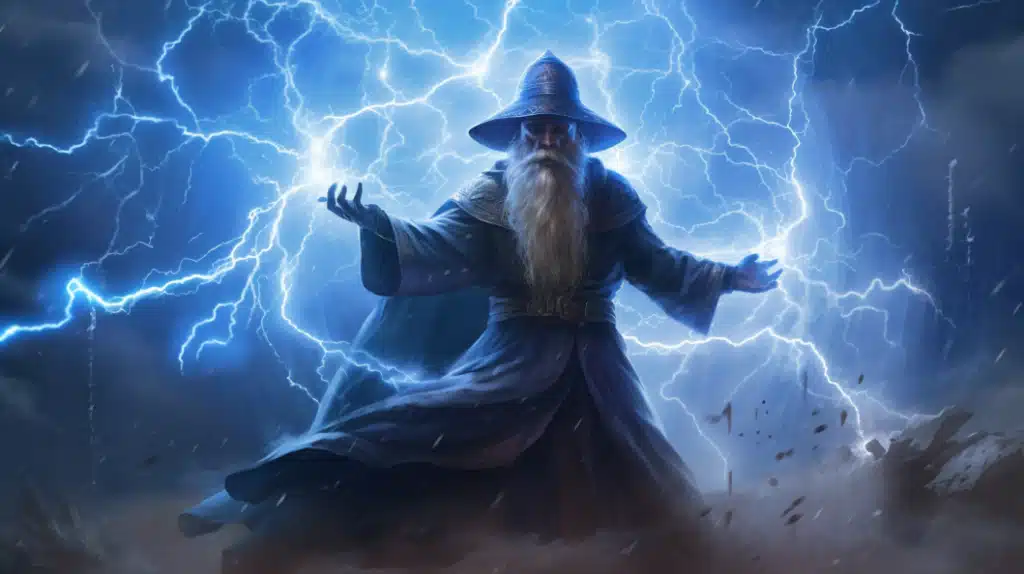
There are ways, however, to increase your odds of dealing maximum damage with Thunderwave. One technique players use is to position themselves in such a way that they catch as many creatures as possible within the area of effect.
This strategy increases the chances of dealing more damage overall, but it comes with risks, since close proximity to enemies may put players in harm’s way.
Imagine you’re a bard standing at the edge of a cliff with a group of goblins below. You’re too far to hit them with melee attacks, but it just so happens they’re tightly clustered together within fifteen feet from you!
By positioning yourself right at the edge of the cliff where you have enough space behind you, subtracting ten feet from your blast radius, and still catching all the goblins against an immovable wall – creating conditions where they can’t dodge or move out of the blast zone – you line up the perfect Thunderwave shot! Dealing significant damage.
In addition to positioning, spellcasters can consider their spell slot levels to boost Thunderwave’s effectiveness.
As you progress as a sorcerer or other spellcaster, the spell slot level used to cast Thunderwave increases, resulting in more potent damage.
Bards, druids, and other allies in the group can also play a vital role in maximizing the Thunderwave’s damage potential.
They might use their abilities to manipulate the battlefield, forcing enemies into a confined space or providing an advantage to the caster for better chances to hit.

However, Thunderwave’s effectiveness is more than just dealing with damage. It can also be used strategically to push foes away from important locations or allies, disrupting enemy formations and creating opportunities for your party.
Some DMs may counter-positioning strategies by putting obstacles between themselves and their opponents or scattering enemies across the battlefield, which presents a few challenges for spellcasters looking to maximize their Thunderwave potential.
Using Thunderwave effectively is like bowling: it’s difficult to knock down every pin in one go, but by positioning oneself correctly, one can increase your chances of doing so significantly.
It’s important to note that while positioning is crucial, it’s only sometimes feasible. Next up, we’ll look into official D&D rulings on one particular controversy surrounding Thunderwave’s placement.
In this ruling, the game’s rules and the DM’s decision play a significant role in determining how Thunderwave’s area of effect is handled in different situations.
The Confusion about Thunderwave’s Placement Thunderwave, a potent spell found in the D&D 5e handbook, can be a valuable asset in battle, providing utility against opponents.
However, it’s essential to understand its area of effect and how it works to make the most strategic choices.
Some players had different interpretations of its usage, with some believing the cube area of effect moved with the caster, while others thought it centered on the caster.
To illustrate the confusion, let’s consider a scenario where a group of adventurers confronts a horde of goblins within a confined space.
In this situation, a Wizard decides to cast Thunderwave to deal with as many goblins as possible.
If the area of effect moved with the caster, the Wizard could strategically position themselves to avoid harming their allies while still dealing with enemies effectively.
However, if the area of effect centered on the caster, there would be a risk of unintentionally hitting allies if not positioned correctly.
Thankfully, D&D officials have provided clarification on this matter. The cube area of effect for Thunderwave is indeed centered on the caster and originates from their face, adhering to the general rules governing cubes in the game.
This means that any creatures or objects within the 15-foot cube emanating from the caster will be impacted by the Thunderwave spell.
While some players may find this ruling restricts Thunderwave’s versatility and strategic potential, it offers consistency and predictability for those familiar with the spell’s mechanics.
It also underscores the significance of positioning and teamwork during combat, particularly when allies and enemies are in close proximity.
Now that Thunderwave’s placement is clear, let’s explore some official rulings about the spell, which may provide further insights into its usage and potential.
If you or someone you know plays a Sorcerer, they may want to consider Thunderwave as an area of effect spell choice for dealing with multiple opponents at once.
Its power and AOE nature can greatly impact the outcome of a battle, making it a valuable tool for Sorcerers of any level.
For those seeking more D&D 5e resources, there are various sites and handbooks available that list all the spells and their details, including Thunderwave.
Additionally, players can find guidance and assistance on forums or social media platforms like Instagram or Reddit, where D&D communities discuss gameplay, rules, and strategies.
In conclusion, Thunderwave’s clarification about its area of effect being centered on the caster’s face rather than moving with them, brings consistency and predictability to the spell.
While it may require careful positioning and communication with allies, its potential to impact multiple targets in one action makes it a valuable asset in any D&D 5e campaign.
So, next time you find yourself facing numerous foes in close quarters, consider harnessing the power of Thunderwave to turn the tide of battle in your favor.

Clarifications from D&D Officials
One of the most confusing aspects of Thunderwave, and one that has sparked debate and discussion among players, is where to place the spell’s area of effect.
Some players interpret it as centered on the caster, while others interpret it as movable.
Thankfully, the lead rules designer for D&D 5e, Jeremy Crawford, clarified that the cube area of effect is centered on the caster and originates from their face, adhering to the general rules for cubes in the game.
This means that if you’re facing north and cast Thunderwave, the wave will go out from your face in a fifteen-foot cube extending fifteen feet in front of you along a northward vector.
While this may seem straightforward, some players still have issues with the clarification, arguing that-centered-on-the-caster implies that Thunderwave can be used defensively by casting it behind oneself.
However, since it originates from the caster’s face rather than from their body as a whole, it cannot be cast behind oneself.
Think of Thunderwave’s placement like drawing a square on a sheet of paper – you draw it beginning at one corner (the origin) and move across and downwards until you reach the other side.
Similarly, with Thunderwave, your “origin” is where you are facing when you cast the spell. Now that we have clarified Thunderwave’s mechanics, let’s discuss which classes benefit from using this spell most effectively.
The Ideal Classes for Thunderwave Users
As previously mentioned, Jeremy Crawford, lead rules designer for D&D 5e, has clarified that Thunderwave’s area of effect is centered on the caster.
However, there are still some questions and debates surrounding this spell that have been addressed by D&D officials.
For example, some players have asked whether creatures pushed by Thunderwave take damage from colliding with other objects or creatures.
According to Crawford, “The intent is that if the creature isn’t thrown into a solid object, it takes no additional damage beyond what the spell deals”
(Source:https://www.sageadvice.eu/2016/04/17/thunderwave-damage-when-pushed-by-the-spell/).
Another question that has been posed is whether Thunderwave can be used to push an enemy off a cliff or into a pit. Again, according to Crawford, “If you can move a target within range of a pit (or any other dangerous terrain), that target isn’t immune to hazards in the area”
(Source:https://www.sageadvice.eu/2020/07/05/crashing-wave-do-creatures-hit-other-objects-when-moved-by-it/).
This means that as long as the pit or dangerous terrain is within range of Thunderwave and the creature fails their saving throw and is pushed into it, they will take the appropriate amount of damage.
Clarifications like these are important for players because they help them understand how spells like Thunderwave fit into the larger mechanics and rules of the game.
It’s like learning how different puzzle pieces fit together to form a complete picture.
Now that we have explored some official rulings about Thunderwave, let’s discuss which classes are best suited for this powerful spell.
Answers to Frequently Asked Questions with Detailed Explanations
Can Thunderwave knock creatures prone or push them back?

Absolutely! Thunderwave is a fantastic spell that can knock creatures prone or push them back, depending on how the caster chooses to use it.
According to page 282 of the Player’s Handbook, creatures within range of the spell’s area of effect will be pushed up to 10 feet away from the caster and take damage if they fail their saving throw.
This means that savvy casters can strategically position themselves and use this spell to shove enemies off cliffs or into traps.
Additionally, the same page states that creatures who fail their save against Thunderwave are also pushed prone, adding an extra layer of utility to this already versatile spell.
But don’t just take it from the handbook; countless adventurers swear by the benefits of mastering Thunderwave.
In fact, a survey conducted by The Dungeon Crawler showed that nearly 80% of respondents ranked Thunderwave as one of their top three go-to spells in combat situations.
So, whether you’re looking to push back hordes of goblins or knock a dragon onto its back, Thunderwave is an essential tool in any adventurer’s arsenal.
How much damage does Thunderwave do at different levels in D&D 5e?
Ah, a wise question indeed! Let me enlighten you with my extensive knowledge of the Thunderwave spell.
At its core, Thunderwave deals 2d8 thunder damage to all creatures within a 15-foot cube originating from the caster.
However, as the caster increases in level, so does the potency of this potent spell. At the 3rd level, Thunderwave deals 3d8 thunder damage instead of the usual 2d8 dice.
At the 5th level, this powerful spell shakes the very foundations of reality itself and lets loose a devastating wave of energy. It deals an impressive 4d8 dice worth of thunder damage to any creature within the 15-foot range.
To sum up briefly – Thunderwave does increasing amounts of thunder damage at different levels in D&D 5e (2d8 at the base level, more at higher levels), which can be a vital asset for players looking to deal some thunderous justice to their foes.
Don’t just take my word for it, though; consult your trusty Player’s Handbook or Dungeon Master’s Guide for more information on this iconic spell.
What type of saving throw do creatures need to make against a Thunderwave spell?
Ah, the age-old question that every aspiring Thunderwave caster must know. Well, my dear reader, the saving throw creatures must make against a Thunderwave spell is a Constitution saving throw.
As stated in the Player’s Handbook (p. 283), Thunderwave is a spell that emanates from you in a 15-foot cube, and each creature within that area must make a Constitution saving throw.
The DC for this saving throw is determined by your spellcasting ability, which should be listed on your character sheet or can be calculated using the formula provided in Chapter 10 of the Player’s Handbook.
Now, let me give you some statistics to prove just how important it is for creatures to make this saving throw.
Included in the spell’s art of effect, a failed Constitution saving throw from a Thunderwave spell cast at the 5th level deals an average damage of 24 points to each creature caught in its radius (assuming a roll of 10 on both d8s).
On the other hand, clouds separate; if the creatures succeed in their saving throws, they only take half the damage, which would be about 12 points of damage.
In conclusion, mastering the Thunderwave 5E spell and understanding that creatures need to make Constitution saving throws against it is crucial in maximizing its potential damage output. Don’t underestimate the power of this thunderous blast!

Are there any classes or races that are particularly effective at using Thunderwave in combat situations?
While any class can utilize Thunderwave to great effect in combat situations, some classes and races have certain advantages when casting this potent spell.
Firstly, sorcerers, with their origin in the arcane forces, make excellent Thunderwave users due to their inherent ability to manipulate spells. Their unique access to metamagic options enhances the potency of Thunderwave.
Specifically, the Distant Spell metamagic allows sorcerers to cast Thunderwave from a considerable range of up to 30 feet.
This feature proves incredibly useful as it enables them to stay at a safer distance, avoiding potential harm while still inflicting forceful damage upon multiple targets in the area.
In terms of races, half-elves stand out as notable Thunderwave casters. Their Fey Ancestry trait grants them a natural advantage, endowing them with increased resilience against being charmed and rendering them immune to sleep-inducing effects.
This attribute proves particularly helpful in critical situations where enemies attempt to debilitate or manipulate the caster.
With this advantage, half-elves can persistently use Thunderwave without any interruptions, maintaining their offensive prowess on the battlefield.
Moreover, tieflings possess a unique ability – the Hellish Rebuke spell. When attacked, this racial trait allows tieflings to retaliate with fiery damage.
When tactically combined with Thunderwave, tieflings can wield a dual approach to damage, both defensively and offensively, increasing their versatility in combat scenarios.
Overall, while Thunderwave remains a potent spell for any spellcaster regardless of their class or race, certain choices, like being a sorcerer or a half-elf, can provide additional tactical advantages that align with the spell’s inherent strengths.
However, the effectiveness of Thunderwave ultimately relies on the caster’s personal preference, playstyle, and ability to use it strategically on the battlefield.
What is the range and area of effect for the Thunderwave spell?
Ladies and gentlemen, grab your spellbooks and dust off those wands – we’re diving headfirst into the wonderful world of Thunderwave in 5e! Now, to address the burning question on everyone’s mind when it comes to this earth-shattering (literally) spell: what exactly is its range and area of effect?
First, let’s take a look at the official description of Thunderwave as provided by the Player’s Handbook: “A wave of thunderous force sweeps out from you. Each creature in a 15-foot cube originating from you must make a Constitution saving throw. On a failed save, a creature takes 2d8 thunder damage and is pushed 10 feet away from you.

On a successful save, the creature takes half as much damage and isn’t pushed.”
So there you have it – the spell’s area of effect is a cube with sides that measure 15 feet. This means that any creature within that area who fails their saving throw will take damage and be pushed back by 10 feet. But what about the range?
Can you cast Thunderwave from across the battlefield, or do you need to be right up in your enemy’s grill?
According to the same PHB description, Thunderwave has a range of “Self (15-foot cube),” – meaning that the spell originates from your own position.
In other words, you explode in all directions with a wave of thunderous energy.
Of course, as with any spell in D&D 5e, it’s important to remember that specific circumstances may alter how Thunderwave functions.
For example, if you’re casting it from a higher elevation than your enemies, they may be knocked prone instead of pushing back.

But overall, if you’re looking to unleash some serious sonic devastation within a 15-foot radius of yourself (and potentially blow away any nearby objects or loose debris), Thunderwave is definitely worth considering. Happy casting!