
Harnessing the Tempest: Ice Storm as a Tactical Masterpiece in D&D 5e


Who says you can’t harness a tempest’s wrath to tip the scales in your favor? I weave the fabric of magic into a frigid tableau, summoning Ice Storm, a spell that’s as much about control as it is about damage.

With precision, I call down a cylinder of biting hail and howling winds, strategically sowed to transform the battlefield into a treacherous landscape. It’s not just about the initial burst of 2d8 bludgeoning and 4d6 cold damage; it’s the aftermath, the difficult terrain that hampers foes and shapes their movements like pawns on my icy chessboard.
As I contemplate my next move, I consider the possibilities of enhancing the storm’s ferocity, knowing that each step up in power could turn the tide of battle. Ice Storm is not just a spell—it’s an artful gambit in the great game of freedom and control.
The Basics of Ice Storm
I’ll start with the basics of Ice Storm: it’s a powerful 4th-level spell that conjures a hailstorm to batter and chill foes within a significant area. This spell isn’t just about the damage — it’s about control.

When I cast Ice Storm, I’m calling forth nature’s fury, crafting a 20-foot-radius, 40-foot-high cylinder of relentless ice and bitter winds. The spell hurls down a barrage, dealing 2d8 bludgeoning and 4d6 cold damage. It’s a masterful mix — the bludgeoning breaks through resistance while the cold damage seeps into the bones.
But the true artistry lies in the aftermath. The terrain turns treacherous, slowing enemies and creating a buffer zone. I can cast this spell from 300 feet away, giving me the freedom to manipulate the battlefield from a safe distance.
And as I grow in power, channeling higher spell slots adds an extra 1d8 bludgeoning punch per level above fourth. Choices matter, and Ice Storm provides a tactical edge that’s too precious to ignore. It’s not just a spell; it’s a strategic declaration of dominion over the field of battle.
Spell Mechanics Explained
As I strategize my next move in combat, I consider the dual damage types of Ice Storm—a mix of bludgeoning and cold that can pierce through different resistances.
The spell’s sizable area of effect, a 20-foot radius cylinder, allows me to engulf multiple foes at once, turning the tides of battle in open terrain.
I mustn’t forget to factor in the Dexterity saving throw; it’s essential for maximizing damage against nimble targets and exploiting their potential vulnerabilities.
Damage Types
Explaining the mechanics of Ice Storm’s damage types, I’m delving into how its blend of bludgeoning and cold impacts your foes in the game. Here’s the strategic breakdown:

- Bludgeoning Damage
- Strategic Advantage:
- Bludgeoning damage increases with spell slot level.
- It represents the hail’s physical force, effective against creatures vulnerable to non-magical attacks.
- Cold Damage
- Inventive Control:
- Cold damage exemplifies the chill of ice; not as commonly resisted as fire.
- It can potentially slow down enemies’ movement.
Each element of Ice Storm serves a purpose. The bludgeoning mirrors the punishing force of hail, while the cold reflects the freezing bite of ice. Together, they ravage the battlefield, turning it into a zone of strategic dominance and creative control.
Area of Effect
Analyzing Ice Storm’s area of effect, I’m struck by its potential to shape the battlefield, with a 20-foot-radius, 40-foot-high cylinder that can impede and control enemy movement. This cylinder centered on a point I choose becomes a zone of tactical superiority.

Every creature in the cylinder must navigate the treacherous terrain, their movements halved, their strategies thwarted. I revel in the control it grants me, turning the ground into a chessboard where I dictate the pace. As the ice hammers down, foes scramble, slipping in their haste.
I watch as the spell alters the terrain until the end of my next turn, a fleeting yet formidable dominion over the field, ensuring my adversaries are right where I want them—struggling within my wintry snare.
Saving Throw Rules
I ensure my adversaries’ fate hangs on a swift roll of the dice when I invoke Ice Storm, as they must immediately attempt a Dexterity saving throw to mitigate the spell’s full impact.
Here’s how I strategize:
- Dexterity Saving Throw
- Failed Save: The creature takes full damage—2d8 bludgeoning and then 4d6 cold.
- Successful Save: The damage is halved, granting them a momentary reprieve.
Crafting my spell, I weigh the odds. A failed save promises swift retribution, while a successful one still chips away at their resolve. I relish the chance to control the battlefield, turning the terrain against them—whether they stand their ground or scramble for safety, freedom is mine to dictate.
Ice Storm Damage Potential
My experience with Ice Storm has shown that its potential for damage is significant, particularly when I utilize higher-level spell slots to enhance its bludgeoning impact. This spell isn’t just about the cold—it’s the ruthless bludgeoning damage that can truly turn the tide of battle.

I’ve learned to cast it strategically, ensuring the 20-foot-radius area of effect encompasses as many enemies as possible, creating a zone of devastation and difficult terrain that hampers their advance.
When I invoke Ice Storm, I’m not just flinging ice; I’m precisely calculating the fall of each hailstone to maximize impact. The Dexterity saving throw it requires adds a layer of unpredictability for my foes—some may dodge, but others aren’t so lucky, and the resulting damage can be devastating, especially at Higher Levels.
Every additional spell slot above the fourth adds a d8 of bludgeoning force, crashing down with the weight of a wintry wrath.
I’ve found that the beauty of Ice Storm lies in its versatility. As a spellcaster who cherishes freedom, this spell offers me the ability to control the battlefield, slow down pursuers, and unleash a barrage of ice and snow that can break through resistances and leave enemies reeling in its chilling wake.
Tactical Applications
When I cast Ice Storm, I’m not just unleashing damage; I’m sculpting the battlefield to my advantage.
By transforming the terrain into a treacherous expanse of ice, I force adversaries to slog through, setting them up as sitting ducks for a well-placed fireball.
This spell’s knack for area control and movement impairment meshes seamlessly with my arsenal, opening the door for devastating spell combos.
Area Control Strategy
While casting Ice Storm, I’m able to strategically manipulate the battlefield by creating a zone of difficult terrain that significantly slows down enemy advances. Here’s how I maximize its potential:
Area of Effect:
- Encompass multiple enemies within the spell’s radius to maximize impact.
- Use the vertical reach to control both land and aerial threats.
Difficult Terrain:
- Position the spell to break enemy lines, forcing them to take longer routes.
- Place it behind retreating allies for a protective barrier.
Enemy Movement Hindrance
Utilizing Ice Storm, I’ve found that every opponent, regardless of their agility or size, is significantly slowed by the spell’s creation of difficult terrain, which disrupts their tactical movements and can shift the momentum of battle.

The area of effect becomes a treacherous landscape where each creature must navigate the movement hindrance to advance or flee. I strategically place this spell to control the battlefield, funneling enemies into choke points or away from vulnerable allies.
The ice not only bites into their flesh but also into their chances of positioning for an attack or retreat. This tactical application isn’t just about dealing damage; it’s about crafting the battlefield to my advantage, ensuring that freedom and control remain firmly in my grasp.
Synergy With Spells
In my tactical arsenal, I’ve found that Ice Storm pairs exceptionally well with area control spells, enhancing battlefield manipulation and ally coordination. Its ability to create difficult terrain means that when I upcast it using a higher spell slot, the increased bludgeoning damage, combined with its cold effect, can be devastating.

- Synergistic Spells:
- Wall of Fire: Trapping enemies between the fiery barrier and Ice Storm’s icy field maximizes damage.
- Entangle: Cast before Ice Storm, it roots targets in place for the full brunt of the storm.
Synergy With Character Abilities
I’ll now delve into how Ice Storm’s effectiveness is significantly enhanced when synergized with specific character abilities.
As an Oath of the Ancients paladin, my arsenal could sometimes feel lacking in ranged area of effect attacks. However, by integrating Ice Storm into my repertoire, I unleash a barrage of ice, expanding my battlefield presence with chilling damage that engulfs adversaries from afar.

The spell’s difficulty terrain feature becomes a strategic cornerstone, allowing me to manipulate the battlefield, slowing enemy advances while my allies and I position ourselves advantageously.
When I cast this spell using a spell slot, the synergy becomes even more apparent. As a druid, my choices for damaging AoE spells are rather limited, but Ice Storm stands out as a formidable option. It’s not just about the damage; it’s about controlling the flow of the fight, creating a buffer zone that enemies hesitate to cross.
And let’s not overlook characters with the Elemental Adept feat—this spell becomes a relentless force. Any resistance to cold my foes might’ve is trivialized, as I ensure that the full fury of the storm is felt. Ice Storm, thus, becomes a testament to my strategic prowess, an inventive tool in my quest for freedom on the battlefield.
Environmental Impact and Storytelling
As a Dungeon Master, I weave the chilling effects of Ice Storm into the narrative fabric of my campaign to craft atmospheres that are as unforgiving as they’re captivating. The spell’s environmental impact isn’t just for show; it’s a pivotal element of storytelling that shapes the world and challenges my players.
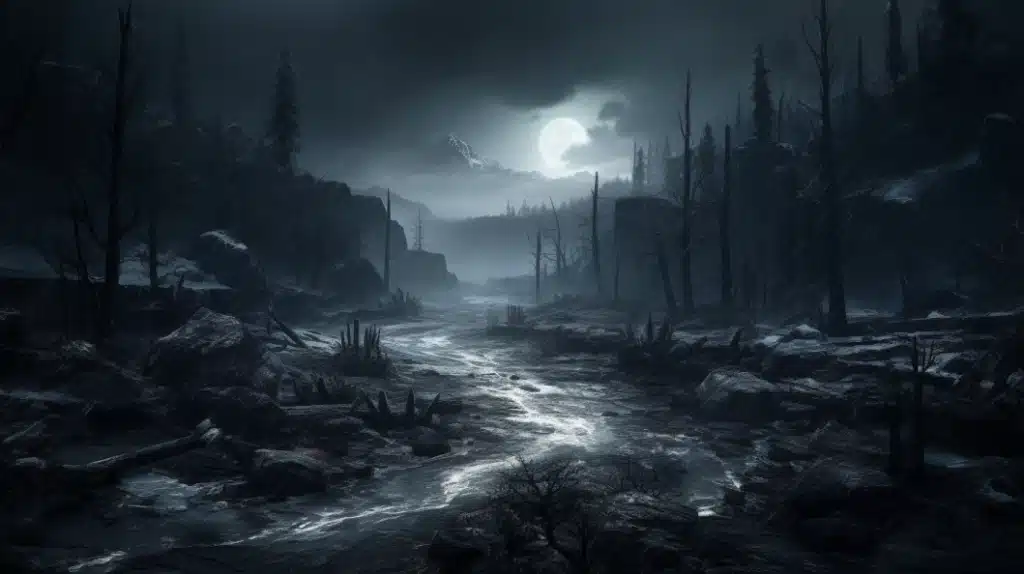
Strategically, I use the area of effect to alter battlefields:
- Encouraging Adaptation: Players must navigate difficult terrain, turning the environment into both ally and adversary.
- Dynamic Combat: The shifting ice demands tactical ingenuity, as well-placed spells can swing the tide of battle.
By transforming landscapes into difficult terrain, I force my adventurers to rethink their strategies, pushing them to innovate and work as a cohesive unit. The environmental impact of Ice Storm isn’t merely a hindrance; it’s a canvas on which epic tales of survival and conquest are painted.
Through inventive storytelling, I tie the spell’s origin to the lore, making it a natural extension of the elemental plane of Water or a manifestation of a deity’s wrath. The environmental impact resonates with a player’s desire for freedom, challenging them to overcome or harness the frigid might of Ice Storm as they carve their path through my world.
Comparing Ice Storm to Other Spells
Every spell in my arsenal, including Ice Storm, has its unique advantages and drawbacks when compared to alternatives such as Fireball or Cone of Cold. When I’m weaving the fabric of battle, the choice of incantation is pivotal.
Ice Storm isn’t just about the bludgeoning damage and the cold damage—it’s a statement of control, turning the battlefield into my own strategic chessboard with difficult terrain to thwart my foes’ advances.

Here’s a snapshot of how these spells stack up:
| Spell | Area of Effect | Damage Types | Control Elements |
|---|---|---|---|
| Ice Storm | 20-ft radius | Bludgeoning and Cold | Creates Difficult Terrain |
| Fireball | 20-ft radius | Fire | – |
| Cone of Cold | 60-ft cone | Cold | – |
Choosing Ice Storm is choosing freedom—the liberty to reshape the battlefield to my will, forcing enemies into a bitter cold gauntlet. I don’t just hurl destruction; I sculpt the terrain, guiding my adversaries into desperate choices. With Ice Storm, I’m not merely a caster; I’m a grandmaster plotting moves in a game of wintry survival.
Maximizing Ice Storm’s Effectiveness
To maximize the impact of Ice Storm in my spellcasting repertoire, I’m mindful to cast it using higher-level spell slots for increased damage output. Leveraging its 300-foot range and expansive area of effect, I can target clusters of enemies from a safe distance, forcing them to make a Dexterity saving throw or suffer the consequences. Plus, by casting with a higher level spell slot, I’m adding an extra 1d8 bludgeoning damage per slot above the fourth.

- Strategic Positioning:
- Initiate from High Ground: This vantage point extends the area of effect and gives me a bird’s-eye view to avoid friendly fire.
- Choke Points: I aim for narrow passageways where enemies cluster, ensuring maximum damage and hindering their advance with difficult terrain.
- Tactical Considerations:
- Elemental Adept Feat: If I’ve taken this feat, I bypass resistances to cold damage, ensuring my Ice Storm hits with full force.
- Terrain Control: Casting Ice Storm strategically to create difficult terrain can split enemy forces or cover a retreat, providing tactical advantages beyond raw damage.
Ice Storm in Different Campaign Settings
I adapt my use of Ice Storm to the unique challenges and environments presented by different campaign settings, ensuring it remains a valuable asset in my magical arsenal. When Wizards of the Coast conjures up a new realm, I dive into the lore and geography, tailoring my spells to the landscapes and adversaries I encounter.
In the frostbitten peaks of Icewind Dale, Ice Storm 5e becomes less about the cold damage—many creatures there shrug it off—and more about controlling the field, turning already treacherous terrain into a labyrinth of ice.
In the sweltering jungles of Chult, Ice Storm is a shock to the system for heat-adapted foes, the sudden chill and slippery ground sowing chaos. It’s about versatility, about being inventive with the elements at my disposal. Different campaign settings demand flexibility; in the Underdark’s claustrophobic caverns, I use Ice Storm to blockade narrow passages or to shatter stalactites, creating new obstacles for my enemies.

No matter where I venture, I consider the tactical advantages Ice Storm provides. The spell’s capacity to hamper enemy movement is invaluable. It’s not just about raw power—it’s about using the environment to my benefit, shaping the battlefield to ensure freedom and victory for my companions and me.
Frequently Asked Questions
How Good Is Ice Storm 5e?
I’d say it’s a versatile spell, offering both elemental damage and area control. It’s strategic for shaping the battlefield, though it might not always be my first pick in combat situations.
What Is the 5th Level Ice Spell?
I harness chilling impact with the 5th level ice spell, using frosty tactics for spell versatility. My arctic magic unleashes a storm, dominating the battlefield and granting strategic freedom through its icy grasp.
What Is the Dex Save of Ice Storm?
I’m calculating the Dexterity impact on my combat strategy, as the spell mechanics of Ice Storm dictate environmental effects that can sway the battlefield to my advantage with strategic area control.
What Is the Snow Storm Spell in D&D?
I harness the Snow Storm spell’s mechanics to dominate battlefields, creating zones of treacherous terrain. It’s my go-to for strategic area control and shaping the environment to my tactical advantage.
Conclusion
In my arsenal, Ice Storm’s a strategic gem. By upping its level, I amplify the bludgeoning wallop it packs.

I’ve learned to place it where it’ll not just freeze foes in their tracks, but also sculpt the battlefield to my party’s advantage. It’s not just a damage dealer; it’s a game-changer, especially when ingeniously combined with other abilities.
In diverse settings, it’s consistently proven its worth, securing its spot as a spell I’ll always keep at the ready.