
Tentacles of Terror: Exploring the Giant Octopus in Dungeons & Dragons

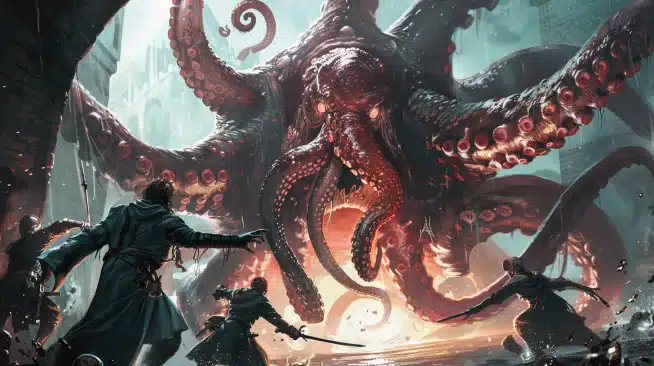
There is no limit to the horizons of the 5th Edition of the fantastically diverse Dungeons & Dragons (D&D) game where all creatures are boundless. Such beings include a Giant Octopus, which wonders and fears a player, and a Dungeon Master (DM) in the same measure of the pool through the mixture of myth and menace. This is no mere beast; this is a testament to how the game can bring to life the most exciting and scariest part of fantasy.
Dungeons & Dragons, since its inception, has been a crucible for myths, legends, and folklore from across cultures. The streamlined rules and improved accessibility with this 5th Edition stand in a tradition that populates its realms with the deepest wells of mythologies, drawing from creatures all around the globe.
That “Giant Octopus” is obviously rooted in the myth and lore of the sea, lurking in the deep, dark waters of oceans, lakes, and rivers within the game. Even the juxtaposition of your historical giant with its maritime habitat exemplifies to perfection the blending of historical and fantastical elements.
The mention of a giant octopus alone evokes visions of epic sea battles, treasure-laden ships being capsized, and daring escapes from the clutches of its tentacles. Its role in D&D is multifaceted: from a terrifying enemy to environmental danger and sometimes even an unlikely ally, depending on the story woven by the DM.
There are specific recommendations regarding how these creatures function within the game in the 5th Edition rules: stats, abilities, and behaviors offered that genuinely define the cunning, strength, and mystical aura of the octopus. Far more than that, it touched on the mysteries, explorations, and unknowns so fundamental to the D&D experience, far beyond mechanics.
Living in the heart of the game, the Giant Octopus represents the very essence of adventure that, in some ways, finds itself representative of all of the unexpected new challenges and wonders that have lain in wait for the player as they navigate across the treacherous waters of fantasy role-playing.
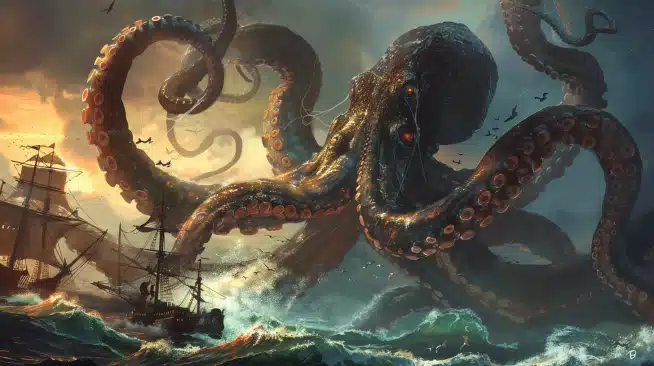
Whether lying in wait as adventurers brave storm and foam to sail into uncharted waters, bursting out in surprise when divers dare enter the cracked, gaping maw of a submerged ruin, or yet again sent to menace sailors by some powerful mage, a fight with a Giant Octopus or Giant Octopus Wizard is a classic that will long be recounted.
For all intents and purposes, it is one of these classic entries to the annals of D&D 5th edition—another excellent example of the game’s capacity to tap into awe and adventures.
With that in mind, its inclusion guarantees that D&D will remain a game of the power of story, the thrill of exploration, and the joy of facing the unknown with every roll of the dice.
A Look at the Ocean’s Phantom and Its Mysteries
Many creatures lived under the world’s vast, soundless, fathomless, and swift seas. To some of them, we know of only through tradition and legend. Within the list of these mysterious beings, one name or two are outstanding for a dubious character—simply drawing the most attention to the enigmatic underwater creature often called “The Phantom of the Ocean.”
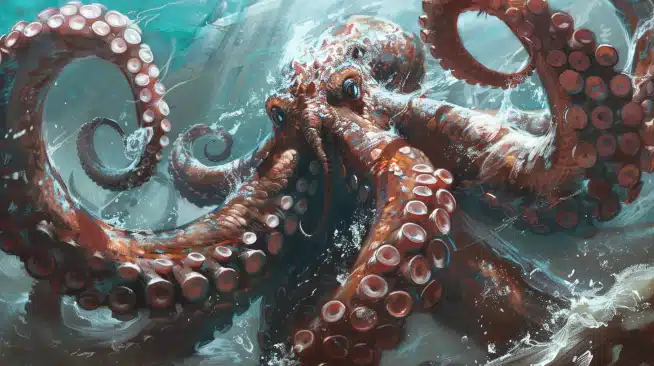
This means that it is a mysterious entity, only glimpsed and very severely understood, that catches the imagination and attention of the imagination and attention of marine biologists and deep-sea adventures.
The Phantom of the Ocean is soundproof to confirm the existence of unexplored territories in our planet’s water depths. Descriptions and sightings claim it to be a very adaptable creature apt to live and develop in the abyss where sunlight does not reach.
The physical characteristics of the beast are a matter of much speculation, with some reports claiming a form that falls outside the paradigms of marine biology. Such accounts border on an ability to merge bioluminescent appendages and ethereal movements into the depths of the ocean with unparalleled stealth.
The mystery of this animal lies not only in its secretiveness but also in the many legends that it created. Sailors and fishermen for hundreds of years have whispered between themselves about the times they saw the Phantom, giving it supernatural abilities.
Such stories had indeed become part of the creature in the fabric of marine lore from generation to generation, so much that the myths could not now fail to attach themselves to one of the endless mysteries of the sea.
Through cutting-edge technologies that constantly evolve for deep-sea explorations, the scientific interest in the Ocean’s Phantom has surged in the last few years.
Ever since ROVs and submersibles started going into the abyss, they have captured fleeting images that might be this enigmatic being. Still, before gaining more concrete evidence, it is one of many points of interest that still need to be discovered.
Thus, the Phantom remains a focus for ongoing research and speculation. Mysteries of the sea ghost highlight how much the planet’s oceans—of them—very little is that which humans know. Despite thousands of years of discovery, the depth of the sea is often referred to as another world; the Phantom beckons our imagination for what is yet to be known.
In a way, it symbolizes the spirit of exploration and human aspiration for knowledge, throwing challenges to respond with sharper insight and bringing to light the secrets it stores. That fleeting, ephemeral nature of the Ocean’s Phantom is where the real intrigue and mystery lay—not what it means: a frontier of discovery that beckons with the promise of the unknown.
With every new voyage of discovery we undertake, the Phantom will endure as a symbol of the alien, enigmatic dominions of the ocean that beg our questions, boggle our minds, and challenge us ever onward into the more profound blue mystery.
Discussing the Basic Stats of the Giant Octopus in D&D 5e
In the wildly imaginative world of Dungeons & Dragons 5th Edition (D&D 5e), the Giant Octopus provides some of the toughest but also most rewarding opportunities for combat encounters that require creativity.

Thus, you are either a game master (GM) or only a curious player, and you want to find out how the basic stats of a giant octopus are supposed to look so that a game with this cephalopod can be implemented in a game properly. What should one do next?
Let’s delve into those attributes and abilities of the character that are of prime importance.
- Size and Type: The Giant Octopus is classified as an enormous beast that is unaligned with any specific moral or ethical compass. Its size makes it a daunting opponent or an intriguing ally, capable of filling many roles in oceanic adventures.
- Armor Class (AC): With an Armor Class of 11, the Giant Octopus’s natural physique provides it with modest protection against attacks. This AC reflects its ability to absorb damage through its thick, rubbery skin while still vulnerable to well-aimed strikes.
- Hit Points (HP): Boasting 52 hit points (8d10 + 8), the Giant Octopus showcases remarkable resilience, allowing it to endure multiple rounds of combat. This stamina is indicative of its tenacity and survival instincts in the harsh marine environment.
- Speed: The Giant Octopus exhibits versatility in movement, with a swimming speed of 60 feet. This swift aquatic locomotion enables it to maneuver easily through the water, catching prey or evading threats with remarkable agility.
- Strength and Dexterity: With a Strength score of 17 (+3) and a Dexterity of 13 (+1), the Giant Octopus is both powerful and somewhat agile. These attributes contribute to its ability to grapple foes effectively and dodge incoming attacks, making it a balanced adversary or companion in terms of physical capabilities.
- Senses and Perception: Enhanced by keen senses, the Giant Octopus has a passive Perception of 10 and darkvision up to 60 feet. This sensory acuity allows it to navigate the murky depths and detect approaching enemies or prey despite the low visibility underwater.
- Special Abilities: Among its most notable features are its Water-breathing ability, enabling it to breathe underwater indefinitely, and its Ink Cloud, a defensive mechanism that allows it to obscure its escape by expelling ink in the water. Additionally, its tentacles are not only weapons but tools for exploration and manipulation of its environment.
- Actions: The Giant Octopus’s primary mode of attack is through its Tentacles, which have a reach of 15 feet. These attacks not only inflict damage but can grapple and restrain their targets, showcasing the creature’s predatory nature. Its multi-attack ability allows it to use its tentacles to make several attacks in a single turn, illustrating its formidable combat prowess.
Incorporating the Giant Octopus into a D&D 5e campaign offers a myriad of narrative and combat possibilities, from underwater battles to mysterious encounters in the deep. Understanding its basic stats is the first step in unleashing the full potential of this captivating creature within your adventures.
Handling Encounters with a Giant Octopus in D&D 5e
Encountering a Giant Octopus in the fantastical realms of Dungeons & Dragons 5th Edition (D&D 5e) presents a unique blend of challenge and opportunity. Renowned for their immense size, keen intelligence, and powerful tentacles, Giant Octopuses can be formidable adversaries or invaluable allies, depending on the approach taken by players.
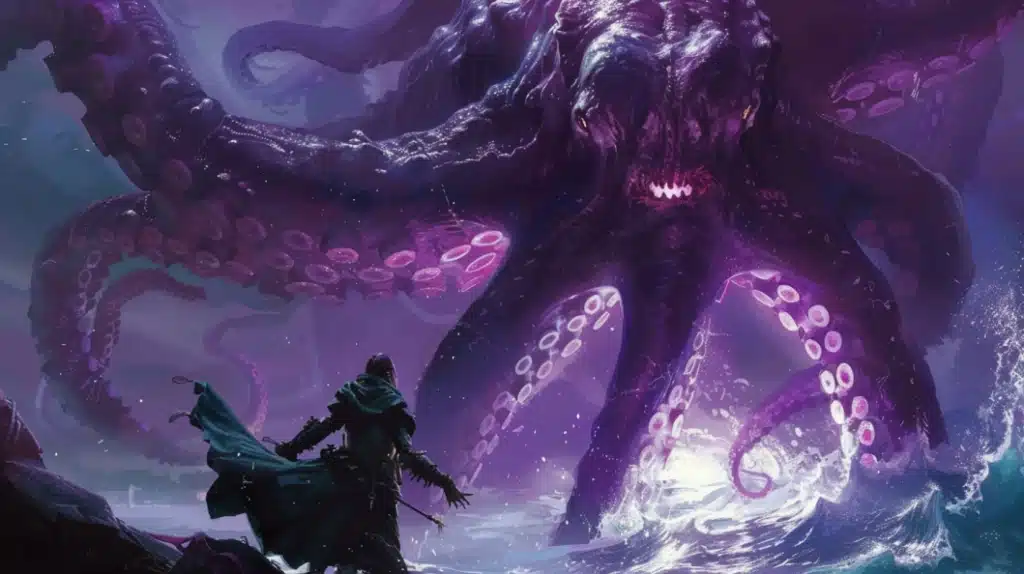
Here, we delve into strategies and tips for both combating and befriending these majestic creatures, ensuring adventurers can navigate these encounters with confidence and creativity.
Combat Strategies Against a Giant Octopus
- Leverage Range and Mobility: The Giant Octopus excels in close combat, thanks to its multiple tentacle attacks and grappling ability. Players should capitalize on ranged attacks and spells to deal damage while maintaining a safe distance. Utilizing mobility-enhancing spells or skills to evade the octopus’s reach is critical.
- Exploit Environmental Advantages: Often found in aquatic environments, the Giant Octopus is a master of its domain. Adventurers can turn the tables by luring it into less favorable terrain or employing environmental hazards, such as underwater currents or rocky crevices, to their advantage.
- Target Weaknesses: While physically formidable, the Giant Octopus may be vulnerable to certain magic or elemental damage. Parties should research or deduce their weaknesses and tailor their spell selection accordingly.
- Divide and Conquer: The octopus’s strength lies in its ability to engage multiple targets simultaneously. By spreading out and attacking from different angles, adventurers can reduce its effectiveness and overwhelm its defenses.
Strategies for Befriending a Giant Octopus
- Demonstrate Intelligence and Respect: Recognizing the Giant Octopus’s intelligence is crucial. Approach it with gestures of respect and attempts at communication, utilizing spells like Speak with Animals or abilities that facilitate understanding.
- Offer Gifts or Services: Like many creatures, a Giant Octopus may be swayed by offerings of food or assistance. Clearing its territory of threats or providing it with rare delicacies from the sea can earn its favor.
- Showcase Mutual Benefits: Illustrate the benefits of an alliance, highlighting how both parties can gain from cooperation. Whether it’s aiding the octopus in defending its territory or offering it a share of treasure, showcasing mutual benefits can be persuasive.
- Exhibit Patience and Consistency: Building trust with a creature as intelligent and cautious as a Giant Octopus takes time. Regular visits and consistent, positive interactions can gradually establish rapport and friendship.
Handling encounters with a Giant Octopus in D&D 5e demands a mix of strategic combat, respectful communication, and an understanding of the creature’s nature. Whether choosing to engage in battle or seek an alliance, the key lies in adaptability, intelligence, and a deep appreciation for the diverse inhabitants of the D&D universe.
The Summary
This article has taken a closer look at the fantastic world of the Giant Octopus in Dungeons & Dragons 5th Edition in an attempt to shed more light on this rather magnificent beast. Some of the critical features that this paper has underlined include the unique powers, how strategically they are put to use in gameplay, and the storytelling opportunities it affords to the Dungeon Master (DMs) and his players.
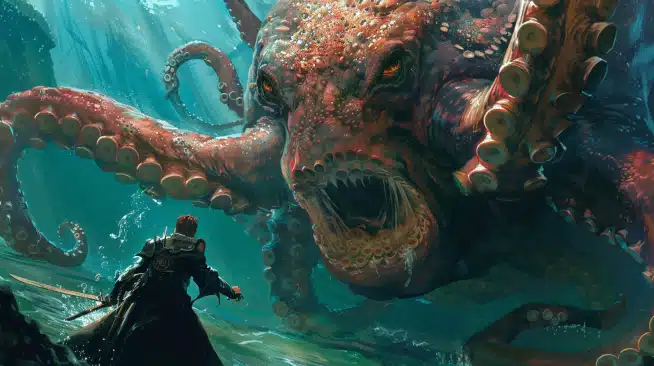
First, the Giant Octopus is famous for its fantastic capabilities, including grappling power. It also has tentacles that can be used simultaneously with several enemies at the same time, and so it becomes a valuable strategic asset in underwater combat scenarios. The post explains the mechanics of his attack to the effect of, “One really does have to understand these things for proper usage of these attacks in encounters. It goes further to expound on the Giant Octopus’s utility beyond just combat.
More than half of the group’s powers are based on movement, control, and offensive attacks. The ink cloud it produces could also be used to escape or set up an ambush, thereby adding another dimension to gameplay. This factor displays how adaptable the Giant Octopus is, and so it can be put in many places throughout the adventure.
The environmental impact of introducing a Giant Octopus into a campaign is another focal point.
The post studies how his influence could change the dynamics of an underwater environment, both towards the local fauna and towards the adventurers. This is invaluable material for the dungeon master looking to enhance the game world to realism and complexity beyond what most players will ever experience.
This kind of blog post perfectly provokes more creativity in using the Giant Octopus, listing the various ways it can be used to make the situation more exciting and to give challenges to add to a campaign. There are many bounds of possibility for its place in the campaign, providing plenty of narrative from a formidable foe to an unlikely ally.
All said and done, in the world of D&D 5e, it is Giant Octopus that brings quite a marvelous addition to the campaign. This is a worthy challenge, standing against the adventurers but also serving them as a really wondrous creature. And with its unique abilities and the strategic depth it adds to encounters, it’s no wonder why he’s a perennial player and DM favorite.
The blog post does a great job of capturing the essence of these creatures and providing some excellent guidance on how they can be included in gameplay and narrative. We invite you to share your own experiences or creative uses of the Giant Octopus in your D&D games.
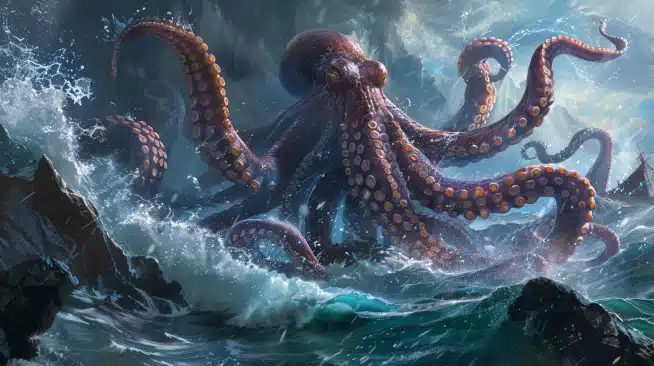
Whether epic battles, cunning getaways, or surprising alliances take place, your stories will create the rich tapestry of adventures that is Dungeons & Dragons. Share your tales, and let’s continue to inspire each other with our collective creativity in the world of D&D.
Common Questions About Giant Octopuses in D&D 5e
What is a Giant Octopus in D&D 5e?
A Giant Octopus is a large, aggressive creature found in the ocean depths of D&D 5e. It relies on its tentacles to grapple and crush prey and can use a cloud of ink to obscure itself and make a quick escape.
How strong is a Giant Octopus?
Giant Octopuses are strong enough to grapple Medium or smaller creatures with their tentacles. A grappled creature is restrained, making it difficult to fight back.
What are a Giant Octopus’s special abilities?
- Underwater Camouflage: A Giant Octopus has an advantage in terms of stealth checks while underwater, making it a sneaky predator.
- Hold Breath: While out of water, a Giant Octopus can hold its breath for 1 hour. This allows it to briefly attack surface ships or creatures on shore.
- Ink Cloud (Recharge): The Octopus can expel a cloud of ink, heavily obscuring the water for 1 minute. This lets it escape or make a surprise attack.
What are some tactics for defeating a Giant Octopus?
- Stay mobile: Avoid getting grappled by the tentacles. If you are grappled, focus on escaping before it crushes you.
- Ranged attacks: Since the Giant Octopus can only breathe underwater, ranged attackers can exploit this weakness if they stay on land or a boat.
- Light source: The ink cloud only works in dark or murky water. If you have a light source, you can see through the ink.
Are Giant Octopuses intelligent?
The D&D 5e Monster Manual doesn’t provide an Intelligence score, so it’s left to the Dungeon Master (DM) to decide. They are typically depicted as cunning predators but not necessarily intelligent in the same way a human or elf might be.