
Unleashing the Power of Drake 5e: Your Ultimate Guide to Beastly Companions in D&D

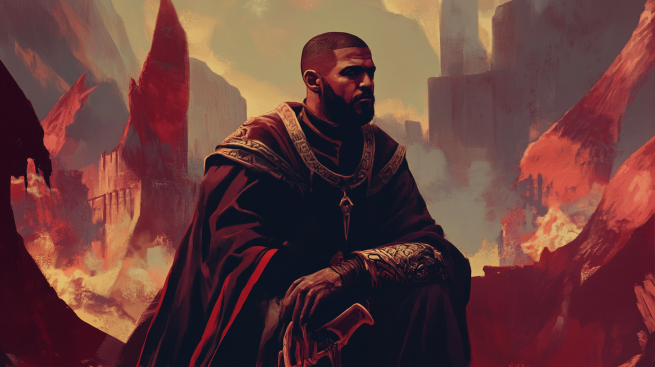
If you’ve ever dreamed of having a drake as your loyal companion in Dungeons & Dragons (D&D) 5th Edition, then buckle up! This guide is all about one of the coolest creatures you can control in the game. Drakewarden Rangers let you fight alongside these fearsome winged beasts, and trust me—once you start, you’ll never want to go back.

Drakes are like mini-dragons—without the “burn your whole party to a crisp” level of danger. They’re perfect for players who love the idea of taming and working with powerful animals.
So, let’s dive into the Drake 5e universe and find out what makes these creatures such awesome allies in your adventures.
What Exactly Is a Drake in D&D?
First things first, what even is a drake in D&D 5e? A drake is a dragon-like creature, but they’re smaller and less intelligent than actual dragons. Think of them as a dragon’s tough little cousin. Drakes are bred by dragons and usually serve them in some capacity. They don’t have the full sentience and intelligence of their dragon ancestors, but they still pack a mighty punch.

Drakes in D&D 5e come in many varieties, from fire-breathing to ice-cold. They can serve different purposes depending on what kind of D&D campaign you’re running, but their most famous use is in the Drakewarden Ranger subclass, which allows you to bond with a drake and summon it as your companion.
Drakes, unlike regular dragons, don’t necessarily hoard treasure or plot the downfall of entire kingdoms. They’re more primal and animalistic, driven by loyalty to their dragon kin and their draconic masters—unless, of course, you become their master!
Drakes can serve various roles in your campaign, whether as mounts, loyal allies, or even powerful enemies. The idea of taming one and having it fight alongside you adds a lot of depth and fun to gameplay. For a player character, they act as a balance between having a full-fledged dragon pet and a more traditional beast companion, like those from the Beast Master subclass.
Meet the Drakewarden Ranger Subclass
The Drakewarden is a Ranger subclass introduced in Fizban’s Treasury of Dragons, and it brings a ton of dragon-themed abilities to the table. As a Drakewarden Ranger, you form a magical bond with a drake—a dragon-like creature that serves as your combat partner.

Over time, this bond grows, and so does your drake. It goes from a Small-sized creature to a Large-sized, fully capable battle companion, even taking to the skies to give you the ultimate edge in mobility and strategy.
Here’s a closer look at the main features you get as a Drakewarden Ranger:
Draconic Gift (Level 3)
When you choose the Drakewarden subclass at level 3, you gain a few cool features, including the ability to speak and read Draconic. You also get Thaumaturgy, a spell that allows you to create minor magical effects—perfect for enhancing the dragon-like aura of your character!
Drake Companion (Level 3)
At level 3, you also gain the ability to summon your very own drake companion. This creature starts small but packs a punch. You can choose its elemental affinity (acid, cold, fire, lightning, or poison), which not only gives it resistance to that type of damage but also affects the extra damage it deals in battle.
The drake itself has a stat block that scales as you level up. It gets tougher, its attacks hit harder, and it even gains new abilities like flying and a breath weapon, just like a real dragon.
Bond of Fang and Scale (Level 7)
When you hit level 7, your bond with your drake deepens, and it grows into a Medium-sized creature. This is when things get really exciting—you can now ride your drake as a mount! The drake also gains the ability to fly, making it even more useful for exploring and combat. Additionally, both you and your drake get extra protection with Magical Bond, which means any attack that targets your drake now also has to contend with magical resistance.
Drake’s Breath (Level 11)
At level 11, your drake becomes an even bigger force to be reckoned with. It gains a breath weapon, allowing it to unleash a devastating cone of elemental damage based on its elemental affinity. This can only be used once per long rest, but when timed right, it can turn the tide of a battle, especially if you’re up against groups of enemies.
Perfected Bond (Level 15)
By the time you reach level 15, your bond with your drake has reached its peak. The drake grows to Large size and gains even more damage resistances. Additionally, every time your drake attacks, it can deal bonus damage equal to your proficiency bonus.
Even better, whenever your drake is summoned, you gain resistance to the same type of damage as its elemental affinity. In short, by this point in the game, you and your drake have become an unstoppable duo.
Drake Companion Stats and Customization
At the heart of being a Drakewarden is, of course, your drake companion. This isn’t just some regular animal—your drake is a magical extension of your character. Its stats scale with your level, and you can customize its abilities to match the type of damage you want to deal or resist in battle.

Here’s a breakdown of your drake’s key stats:
- Hit Points: Your drake’s hit points grow based on your Ranger level. It starts with 5 + five times your Ranger level, so at level 5, your drake will have 30 HP. This makes it pretty tanky, even at early levels.
- Armor Class (AC): The drake’s AC is 14 + your proficiency bonus. This means as you get stronger, so does your drake’s defense. By the time you reach higher levels, your drake’s AC can rival even the toughest fighters.
- Attack Power: Your drake starts with a bite attack that deals 1d6 + its Strength modifier. But wait, there’s more! It also deals an extra 1d6 damage of its elemental type (acid, cold, fire, lightning, or poison). This elemental damage scales up as you level, making your drake’s bite attack even more potent.
- Size and Growth: Your drake starts as a Small creature, but at level 7, it grows to Medium, and eventually, it becomes Large by level 15. Its growth isn’t just for show—it means you can eventually ride it into battle, and it can carry more gear or companions.
- Movement: Once your drake reaches level 7, it gains the ability to fly with a movement speed of 40 feet. This is where your drake becomes a game-changer, allowing you to stay mobile, zip around battlefields, or reach hard-to-get places in dungeons.
These customizable aspects make the drake incredibly versatile. Whether you want to specialize in dealing damage, soaking up hits, or even flying above the battlefield, your drake is ready to adapt.
How to Play as a Drakewarden: Strategy Tips
The Drakewarden Ranger offers a ton of flexibility in combat, making it one of the most versatile subclasses in D&D 5e. But how do you maximize the potential of your drake? Here are some strategy tips to help you make the most of this beastly companion.

1. Know Your Role
As a Drakewarden, your role on the battlefield is flexible, but typically you’ll be somewhere between a support and a striker. Your drake can act as a tank, absorbing hits for the party, or as a damage dealer, dishing out elemental attacks. It’s essential to communicate with your party and adjust based on their needs.
2. Elemental Tactics
One of the coolest features of the drake is its elemental affinity. You get to choose whether your drake deals acid, cold, fire, lightning, or poison damage. Take a moment before each rest to think about the enemies you’ll be facing. Are they weak to fire? Switch your drake’s element to fire and watch them burn. Are they resistant to cold? Avoid using a cold drake in that fight.
3. Commanding Your Drake
You control your drake using a bonus action, which means you can attack and command it to do something on the same turn. Use this to your advantage by positioning your drake strategically. For example, have it block enemies from reaching your backline or use it to flank opponents while you attack from a distance. Remember, flanking gives you and your drake an advantage in many battles!
4. Stay Mobile
By level 7, your drake gains the ability to fly, and that’s where things get interesting. Mobility is key for any Ranger, and with a flying drake, you’ll have it in spades. Need to escape a sticky situation? Hop on your drake and soar away. Want to rain arrows from above? Fly into the air and take the high ground. Mobility is one of your biggest assets as a Drakewarden, so use it whenever you can.
5. Drake’s Breath: A Game-Changer
At level 11, your drake gains a breath weapon, allowing it to unleash a devastating area-of-effect attack once per long rest. Don’t waste this ability! Save it for moments when your party is overwhelmed, or when you’re facing a large group of enemies. The damage can quickly add up, and it’s often the difference between victory and defeat.
6. Coordinate with Your Party
You and your drake are powerful, but you’re even stronger when working together with your party. Coordinate with your teammates to set up combo attacks. For example, have your wizard cast a spell that weakens enemies to a certain element, then command your drake to attack with that same element. The teamwork potential is enormous.
Fun Ideas for Roleplaying a Drakewarden
Beyond the mechanics, being a Drakewarden offers some amazing opportunities for roleplaying. Here are some ways to make your drake feel like more than just a combat asset.

Drake’s Personality
Don’t forget, your drake has a personality of its own! Is it a stoic protector? A playful companion who’s always causing mischief? Maybe it’s a fierce warrior who only respects strength. Giving your drake a personality will make your roleplaying experience far richer. You could even add quirks like the drake hating certain foods, having a favorite sleeping spot, or being extra protective when other creatures come near.
Backstory Bond
Think about how you and your drake came together. Did you find it as an egg and raise it? Was it given to you by an ancient dragon as part of a sacred bond? Did you rescue it from danger, or maybe it rescued you? The more you develop the backstory of your bond, the more invested you’ll be in your drake as a character.
Training Your Drake
You could also roleplay moments of training with your drake. Maybe before each battle, you run through drills to perfect its attacks. Perhaps you’re always teaching it new tricks or refining its breath weapon. This adds flavor and realism to your relationship, making the bond between you and your drake feel truly special.
Drakewarden vs. Other Ranger Subclasses
The Ranger class has some strong contenders when it comes to subclasses, including the Beast Master and Gloom Stalker. So how does the Drakewarden stack up in comparison? Let’s do a quick comparison of these popular Ranger subclasses.
Drakewarden vs. Beast Master
Both subclasses revolve around having a beast companion, but the Drakewarden’s drake is far more powerful than the Beast Master’s animal companion. The drake grows larger, gains elemental attacks, and can even fly—none of which the Beast Master’s companion can do. However, the Beast Master’s companion is more customizable in some respects, allowing for more versatile roleplaying and different kinds of animals.
Drakewarden vs. Gloom Stalker
Gloom Stalkers are known for their stealth and burst damage. They excel at ambushing enemies and dealing massive damage in the first round of combat. However, they don’t have the same staying power as a Drakewarden. The Gloom Stalker doesn’t get a companion, so it relies entirely on its own abilities, while the Drakewarden has the support of its drake.
If you want a character that can sneak around and deal lots of damage quickly, Gloom Stalker is great. But if you want more sustained combat power, the Drakewarden is the way to go.
Drakewarden vs. Horizon Walker
Horizon Walkers specialize in teleportation and dimensional travel. They’re great for campaigns involving planar travel and fighting extraplanar creatures. However, like the Gloom Stalker, the Horizon Walker lacks the companionship and versatility of the Drakewarden’s drake.
If you’re into teleporting around the battlefield and dealing with otherworldly threats, the Horizon Walker is fantastic. But for more grounded, tactical combat, the Drakewarden might have the edge.
Final Thoughts on Drake 5e
Whether you’re new to D&D or a seasoned veteran, the Drakewarden Ranger offers a unique and thrilling experience. Commanding a drake in battle is undeniably cool, and the mechanics of the subclass make it rewarding to play both in combat and roleplaying.

The drake itself is a powerful, customizable companion that grows with you as you level up. Its abilities, from elemental damage to flying, provide incredible versatility and can turn the tide of any battle. Plus, the bond you form with your drake is not only strategic but also offers great roleplaying moments.
In short, if you’ve ever wanted to be a Ranger with a dragon at your side, look no further than the Drakewarden subclass. Get ready to take to the skies, command elemental fury, and lead your drake to victory in every campaign!
FAQs About Drake 5e
1. Can my drake die in combat?
Yes, your drake can die in combat, but don’t worry! If your drake dies, you can summon it again after a long rest, and it’ll return with full health.
2. What happens if I change my drake’s elemental type?
You can change your drake’s elemental type whenever you finish a long rest. This allows you to adapt to different enemies or environments.
3. Can I ride my drake?
Yes! Once your drake grows to Medium size (at level 7), you can ride it as a mount. It also gains the ability to fly, making it a fantastic tool for mobility in combat.
4. Do I control my drake, or does it act on its own?
You use your bonus action to command your drake to attack or perform other actions. It acts on your turn, so you have full control over it.
5. How does the drake’s breath weapon work?
At level 11, your drake can use its breath weapon, which deals elemental damage in an area of effect. This attack can only be used once per long rest, so use it wisely!