
Your Friendly Guide to Seeing if You Hit the Monster in D&D

Hello there! Come on in and get comfortable. I want to talk to you about something that might seem a little confusing at first when you play Dungeons & Dragons.
You’ve got your character sheet, you’ve got your dice, and your friend who is running the game describes a big, scary monster.
Everyone looks at you and says, “What do you do?”
You decide, “I’m going to hit it with my axe!” That’s a great idea. But then you think… “How do I know if I actually hit it?
That’s what your 20-sided die is for. You roll it and add a couple of numbers from your sheet to the result. If that total is equal to or higher than the monster’s Armor Class, you hit!
That exact feeling, that moment of “Wait, what do I do?” is something every single person has felt.
I remember my first time playing; my hand was shaking a little as I picked up the dice! I was so worried I’d get it wrong and everyone would think I didn’t know what I was doing. But you know what?
They were all super nice and helped me out. It’s a totally normal feeling, and I promise you, it goes away really quickly.
Figuring out your chance to hit isn’t about being a math expert. It’s not like you need to be a calculator or anything.
It’s really about knowing which two little numbers to find on your character sheet—the bonus for your Strength or Dexterity, and your Proficiency Bonus and adding them to your roll.
That’s it. It’s like following a simple recipe.
My goal here is to walk you through that recipe, one easy step at a time, so you can feel super confident and get back to the best part: the adventure!
We’re in this together, so let’s grab a snack and figure it out.
I’ll explain everything just like I would to my best friend who’s never played before.
A Quick Word on Those Funny Dice
Before we start, let’s have a quick chat about the dice themselves. This is a tiny thing, but it’s one of those little details that can make you feel more comfortable.
You’ll see a bunch of different dice in the box, but the most important one for hitting a monster is the one with twenty sides.
It’s called a twenty-sided die. Now, here’s the grammar part: if you have just one, the proper word is a die. If you have two or more, you call them dice.
But here is the biggest secret, and I want you to really listen to this: if you say “dice” for one, it is completely okay. I do it all the time!
My friends do it all the time. At every single game table I’ve ever been to, people say things like, “I roll the twenty-sided dice.”
Nobody will ever correct you or make you feel bad. We all just know you’re talking about that one important die.

So please, don’t ever worry about getting that word perfect. The important thing is that you’re playing and having fun.
You’ll also hear people call it a d20. That might sound like secret code, but it’s not! It’s just a much shorter and easier way of saying “a die with twenty sides.”
So if someone says, “Roll a d20,” they just mean that twenty-sided die. Now you’re in on the lingo! See, you’re learning already.
The Main Idea – It’s a Simple Contest
Okay, let’s get into the main idea behind hitting something. I promise it’s really simple. Think of it like a contest, a little competition between you and the monster.
On your side of the contest, you do this: you roll the d20 and then you add your character’s natural skill and their training to the roll. You add those two numbers up, and you end up with one final number.
Let’s say, for example, you add everything up and get a 15.
On the monster’s side of the contest, it has a secret number that represents how hard it is to hit. This number is called its Armor Class, or everyone just says AC for short. Think of it like the monster’s defense score.
A big, slow, clumsy monster might have a low AC because it’s an easy target. A quick, agile, well-armored monster might have a high AC because it’s well-protected and hard to hit.
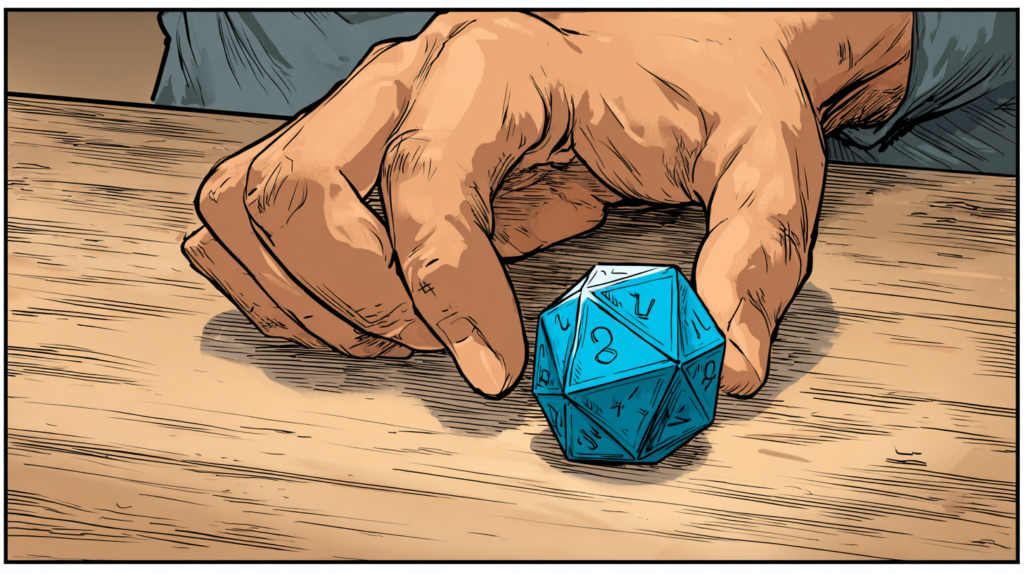
Here’s what happens next: you tell your number (in this case, 15) to the person running the game (we call that person the Dungeon Master, or DM for short). They are the one who knows the monster’s secret AC number.
They do a quick comparison in their head. If your number is equal to or higher than the monster’s AC, your attack hits!
Amazing! You get to roll some other dice to see how much damage you did. If your number is lower than the monster’s AC, your attack misses. That’s okay too! It happens to everyone.
That’s the whole game right there. The only job you have is to figure out which numbers from your character sheet to add to your d20 roll to get your total.
And I promise, it’s so easy. We’re going to find those numbers together right now.
Finding Your Character’s Two Special Numbers
Your character sheet has all the answers you need. I know it might look a little busy at first glance with all its boxes and words, but we only need to find two little numbers.
It’s like a treasure hunt.
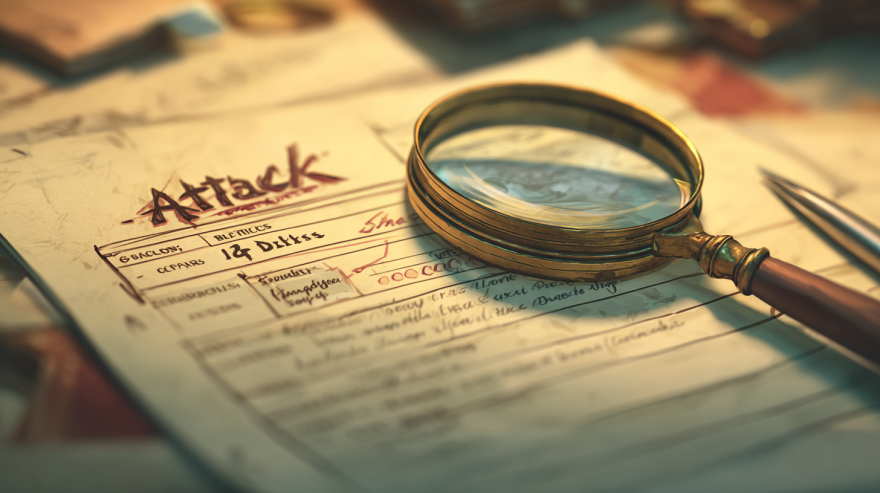
Let’s go on that hunt together to find them. I’ll be your guide.
Number One: Your Natural Talent (Your Ability Modifier)
First, let’s look for your Ability Scores. These are the six big numbers for Strength, Dexterity, Constitution, Wisdom, Intelligence, and Charisma.
Don’t let all those names scare you. For right now, you only need to find the one that matches the weapon you want to use. This is the key.
- Is your character using a heavy weapon like a sword, an axe, a mace, or even just their fists? If so, you will use Strength. Strong characters hit harder with these kinds of weapons.
- Is your character using a precise or quick weapon like a bow, a dagger, a sling, or a rapier? If so, you will use Dexterity. Quick and accurate characters are better with these kinds of weapons.
Now, here’s a cool little twist. Some weapons, like a rapier or a dagger, have a special property called Finesse.
This is just a fancy word that means you can choose to use either your Strength or your Dexterity modifier for your attack roll, whichever number is higher!
So if you’re a quick character with high Dexterity but low Strength, you can use a rapier and still be effective. You get to pick the better number. How cool is that?
Got it? Great. Now, right next to that big score is a smaller number. It will almost always have a plus sign (+) in front of it, like +3 or +4.
This smaller number is your Ability Modifier. This number is a bonus that shows how naturally good your character is with that kind of action.
A high Strength score means a high Strength modifier, which means your character is naturally strong and good at hitting things with strength-based weapons.
Number Two: Your Training (Your Proficiency Bonus)
Now, let’s find the second number. This one is called your Proficiency Bonus. This number represents all the training and practice your character has had.
Maybe they went to fighter school, or they’ve been practising with a bow every day in the forest.
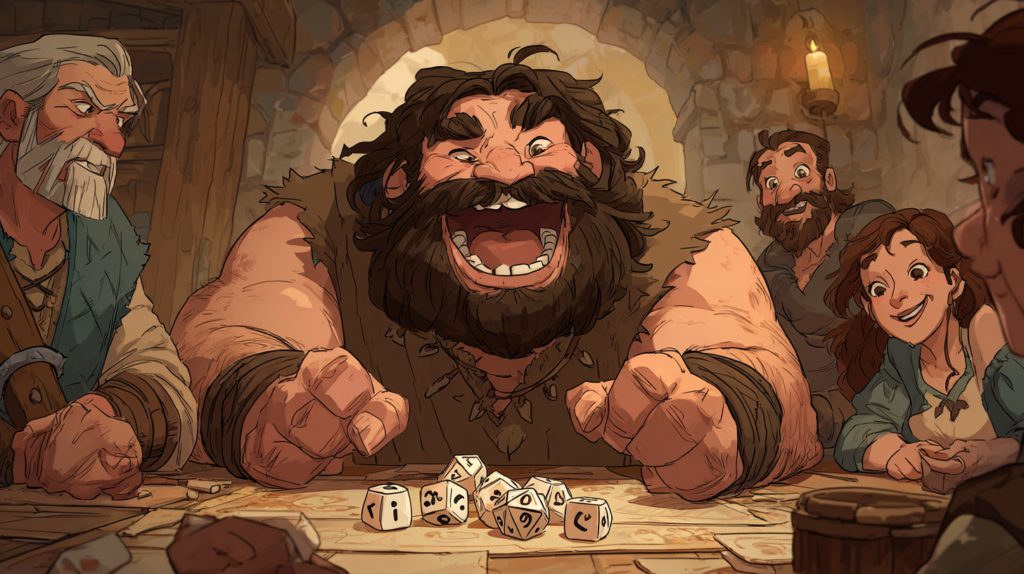
Every beginner character is already pretty good at what they do, so this bonus starts at +2 for all brand-new level 1 characters. It’s the same for everyone at the start.
You can usually find this number in a little box or bubble near your character’s level and class.
If you are experienced with the weapon you are using, and you almost always are with the simple weapons you start with, you get to add this bonus to your roll.
Being “proficient” just means you’re trained in it.
So, if your character sheet says you’re proficient with a longsword, you’re good to go.
So, let’s put it all together. The simple recipe for almost every attack is this:
d20 Roll + Ability Modifier + Proficiency Bonus = Your Attack Total
You just add those three things together. That’s your number. You tell that number to your DM. It’s that straightforward.
A Quick Note on Punching (Unarmed Strikes)
What if you’re in a bar fight and you don’t have your weapon? Or what if a wizard gets grabbed and just has to punch a goblin?
That’s called an unarmed strike. The rule for this is just a little bit different, so I wanted to mention it quickly so you’re not surprised.
You are always considered proficient with your own fists. So you do get to add your Proficiency Bonus to the attack roll to see if you hit.
That makes sense, right? You know how to throw a punch. However, you only add your Strength modifier to the roll, not your Dexterity.
Punching and kicking are about brute force. So, for a standard punch from most characters, you would roll:
d20 + Strength Modifier + Proficiency Bonus
The only exception to this is if you’re playing a character from the Monk class. Monks are martial arts experts, so they have special rules for unarmed strikes that make them much better.
But for most characters like fighters, wizards, and rogues, the formula above is what you use for a good ol’ punch.
The Monster’s Secret Number (Armor Class)
We’ve talked about the number you’re building on your side of the contest.
Now let’s talk about the number you’re trying to beat: the Armor Class, or AC.
Here is some wonderful news that takes the pressure off of you: you don’t need to know the monster’s AC. You don’t have to memorise it or guess it.

That is 100% the DM’s job. Your only job is to roll your dice, add your two numbers together, and tell the DM the final total.
They will then look at their secret notes and tell you the cool result: “That hits!” or “That just misses!” They might even describe it in a fun way, like “Your sword scrapes off its thick hide!”
This system is great because it means you have one less thing to worry about. You can just focus on your character.
But it does help to understand what makes a monster’s AC go up or down. Think of it like this:
- A Zombie might have an AC of 8. It’s slow, clumsy, and falling apart. It’s not hard to hit. You just need to land a good blow.
- A Goblin might have an AC of 15. It’s quick, jumpy, and has a little shield. It’s a bit harder to hit because it can block and dodge.
- A Knight in full plate armor might have an AC of 18. It’s covered head-to-toe in heavy metal armor. It’s very hard to find a weak spot to hit.
- An Ancient Dragon might have an AC of 22 or higher! Its scales are as hard as rock, and it’s magically protected. It’s extremely difficult to hurt it with a normal weapon.
Part of the fun of the game is slowly figuring out the monster’s AC during the fight.
You might roll a 14 and miss, then roll a 15 and hit. “Aha!” you think, “So its AC is 15!”
It becomes a little mystery you get to solve while you play. It makes those hits feel even more satisfying.
A Real Example from My First Game
Let’s make this real with a story from one of my very first games. It might help to see it in action.
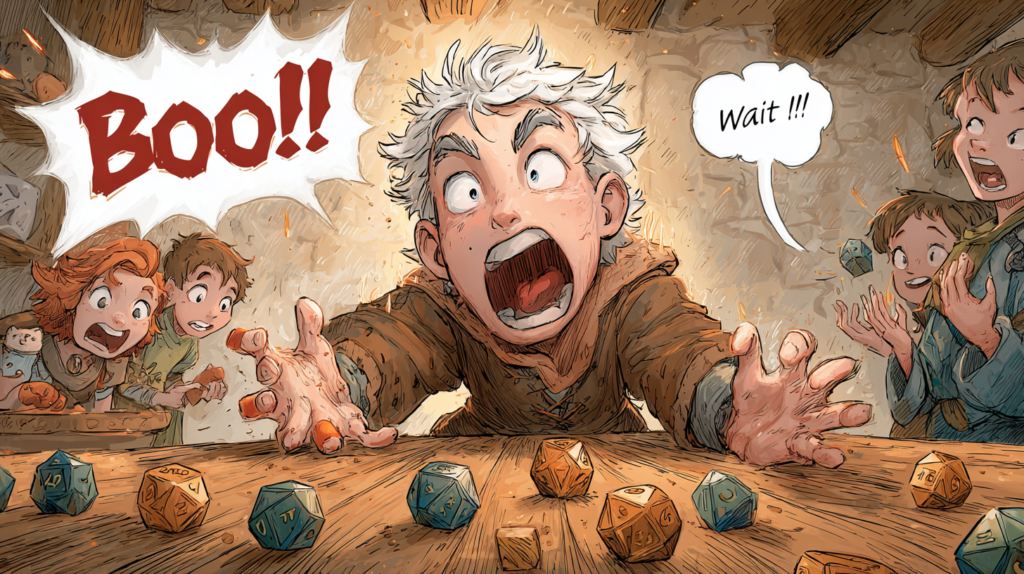
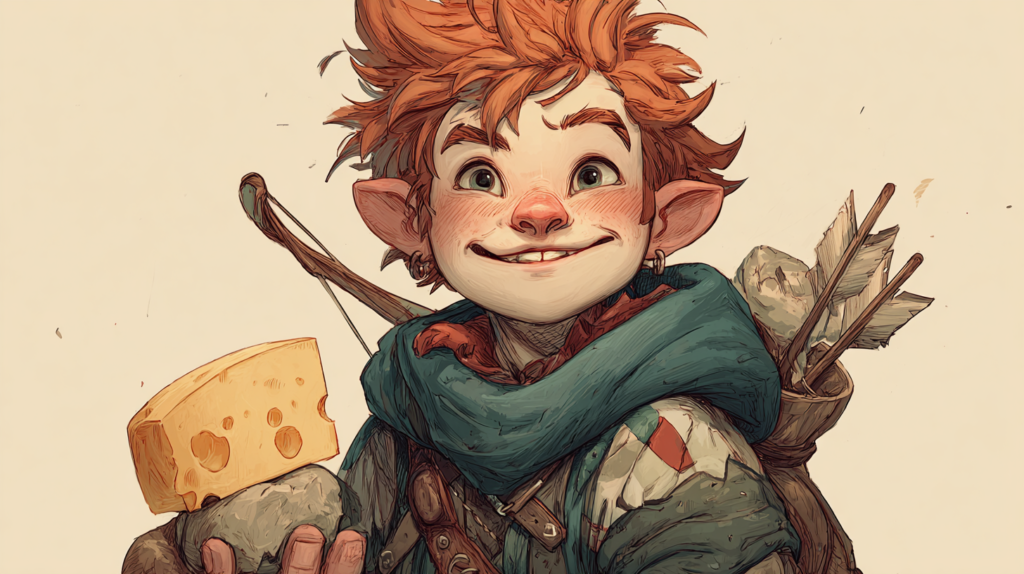
My first character was a cheerful Halfling rogue named Pip. Pip loved two things: finding delicious cheese and his trusty shortbow.
Let’s use Pip as our example.
The DM describes a mean-looking Goblin peeking out from behind a tree. Pip decides to shoot it with his shortbow.
- Find the Ability Modifier: First, I need to know what ability my weapon uses. A shortbow requires accuracy, so it uses Dexterity. I look at Pip’s Dexterity score on his sheet. It’s a 16. I know that the modifier for a 16 is +3. I remember that by looking at the chart on the sheet, it’s usually right there.
- Find the Proficiency Bonus: Next, I find Pip’s Proficiency Bonus. He’s a Level 1 Rogue, so his bonus is +2. I check my sheet, and yes, I am proficient with a shortbow. So I get to add this.
- Add them together: Now I add my two numbers: +3 (Dexterity) + +2 (Proficiency) = +5. So, Pip adds +5 to every single attack roll he makes with his shortbow. I might even write “+5” next to the shortbow on my sheet so I don’t have to add it every time.
The action happens! The DM says the Goblin is making a funny, rude face at us. I say, “Pip fires an arrow from his shortbow!”
I grab my d20, give it a good shake for luck, and let it roll across the table.
- The d20 lands on an 11. I do the quick math in my head: 11 + 5 = 16. I tell the DM, “I got a 16 to hit.”
- The DM knows the Goblin’s AC is 15. My 16 is higher! The DM smiles and says, “The arrow zips through the air and hits the Goblin right in the arm! It lets out a sharp yelp of pain. Nice shot! Roll your damage!” I then get to roll the shortbow’s damage die, which is a six-sided die (a d6), to see how much it hurts.
- What if the d20 had landed on a 9 instead? My math would be: 9 + 5 = 14. I’d tell the DM, “I got a 14.” The DM would then say, “The arrow sails just over the Goblin’s head and disappears into the bushes behind it. It dodged at the last second!” A miss! And that’s okay. It happens to everyone. I’d just try again next turn.
See how that works? It becomes a rhythm. Roll, add your number, and say the total. The DM tells you what happens.
It feels really good when it becomes automatic and you don’t even have to think about it.
A Quick But Important Note on Damage
I’ve mentioned rolling damage a couple of times. I want to be super clear: figuring out if you hit and figuring out how much damage you did are two completely separate steps.
They use different dice and different numbers.
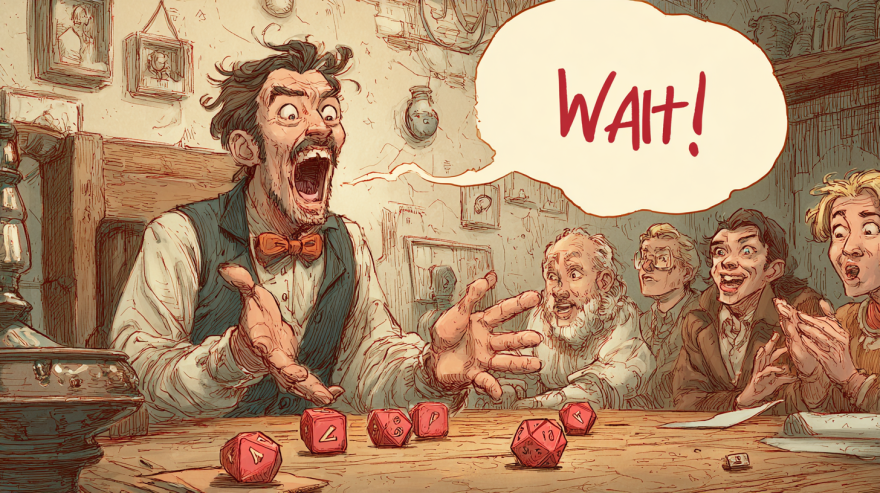
The d20 and the math we just did are only for answering the question: “Do I hit?” Once the DM says yes, that question is answered.
Now you move on to the next question: “How much did it hurt?”
You answer that by rolling your weapon’s damage dice. This is almost always a smaller die, like a d6 or a d8. The number you roll on that die, plus sometimes your Ability Modifier (but not your Proficiency Bonus!), is the damage.
But that’s a topic for another day. For now, just know that hitting and damaging are two different roles. You’ve mastered step one!
A Note on Using Two Weapons
Later in that same fight, something different happened. The Goblin got mad and ran right up to Pip! He was now way too close for Pip to use his bow effectively.
So, Pip quickly put his bow away and pulled out two shortswords instead.
I knew I could attack with one sword using my main action.
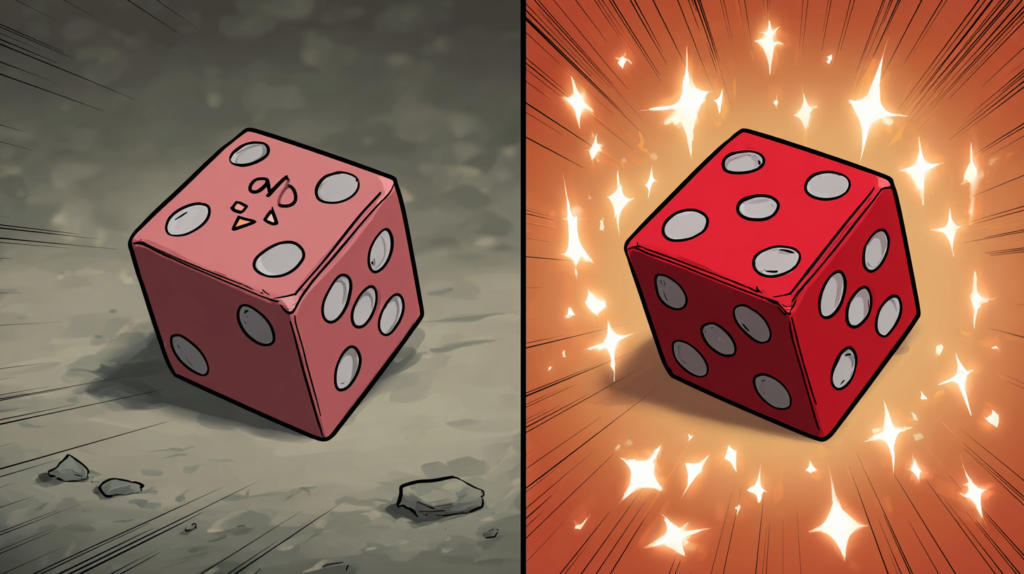
Because a shortsword is a finesse weapon (meaning you can use Dexterity for it), I would still use my Dexterity modifier (+3) and my Proficiency Bonus (+2). My total was still +5 to see if I hit.
But I also wanted to attack with the other sword in my other hand.
This is called Two-Weapon Fighting. Here’s the important part that I had to learn: doing this second attack uses your Bonus Action.
A Bonus Action is a special, smaller thing you can do on your turn, if you have an ability that allows it. Two-weapon fighting is one of those things.
So I said to the DM, “And I use my Bonus Action to attack with my other shortsword.”
The rule for this second attack is: you still add your Ability Modifier and Proficiency Bonus to see if you hit.
So for that second attack, I would still roll my d20 and add my +5.
That doesn’t change. However, and this is the tricky part, if you hit with that second attack, you do not add your Ability Modifier to the damage roll unless your character has a special feature called the “Two-Weapon Fighting” style. It’s a bit of a weird rule, but that’s how it works!
So my second attack might hit, but it would do a little less damage than the first. It’s a trade-off: you get an extra chance to hit, but it might not hurt as much.
The Best and Worst Rolls
Now, let’s talk about two special numbers on the d20: the 20 and the 1.
If you roll a 20 on the d20, that’s called a natural 20 or a critical hit. It’s the best roll you can get! It doesn’t matter what the monster’s AC is or what your bonuses are. A natural 20 is always a hit, and it’s always an extra good one.
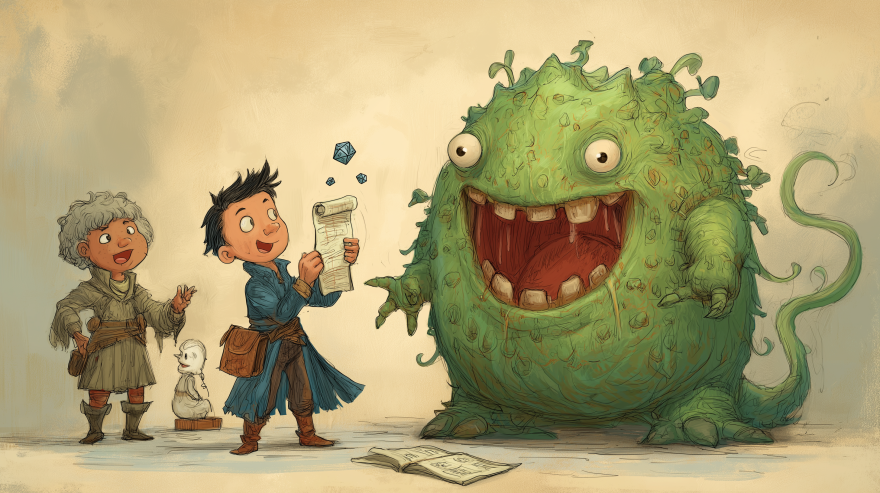
Usually, you get to roll all your damage dice twice! So if your sword normally does 1d8 damage, on a critical hit, you would roll 2d8. It’s a fantastic feeling.
For an attack roll, a natural 1 is always a miss, no matter how high your bonuses are. This is the only consequence of a natural 1 in the official rules.
While many Dungeon Masters add extra penalties for a ‘critical fail,’ such as your sword getting stuck or you tripping, these are house rules and not part of the standard D&D 5e game.
It’s important to clarify with your DM what house rules they use.
It’s all in good fun and adds to the story. Everyone has these moments, so just laugh them off!
Why This is So Helpful – It’s About More Than Math
Knowing how to do this yourself does something amazing: it lets you forget about the rules and just play the game.
It changes the experience from feeling like homework to feeling like an adventure.
First, it gives you confidence. When it’s your turn, you can act right away. You don’t have to pause the game and ask, “What do I add again?”
You can just roll the dice, know your number, and announce it clearly.
You feel like a hero who knows their stuff. This makes the game move faster and smoother for everyone, and it makes you feel really good about yourself.
Second, it helps you make smart choices during the game. Knowing what my bonuses were helped me decide what to do when the Goblin got close to Pip.
I knew I could switch to my shortswords and still have a good chance to hit because I knew I still got to add my +5. That knowledge gave me a good option.
If I didn’t know how it worked, I might have thought my turn was wasted because I couldn’t use my bow. Understanding the basics opens up more possibilities for your character.
When you’re not worried about the math, you can focus on the fun part: the story and the description! Instead of just saying, “I hit the Goblin,” you can get into it:
“Pip, frustrated that his shot missed, drops his bow, yells a Halfling curse word, and tries to jab his sword at the Goblin’s legs!”
The numbers are just the rules; the story you and your friends tell together is the real game. The rules are just there to help decide what happens in the story.
The One Mistake Everyone Makes (And How to Skip It)
I want to tell you a funny and honest story about my friend, Tom. Tom was playing a mighty Barbarian for the first time.
He was really excited. On his first turn in combat, he got really into it, rolled his d20, and it came up a 19.
He was so sure that such a high number would hit that he immediately grabbed his big, chunky damage dice and rolled them across the table, shouting, “I do 12 points of damage! Yeah!”
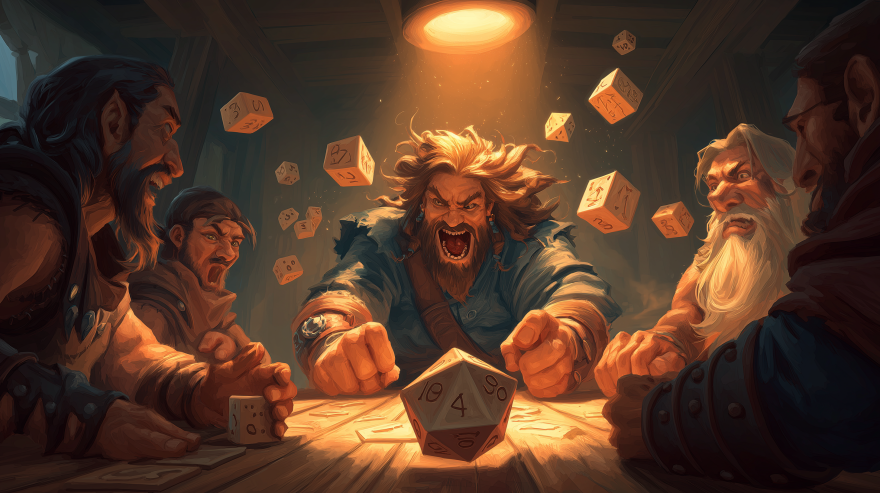
The DM smiled a kind smile and said, “That is awesome damage, Tom… but what was your total to hit?” Tom had completely forgotten to add his bonuses!
He was just looking at the number on the die itself. His actual total was 19 + 4 = 23, which was definitely great.
But what if he had rolled a 5? 5 + 4 = 9. If the monster’s AC had been 15, he would have missed, and he would have felt sad that he got all excited about damage for nothing.
This is the number one, most common mistake new players make: rolling damage before they know if they hit. It comes from excitement, and that’s a great thing!
But it can lead to a little bit of a letdown.
The golden rule is this: Take it one step at a time. Be patient.
- Roll your d20.
- Add your bonuses together. Tell the DM the total.
- Wait for the DM to say, “That hits!” (This is the most important step! Wait for the okay!)
- After you hear the DM say “hit,” you pick up your damaged dice and roll them.
This actually makes the game more exciting for everyone. There’s a moment of suspense where the whole table waits to hear if the attack lands.
Then, when the DM says “Hit!” everyone gets to celebrate before you roll the damage.
It’s a good habit that saves you from a little bit of disappointment and makes the successes feel even better.
TL;DR
- Grab your d20 (the twenty-sided one).
- Roll to hit: Add your Ability Modifier and your Proficiency Bonus (if you are proficient with the weapon) to your d20 roll.
- Ability Modifier: Use your Strength modifier for most melee weapons, or your Dexterity modifier for ranged weapons and weapons with the Finesse property.
- Proficiency Bonus: It’s +2 for a new level 1 character.
- Tell your DM the total number. Your DM will tell you if your total meets or exceeds the target’s Armor Class (AC), and if it’s a hit or a miss.
- Check for a critical roll:
- If you rolled a natural 20 on the d20, it is an automatic hit and a critical hit.
- If you rolled a natural 1 on the d20, it is an automatic miss.
- Roll for damage if you hit.
- Roll the damage dice indicated for your weapon.
- Add the same Ability Modifier you used for your attack roll.
- If you scored a critical hit, you roll double the number of damage dice (for example, 2d8 instead of 1d8) and add your normal modifiers.
- If you miss, that’s okay! You may still have helped your party by learning something, such as how an enemy responds to attacks or what its armor looks like.
Conclusion
You are going to do just fine. I know this might feel like a lot of words now, but when you’re actually at the table with your friends, it will click.
It will become second nature. The whole point of this game is to have a fun, shared adventure with your friends.
The dice and the numbers are just there to help decide what happens in the story. They are tools, not the main event.
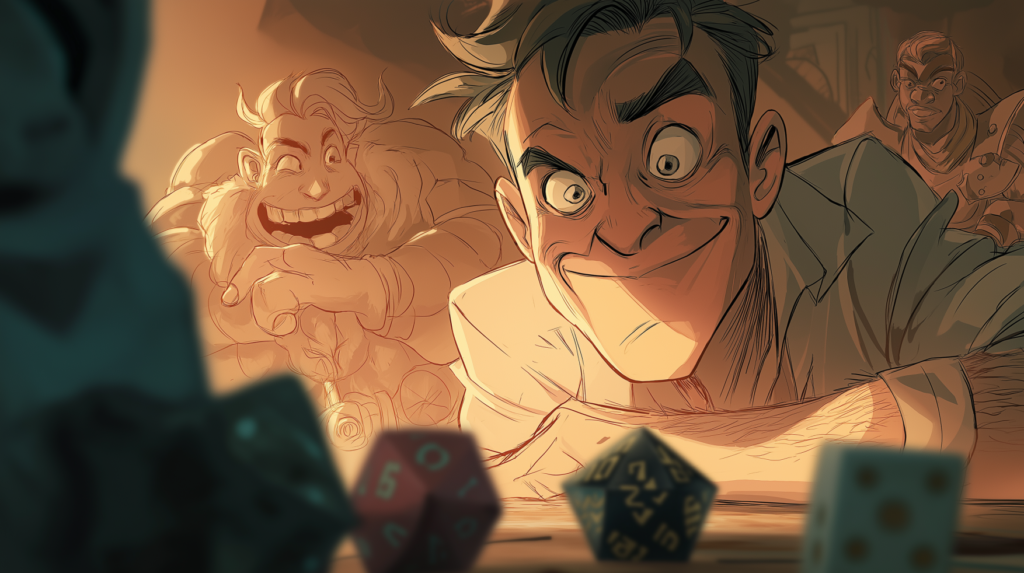
If you forget what to add, just ask. “What’s my Proficiency bonus again?” or “Do I add my Strength or Dexterity to this?” are perfectly normal questions.
Everyone at the table wants you to succeed and have a good time. We’ve all been where you are. Now go on, grab your dice, be brave, and have an amazing adventure.
I’ll be rooting for you.
Frequently Asked Questions (FAQs)
1. What happens if I roll a 1 on the d20?
A roll of 1 on the d20 is always a miss, no matter how amazing your bonuses are.
It’s often called a “critical fail” or a “natural 1.”
Many DMs will describe it in a funny or dramatic way, like your sword slipping out of your hand and sliding across the floor, or your bowstring snapping. It’s all in good fun!
2. I’m a wizard. Do I use this same rule for my magic spells?
You do, but only for spells that say they require a “spell attack” in the description.
For those spells, you won’t use Strength or Dexterity. Instead, you will use your spellcasting ability modifier. For a Wizard, this is Intelligence.
For a Cleric, it’s Wisdom. For a Bard, it’s Charisma. You still add your Proficiency Bonus. So a Wizard’s “to-hit” for a spell would be: d20 + Intelligence modifier + Proficiency Bonus.
3. I’ve looked all over and I still can’t find my Proficiency Bonus on my sheet. Help!
It’s okay! Don’t stress. It’s often in a small box near your character’s class and level.
If you’re using a pre-made character sheet from the official D&D starter set, it’s usually written right next to your weapons in the “Attacks” section.
The easiest thing to do is just ask your DM or a friend at the table. “What’s my Proficiency Bonus?” is a very, very normal question that people ask all the time. No one will mind.
4. I added everything up right and got a 17, but the DM said I missed. Is the DM being mean, or did I do something wrong?
No, not at all! You almost certainly did nothing wrong. This just means the monster has an Armor Class higher than 17. Maybe it’s 18 or 19.
Some monsters are just really, really hard to hit because they have magical defences or incredible armor.
That’s not the DM being mean; it’s just the monster being tough! It makes the fight more challenging and exciting.
You might need to try a different tactic, like using a spell that forces the monster to make a saving throw instead of you making an attack roll.
