
Homebrew Rule: The MVP Award in Dungeons & Dragons

Introduction
Let me ask you something: you’re in the middle of a Dungeons & Dragons campaign. There’s a huge dragon in front of you, and you and your group are fighting for your lives.
One of your companions made a clever move, another inspired the group with their words, and someone else made a joke that made everyone burst into laughter.
After all is said and done, who gets the thank you?
Sure, there’s always a winner in combat, but D&D isn’t just about fighting; it’s about creating memories, telling stories, and working together as a group.
This is where this experimental homebrew MVP Award system comes in – though it’s worth noting this has no basis in official D&D rules.
Forget just counting kills and damage. This homebrew rule is about celebrating all the different ways people help, from smart plans and great roleplaying to simply keeping the group from falling apart.
The MVP Award is a homebrew rule I’ve created where players vote for the Most Valuable Player in your group, but it’s not based solely on combat.
Maybe you saved someone’s life by healing them at just the right time. Maybe your bard charmed an NPC in a hilarious and unexpected way.
Or perhaps you just made everyone laugh with a well-timed quip. In D&D, these moments count.
The MVP Award is designed to celebrate those moments, the ones that make the game memorable and fun for everyone.
But why should you care? D&D is more fun when everyone feels like they matter, and the MVP Award aims to help make that happen.
It’s not just about who dealt the most damage in the fight; it’s about recognising how everyone contributes to the overall experience.
When working properly, the MVP Award can help ensure that everyone on the team, regardless of their experience, feels valued for their part.
Should we take a look at this experimental system?
What Is the MVP Award and Why Should You Consider It?
The MVP Award is an experimental homebrew rule you might consider adding to your game where, at the end of each session, everyone votes for who they think was the Most Valuable Player.
The MVP could be anyone: the fighter who took a massive hit for the team, the wizard who cleverly solved a tough puzzle, or even the player who was simply the best at keeping the group laughing.
Now, I know what you’re thinking, “How do you judge who’s the MVP?”
Well, the answer is simple in theory but complex in practice. It’s about recognising the contribution that made the game more enjoyable for the entire group.
In traditional D&D games, it’s easy for players who are excellent at combat or who know the rules really well to take centre stage.
But what about everyone else? What about the player who roleplays brilliantly, or the one who constantly supports the group behind the scenes?
When implemented carefully, the MVP Award can give everyone a chance to shine.
It recognises that while some players are great at combat, others are great at adding to the story, solving problems, and making sure the group works together smoothly.
And that’s what makes this system potentially powerful – though results may vary by group dynamics.
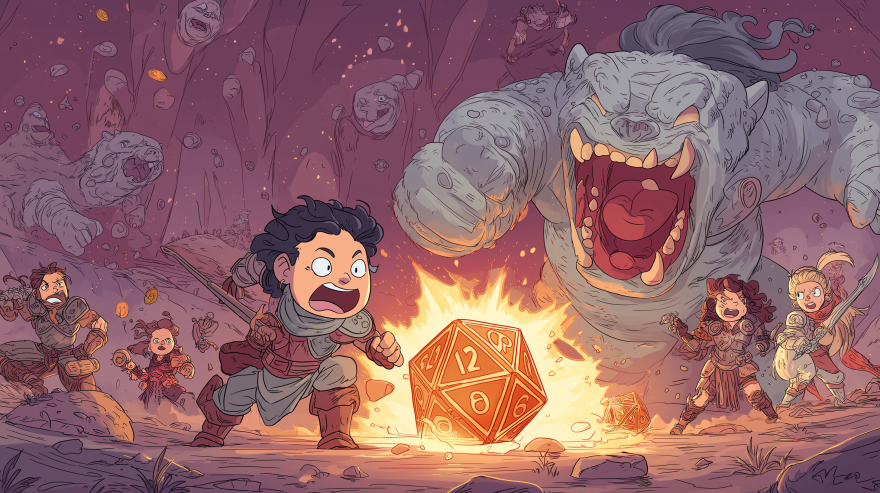
The MVP Award isn’t about making the game a popularity contest, though that’s a risk we’ll discuss later.
It’s about acknowledging the moments that matter, whether it’s coming up with a clever solution to a problem, providing emotional support to other players, or just being the person who makes the group laugh during a tough encounter.
When working properly, it can make D&D feel more like a shared experience, where every player’s contribution is recognized though results may vary by group.
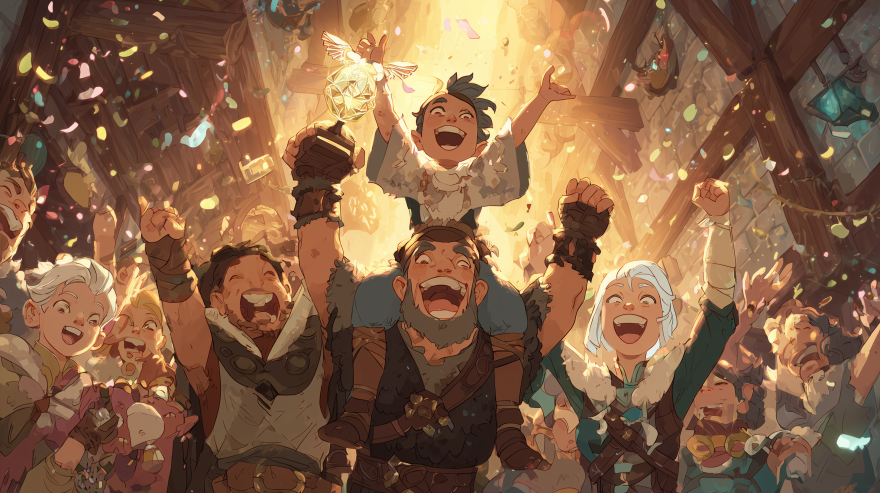
The potential beauty of this rule is that it allows for different kinds of victories. It’s not just about who can swing the biggest sword or cast the most powerful spell.
It’s about teamwork, creativity, and the shared moments that happen throughout a campaign.
When you play D&D with the MVP Award in mind, you might find that sessions become more engaging, and different players get their time to shine.
How Do You Vote for the MVP?
Now that you know what this experimental MVP Award is, let’s talk about how it actually works in your game. The process is straightforward, but implementation requires care.
At the end of every session, take a moment to reflect on what just happened in the game. Was there a particularly clever idea that helped the party?
Maybe someone made a huge sacrifice or took a risk to help out the group.
Maybe someone made a funny comment that lightened the mood or made everyone laugh. All of these moments can matter.
Here’s how the voting process works:
Think back on the session: Everyone should take a moment to think about what happened during the game. Who stood out? Was there a moment when someone did something especially clever or made the game more fun?
Don’t vote for yourself: This is an important rule. No one gets to vote for themselves because it’s all about recognising others. This keeps it fair and ensures the MVP is chosen based on what everyone else saw.
Vote and explain: Everyone votes for who they think was the most valuable player. But don’t just say, “I vote for John because he was awesome.” Explain why. Was it his quick thinking? His amazing roleplaying? Or his quick reflexes in a tough battle? Giving a reason makes the vote more meaningful and helps prevent popularity contests.
Count the votes: After the votes are in, the player with the most votes is crowned the MVP of that session. Simple. But here’s the key point: the MVP doesn’t need to be the one who killed the monster or completed the quest first. The winner could be the player who gave the group the most fun moment, helped make tough decisions, or kept everyone engaged in the story.
This voting process aims to ensure that everyone’s contribution is noticed.
And it keeps the game lighthearted because it’s not a competition for the best fighter, it’s a celebration of the moments that made the game enjoyable for everyone.
Important Considerations Before Implementing
Before you decide to add this system to your game, here are some crucial factors to consider:

This system works best with established groups who trust each other.
If your players don’t know each other well or there are existing social tensions, the MVP Award might create more problems than it solves.
It may create pressure or anxiety for shy players or newcomers.
Some players might feel constantly evaluated or worry they’re not contributing enough to earn recognition. This can make the game less fun for these individuals.
Watch for popularity contests rather than genuine contribution recognition.
Despite the “explain your vote” rule, players might still vote based on friendships rather than actual contributions to the game.
Some groups may find it distracting from collaborative storytelling.
Official D&D guidance emphasizes that “it’s not a competition” and focuses on cooperative storytelling. This system introduces a competitive element that may not align with all groups’ preferred play styles.
Consider whether your group actually needs formal recognition systems.
D&D already has the Inspiration system for recognizing good roleplay and creative solutions. Ask yourself if adding another recognition system is necessary or helpful.
Why Should You Consider Adding the MVP Award to Your Game?
If you think your group might benefit from this system and the considerations above don’t raise red flags, here are the potential benefits:
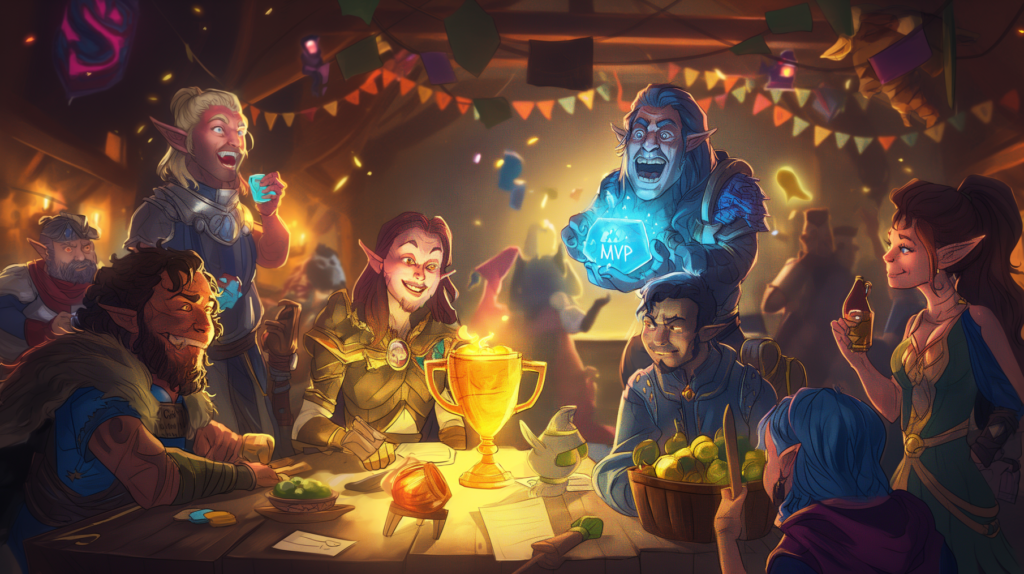
1. It May Encourage Teamwork
The MVP Award isn’t about glorifying one person. Instead, it’s about highlighting the teamwork that makes the game great. D&D is all about the party working together to overcome challenges.
By recognising everyone’s contributions, this system might reinforce the idea that everyone plays a role in the success of the group, whether you’re healing your friends in the backline, solving puzzles, or leading the charge into battle.
2. It’s Intended to Give Everyone a Chance to Shine
Some players might not feel as confident because they don’t excel in combat or because they’re new to the game. However, with the MVP Award, different types of contributions can be recognised.
You don’t have to be the best at combat to be the MVP.
You could have roleplayed your character’s backstory in a way that brought depth to the story, or you could have made everyone laugh with your quirky decision-making.
The MVP Award aims to give everyone a chance to feel like they’re a valuable part of the game, though effectiveness varies by group dynamics.
3. It Shifts Focus from Combat to Broader Contributions
While combat is important in D&D, it’s the roleplaying, the creativity, and the camaraderie that make the game unforgettable.
The MVP Award emphasises that it’s not just about who can swing the hardest or cast the most spells. It’s about the moments that make the game fun.
When you focus on those moments, you might find that your sessions are more enjoyable and engaging for everyone involved.
4. It May Foster a Positive Atmosphere
The MVP Award aims to create a positive environment at the table.
Instead of focusing on competition or who’s the “best” at the game, it shifts the attention to what made the game fun for everyone.
It’s about recognising the effort that each person puts into the game, whether that’s through strategy, humour, roleplaying, or simply being supportive.
This might make the game more about collaboration and enjoying the experience together.
How the MVP Award Could Improve Roleplaying
The MVP Award might be beneficial for those who love to roleplay.
Here’s why: D&D is all about becoming your character and telling a great story.
And what’s more fun than having your creative moments recognised?
When you roleplay, it’s not just about killing monsters or completing quests; it’s about the moments that make your character come to life.
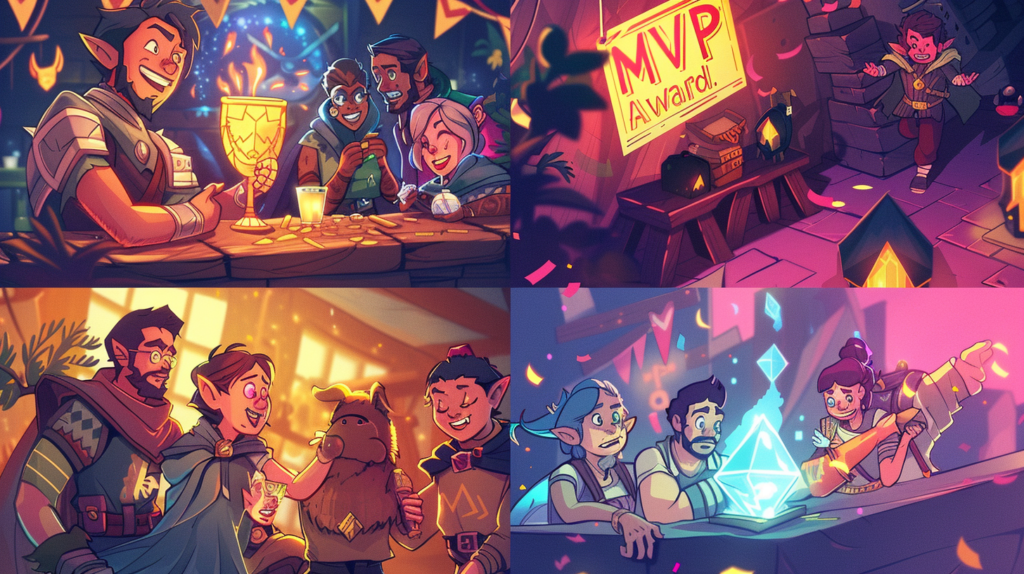
Your character may have made a tough decision that changed the course of the story.
Maybe you had a moment of great roleplaying where you delivered a moving speech or had an emotional interaction with another character.
These are the moments that bring the game to life, and the MVP Award aims to ensure that they’re recognised.
When players are encouraged to think about how they can enhance the story, the game might become more immersive.
Everyone starts to think about how their actions affect the world around them, which could make the roleplaying experience more enjoyable for everyone.
The MVP Award might also make players more willing to take risks with their characters, knowing that those risks could lead to recognition. This could keep the game fresh and exciting.
The MVP Award helps break the cycle of only valuing combat and encourages the group to appreciate the full experience of D&D.
It aims to make the game feel less like a battle simulator and more like a collaborative story where everyone has something valuable to contribute.
Why the MVP Award Might Help New Players
When you’re new to D&D, it can feel overwhelming. There are a lot of rules to learn, and it can sometimes be hard to know how to contribute, especially when you’re surrounded by more experienced players.
The MVP Award is intended to make sure new players feel included and appreciated, though this doesn’t always work in practice.
You don’t have to know every rule or be great at combat to make a big impact. You could offer a great idea to the group, or you could roleplay in a way that surprises everyone.
The MVP Award aims to ensure that those moments don’t go unnoticed, and that recognition might boost confidence in new players. It lets them know that even if they’re still learning, their contributions can matter.
However, it’s important to note that research shows recognition systems can sometimes create pressure rather than confidence for newcomers, especially if they feel like “outsiders” in an established group.
Monitor new players carefully to ensure the system is helping rather than hindering their enjoyment.
For new players, the MVP Award can potentially help them engage with the game in a way that doesn’t require expert knowledge of the rules.
You can still be creative and supportive and make the game enjoyable for others, and that might get noticed.
The MVP Award might help new players take risks with their character because they know that it’s about making the game fun, not just being good at combat.
How the MVP Award Might Build Better Teamwork
D&D is a team game. And the MVP Award aims to encourage teamwork in a fun and rewarding way.
Players might start thinking about how their actions can benefit the group. Maybe you don’t need the MVP for yourself, but you can still help others get recognised for the great things they’re doing.
It also aims to make sure that no one feels left out.
Every contribution might count, whether it’s someone getting the killing blow or someone else coming up with a plan that saves the day. Everyone has a role, and the MVP Award intends to make sure those roles are valued.
And when everyone works together and has each other’s backs, the story might become richer.
Teamwork can make D&D feel more like a shared experience than a game where people play to win. And isn’t that the point of the game?
The MVP Award Can Inspire New Ideas and Fresh Perspectives
By recognising different types of contributions, this rule might encourage players to step out of their comfort zones and try new things. It could challenge everyone to think about how they can add to the story in creative and unique ways.
Sometimes, it’s easy to get stuck in a rut. Players who specialise in combat might only focus on fighting, while others stick to solving puzzles or managing NPCs.
But the MVP Award might shake things up. It could encourage players to contribute in new ways.
A normally quiet player may step forward to help solve a major problem, or someone might add a fresh spin to an old character trait.
The MVP Award might make everyone think about what’s next, which could keep the game feeling new and exciting.
When NOT to Use the MVP Award
The MVP Award isn’t right for every table. Avoid it if:
- Your group already has social tensions or cliques. The voting system could exacerbate existing problems and create favourites.
- Players seem competitive rather than collaborative. If your players already compete for spotlight time, adding formal recognition might make this worse.
- New players feel intimidated or evaluated. Watch for signs that newcomers feel pressure to “perform” rather than simply enjoy the game.
- It becomes a popularity contest based on friendships. If votes consistently go to the same people regardless of contribution, the system isn’t working.
- Players start designing characters to win votes rather than for fun. The system should enhance existing play, not drive character creation decisions.
- Your group dynamics are already working well. If players already feel valued and recognized, adding a formal system might be unnecessary.
- Time constraints make voting feel rushed. The discussion should feel meaningful, not like a burden at session’s end.
A Few Things to Keep in Mind
While the MVP Award can potentially encourage participation, it’s important to remember several key points:
Avoid turning it into a popularity contest: The goal is to celebrate what makes the game fun, not who’s the most liked. Everyone should feel that their contributions matter. Monitor voting patterns to ensure they reflect genuine contributions rather than social dynamics.
Don’t let it overshadow the campaign: The MVP Award is a fun addition, but it should never take the focus away from the story or group dynamics. It’s about fun moments, not becoming the primary focus of the game.
Regular evaluation is crucial: Check in with your players regularly to ensure the system is working as intended. Ask if anyone feels the system is causing problems or pressure.
Have an exit strategy: Be prepared to discontinue the system if it’s not working. There’s no shame in trying something and deciding it’s not right for your group.
How the MVP Award Makes Every Session Feel Special
One of the potential benefits of the MVP Award is that it can add meaning to every session.
Even if your group only barely makes it through a fight, everyone might feel like their hard work was noticed and valued.
It’s the small moments that make D&D special, and the MVP Award aims to celebrate those moments in a way that makes everyone feel good about their contributions.
My Experience with the MVP Award: Why It Changed Our Sessions
Let me tell you about something that completely changed the way I looked at our D&D games: implementing this MVP Award system.
I know what you’re probably thinking – MVP sounds like it’s all about who can deal the most damage, right?
But trust me, once we added this experimental rule to our sessions, it opened up a whole new side of the game that I never realised was missing.
Before we started doing this, our games fell into the same pattern every time. Big combat fights were always the highlight.

Whoever did the most damage or killed the most enemies got all the attention.
And don’t get me wrong, I’m all for a good fight, but after a while, it started to feel like the game was only about who could swing the biggest sword or cast the flashiest spell.
What happened to all the cool stuff that happened outside of the fights? What about the funny moments, or the clever solutions to puzzles, or the amazing roleplaying?
People who were good at combat got all the praise, while others, especially newer players, got left in the dust.

Some players were shy, didn’t know all the rules, or weren’t as confident in battle. But that didn’t mean they weren’t contributing in awesome ways! And that’s where the MVP Award came in.
We decided to try it out as a fun little experiment. The idea was simple: at the end of each session, we’d vote for who we thought was the “Most Valuable Player.”
And it wasn’t just about who killed the most monsters or rolled the highest damage – not at all. It was about who contributed in a meaningful way to the story or the fun of the game.
It could be anyone: the player who made us all laugh, the one who thought of a clever plan to get us out of a sticky situation, or the one who roleplayed their character in a way that made the whole game feel more real.
The best part? You couldn’t vote for yourself.
At first, I wasn’t sure how it would work. I mean, who decides who gets the MVP when everyone’s doing different things?
But it actually turned out to be more engaging than I expected. And it definitely made more players feel included – though I should note that results varied depending on our group dynamics.
In one session, I remember a player who wasn’t great at combat but came up with the perfect idea to get past a tough puzzle. It wasn’t flashy, and it wasn’t some big heroic moment, but it totally saved the day.
They got the MVP vote, and it made them feel awesome, plus the whole group got to appreciate how clever they were.
Then, there was this one time when another player was just absolutely hilarious. We were in the middle of a serious scene, fighting off a bunch of goblins, when this person cracked a joke that made everyone burst out laughing.
It totally lightened the mood and made a tense moment way more fun.
And you know what? That person ended up getting the MVP vote, too. Not because they did the most damage, but because they made the session more enjoyable for everyone.
And here’s the thing: The MVP Award didn’t just boost the confidence of the players who got voted for, but it helped the entire group when it worked well.
We started to really pay attention to all the things people were doing, both in and out of combat. The fights were still exciting, but now the whole session felt more like a shared experience. It wasn’t just one or two players shining; different people got recognition at different times.
Even if you didn’t get the MVP vote, you knew your contribution might be noticed.
This made most players feel like they were part of the team, and it just made the whole thing more fun – though I should mention we had to address a few instances where voting seemed based more on friendship than contribution.
I think what I loved most about the MVP Award was that it made me look at the game differently. Instead of just focusing on the combat or the winning, I started thinking about the moments that made our game stand out.
Sure, combat was still fun, but it was the small moments, those little surprises and creative ideas, that made our sessions special.
Another interesting effect was that it gave newer players more opportunities to shine, though this didn’t always work perfectly.
They didn’t have to be experts at combat or know every rule to make an impact. They could be the one who had a brilliant idea, or the one who made everyone laugh during a tense moment.
I’ve seen players who were quiet at first become more involved, knowing that they didn’t have to be the best fighter to make a difference.
That recognition really helped boost their confidence and made them feel like they were an important part of the game, though I noticed we had to be careful that newer players didn’t feel pressured to “perform” for votes.
I think one of the better aspects of the MVP Award was how it brought the group together when it worked well. It wasn’t about individual glory anymore; it was about celebrating what each person brought to the table.
And by the end of each session, it felt like we had all contributed to the story, whether through a clever solution, great roleplaying, or just making the game more fun.
It wasn’t just about “winning” fights; it was about winning together, and that was a pretty good feeling.
So, if you’re thinking about adding the MVP Award to your own D&D sessions, I’d say consider it carefully. It’s a simple rule, but it can really change the dynamic of the game – sometimes for the better, sometimes in unexpected ways.
You’ll find that different contributions get recognised, not just the ones who can deal the most damage or land the killing blow.
It might make your sessions feel more like a team effort, and in my experience, that’s often what D&D is all about. Just be prepared to adjust or abandon the system if it’s not working for your particular group.
TL;DR: The MVP Award in D&D
MVP Award: An experimental homebrew rule where players vote for the “Most Valuable Player” based on their contributions to the session.
It is not just about combat; it highlights creativity, teamwork, and roleplaying.
Anyone can potentially win, regardless of experience level.
Aims to encourage teamwork, roleplaying, and more fun – though results vary by group.
Important: This has no basis in official D&D rules and may not be appropriate for all groups.
Conclusion
The MVP Award is a potentially interesting way to make your D&D sessions more engaging and inclusive, though it requires careful implementation and monitoring.
When working well, it can help players feel like they’re a part of the story and that their contributions are valuable.
By focusing on creativity, teamwork, and fun moments, it might shift the game away from just combat and add a layer of recognition for everyone involved.
However, this system isn’t right for every group. It works best with established players who trust each other and can handle the competitive element without it becoming toxic.
Groups with existing social tensions, very new players, or those who prefer pure collaborative storytelling without evaluation might find this system counterproductive.
If you do decide to try it, start with a trial period and be prepared to modify or discontinue the system if it’s not enhancing your group’s experience.
Remember that the goal is to make the game more fun for everyone, not to create pressure or competition where none existed before.
Give it a careful try in your next campaign if it seems like a good fit, but watch closely to see how it changes the experience for everyone at the table!
FAQs
1. Can the MVP Award be used every session?
Yes! The MVP Award can work for every session if your group enjoys it. It keeps things engaging and gives everyone a chance to be recognised. However, monitor whether it remains fun or becomes routine and meaningless.
2. Do I need to give a physical reward for the MVP?
No, the MVP Award is all about recognition. You don’t need to give anything physical, but a small token is totally fine if you’d like. The recognition itself should be the primary reward.
3. Can I change the MVP Award to fit my group?
Absolutely! It’s a homebrew rule, so feel free to adjust it however works best for your group. You can even add categories like “Best Roleplaying” or “Most Creative Solution” if that works better for your table dynamics.
4. Should the MVP always be a player?
Yes, the MVP should always be a player. But if you want to create a special recognition for the DM, go for it! There’s no limit to how you can customise the MVP idea.
5. Is this an official D&D rule?
No, the MVP Award is purely homebrew content with no basis in official D&D materials. Official D&D emphasises cooperative storytelling without competitive player evaluation. This system introduces elements that may not align with the official philosophy of the game.
6. What if the voting becomes a popularity contest?
This is a significant risk. If you notice voting patterns that consistently favor the same players regardless of contribution, or if votes seem based on friendships rather than game contributions, you may need to modify the system or discontinue it. Consider implementing more specific voting criteria or having the DM make the final decision based on player nominations.
7. What if a player never wins MVP?
This is a serious concern that can lead to player frustration and reduced enjoyment. If someone consistently goes unrecognised despite contributing, consider whether the system is working fairly. You might need to help the group recognise different types of contributions or consider rotating recognition to ensure everyone gets acknowledged over time.