
Understanding the Action Economy in D&D 5e: A Simple Guide

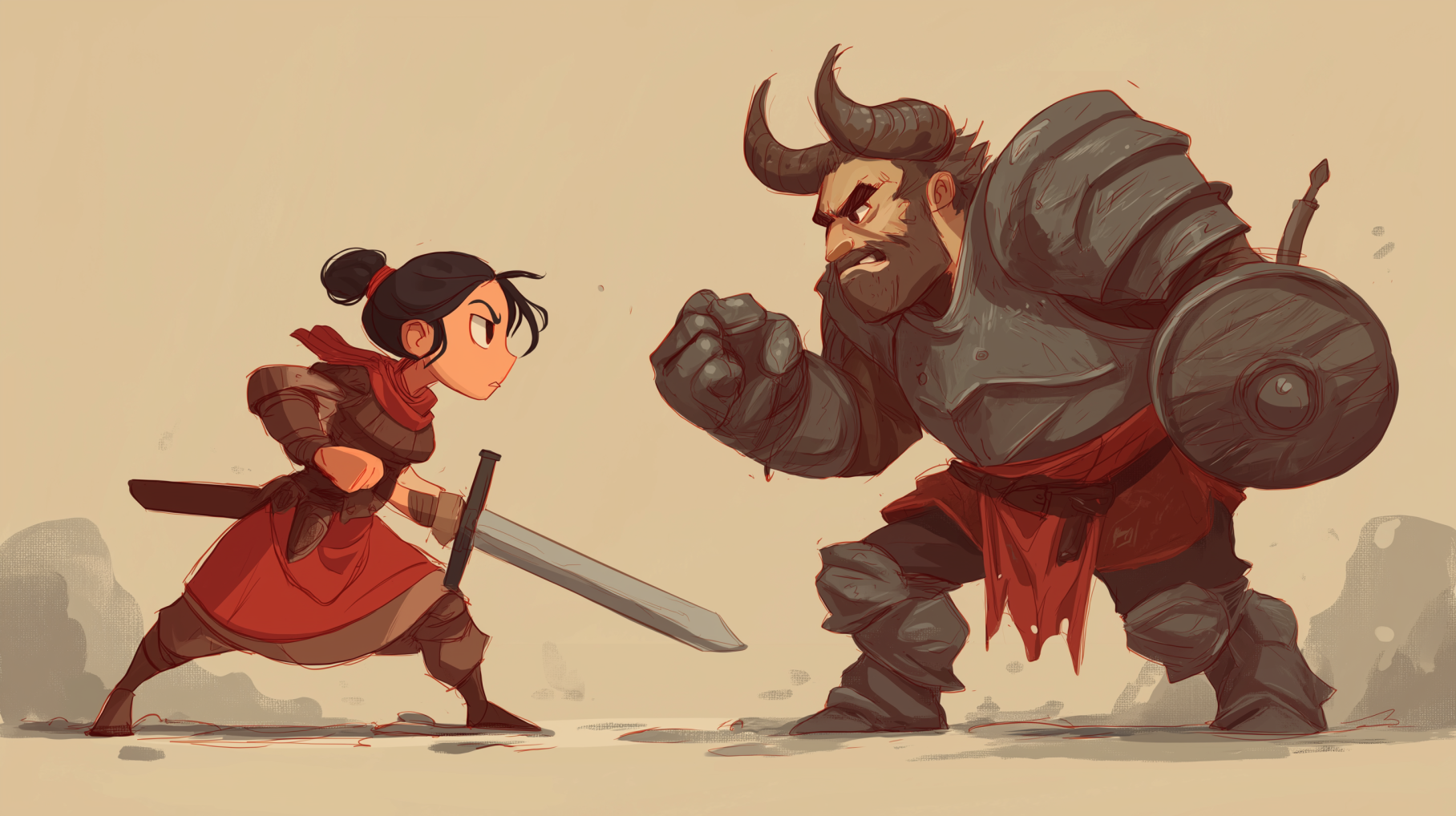
Have you ever played a game where one side kept getting to do more things than the other side? Like in a playground game where one team always gets the ball more times?
That’s basically what happens in Dungeons & Dragons fights, and it’s super important to understand.
Let’s talk about it in the simplest way possible!
What’s This “Action Economy” Thing?
Imagine you’re playing a game with your friends. On your turn, you get to move around the room, punch somebody, jump over a table, and then grab a shield. That’s four things you get to do.
But your friend only gets to move and punch. Who do you think is going to win? You! Because you get to do more stuff.
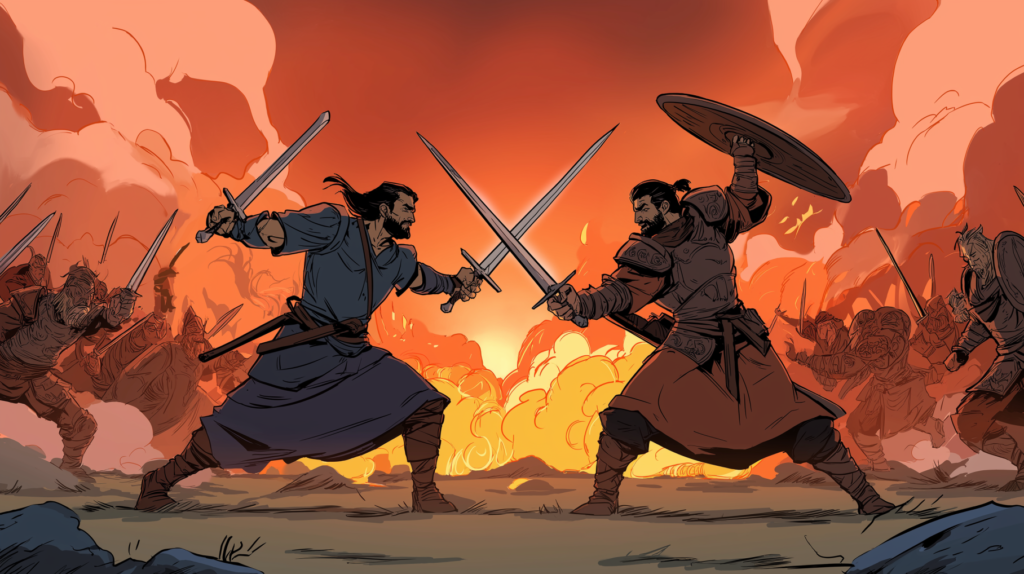
That’s action economy. It’s just counting how many things each person or creature gets to do on their turn during a fight. The person or team that gets to do more things is almost always going to win.
In a regular game, when you fight a monster, all the players together get to do WAYYY more things than the monster does.
That’s why boss fights are so hard to make fair: the bad guy gets totally outnumbered in terms of how many actions they get.
Let’s Count What Everybody Gets to Do
On your turn in a D&D fight, you basically get five kinds of things you can do:
1) You Get to Move Around
You can walk, run, or crawl as far as your legs can take you. If you’re fast, you get 30 feet. If you’re slower, maybe 20 or 25 feet. You can even use your movement in pieces: move forward 10 feet, then do something, then move another 10 feet.
2) You Get One Free Quick Thing
You can open a door, pull out your sword, grab something off a table, or do one other quick action without using up your main action. It’s like a freebie.
3) You Get One Big Action
This is your main thing for the turn. You can punch somebody, swing your sword, throw a ball of fire, run really fast, crouch down to hide, or cast a magic spell. You pick ONE big thing.
4) You Might Get a Bonus Action
Not everyone gets this. Bonus actions are special extras that some classes and abilities give you. If you’re a rogue, you can use your bonus action to zoom away or hide. If you’re a fighter with two swords, you can attack with your second sword. If your spell is a bonus action spell, you can cast it on top of your regular action.
5) You Might Get a Reaction
A reaction is something super quick you can do on someone else’s turn. The most common one is when an enemy walks away from you in a fight, you get to swat them as they leave. That’s called an opportunity attack. Some magic spells are also reactions.
When you add all of this together, a normal player character gets between 3 and 5 things they can do each turn.
Here’s the crazy part: if you’ve got four players in your group, that means your whole team gets between 12 and 20 things they can do every single round!
What About the Monsters?
The monsters fight with the same rules as players. They move, take an action, maybe take a bonus action, and maybe use a reaction.
However, and this is a significant issue, most monsters lack bonus actions.
Think about it. Almost every player class is designed to use bonus actions. You can dual-wield swords. You can cast bonus action spells.
You can use sneaky rogue tricks. But when you make a regular monster? Usually, it just attacks and stands there. No fancy bonus stuff.
This means a regular monster only gets about 3 to 4 things per turn. That’s already less than what most players get.
So if you put one monster against four players, the score is way lopsided. The players are getting 12-20 actions per round, and the monster is getting 3-4 actions. The monster is going to lose really fast.
What About Super Powerful Monsters?
There are special monsters that are supposed to be really, really powerful. These are monsters like dragons, liches, and demon lords. These special monsters get extra stuff called legendary actions and lair actions.
Legendary actions are like superpowers. When it’s not the monster’s turn, it still gets to do extra things!
Usually, the monster has something like 3 or 4 legendary action points, and different attacks cost different amounts. A simple move might cost 1 point, a regular attack might cost 2 points, and a super-powerful attack might cost 3 points.
Lair actions are even cooler! These only work if you’re fighting the monster in its own home. And during each round of fighting, at a certain time (the DM picks), something happens because the lair itself is attacking!
Maybe the ground shakes, or rocks fall from the ceiling, or magic blasts everyone. This gives the monster one extra action each round.
When you add legendary actions and lair actions together, a really powerful monster might get 6 to 8 things per turn. That sounds like a lot! But four players still have 12-20 things per turn, so the monster is STILL outnumbered.
Here’s the Real Problem
Let’s actually count an example. You’ve got a party of four adventurers fighting one really angry giant. Let’s count what happens each round:
The Players Get:
- Player 1: Move 30 feet + big action + bonus action + one special move = 4 things
- Player 2: Move 30 feet + big action + bonus action + one special move = 4 things
- Player 3: Move 30 feet + big action + bonus action + one special move = 4 things
- Player 4: Move 30 feet + big action + bonus action + one special move = 4 things
Total: 16 things the players can do
The Giant Gets:
- Move + big action + one special move = 3 things
- Total: 3 things the giant can do
The giant can only swing its big club at one player per turn. But all four players are attacking the giant at the same time every round. Even if the giant is huge and super strong, it’s getting attacked way more times than it can attack back.
It’s like if one person were playing tag against four other people. The one person is going to get tagged out really quickly because there are four people attacking them at once.
Real Examples That Show This
Some player abilities are really strong just because they give you extra actions:
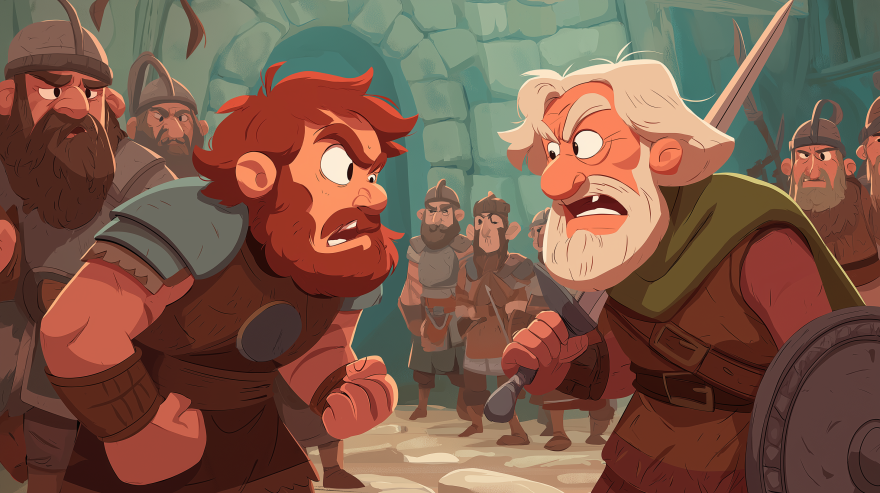
Fighters with Two Swords: These fighters can attack with their first sword as their big action, then attack with their second sword as a bonus action. That’s two attacks in one turn instead of one!
The Polearm Master Trick: Some fighters have a special ability called Polearm Master. When you use a long spear or similar weapon, you get a bonus action attack. PLUS, when enemies run UP to you, you get to hit them (not just when they run away). This gives fighters THREE chances to hit per turn instead of one!
Sneaky Rogues with Bonus Actions: Rogues can attack with their big action, then use their bonus action to zoom away, hide, or slip past enemies. They get to both attack AND escape in one turn!
Magic Bonus Action Spells: Some spells are cast as bonus actions. This means a cleric can cast a big lightning spell as their main action, then cast a healing spell as a bonus action. That’s TWO spells in one turn!
All of these make a huge difference because they give players extra things to do. The more things you can do, the more likely you are to win.
How Do DMs Fix This?
If you’re the Dungeon Master (the person running the game), you probably want to make fights that are actually scary and challenging.
But if you only use one monster, the players are going to destroy it super fast. So what do you do?
Add More Bad Guys
The easiest fix is not to fight just one monster. Have the boss monster plus some weaker helpers. If you’ve got four players, have five bad guys on the other side. Now the action economy is more balanced! The players still have more stuff they can do, but not OVERWHELMINGLY more.
Give the Boss Extra Powers
If the boss is super important and supposed to be fought alone, give it legendary actions. These let the boss do more stuff on their turn. The boss still probably won’t be as strong as four players working together, but it’ll be way harder to beat.
Make the Environment Attack
The place where you’re fighting can help the bad guys. Maybe there’s a crumbling ceiling that drops rocks. Maybe there’s lava that shoots up. Maybe there are magic circles that blast people. These environmental hazards act like extra attacks for the bad guys.
Use Up the Players’ Resources First
If the players have already fought three other monsters before they get to the boss, they’re tired. They’ve used up their best spells. They can’t use their special abilities anymore. This makes them weaker, so the boss fight is harder.
Make Sure the Bad Guys Go First
If the bad guys win the initiative roll (the roll that decides who goes first), they get to attack the players BEFORE the players can react. This helps balance things out a little bit. If the bad guys go last, the players will have beaten them up a ton before they even get one turn.
Why This Matters So Much
Understanding action economy isn’t just boring math; it actually changes whether your game is fun or not.
If the players outnumber the monsters in terms of actions, the fight is boring. The players just watch their enemies fall over and die. There’s no tension, no excitement, no real danger.
But if both sides have about the same number of actions, the fight is AWESOME. Both sides have to make tough choices. The bad guys feel scary. You don’t know who’s going to win. Every turn matters.
That’s when D&D fights become really fun stories instead of just math problems.
Simple Tips for Everyone
If You’re Playing a Character:
- Try to pick abilities and powers that give you extra things to do each turn
- Work with your friends to make your team stronger together
- Ask your DM if you can do cool combos with other players
If You’re the Dungeon Master:
- Never ever use just one monster in a regular fight
- Give boss monsters other creatures to help them
- Make the environment do stuff
- Remember that the bad guys don’t have to be stronger; they just need more chances to act
The Big Takeaway
Action economy is basically just a fancy way of saying “whoever gets to do more stuff wins the fight.” The team with more actions gets more chances to attack, more chances to heal, and more chances to do cool things.
In normal D&D, the player characters almost always have more actions than the monsters because there are more players than monsters. That’s why boss fights are so hard for Dungeon Masters to balance.
You have to give the boss either more helpers, special powers, or environmental tricks to even things out.
Once you understand this one simple idea, you’ll be way better at D&D, whether you’re a player or a DM. You’ll make smarter choices, plan better fights, and have more fun. And that’s really what D&D is all about: having fun and telling an awesome story with your friends!
Commonly Asked Questions?
1. Why do players usually win fights against monsters?
Because players get to do more stuff during each fight! They can move, attack, use magic, hide, and do special tricks all in one turn. Since they can do more things than most monsters, they usually have the advantage and are more likely to win.
2. Can monsters ever get more actions like players?
Yes! Some really big and powerful monsters, like dragons and evil kings, have special powers called legendary actions. These let them do extra stuff even when it’s not their turn. They can even use special powers in their lair, the place where they live, called lair actions. But most normal monsters don’t have these extra powers.
3. What happens if there are more monsters than players?
If there are more monsters than players, the monsters can attack more times and do more tricks. This can make the fight really hard for the players because the monsters have the advantage in how many actions they get each turn.
4. How can I make a boss fight fair and fun?
You can add some weaker monsters to help the boss, so the action counts are similar. You can also give the boss special powers called legendary actions or put tricky things in the environment, like falling rocks or magic storms, to help balance things out.
The idea is to make sure everyone has a chance to do cool and smart things during the fight. Would you like me to prepare this as a downloadable document or expand on any of the FAQs?
This a really well written article, from my perspective as a teacher. Thank you.
As a new DM, I’ve found this info very helpful.
Wow, thank you so much!
That reference sheet is indeed golden – however, could you indicate where multi-attacks and legendary actions might fit into that? for instance – if my mage has a wyvern as a mount and the wyvern, by order of initiative, goes right after the dragon in your example sceanrio, and as a homebrew wyvern also has a lengendary action of being able to spit venom – could it then as it follows the golden dragon’s turn, spit venom (legendary action – as long as it has recharged from last use), then multi-attack – all in the same turn? Just wondering if I have this in my head correctly.
Legendary Actions are used after another creature’s turn.
That said, if you’re giving out souped-up wyvens to PCs the action economy is going to be the least of your worries as a DM.