
Dungeons & Dragons Giant Scorpion 5e: Complete Monster Guide

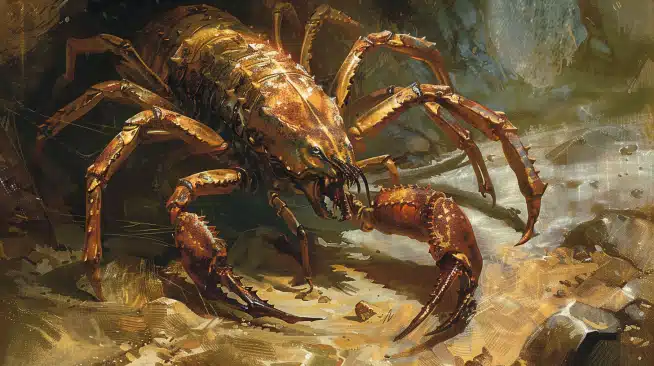
The Giant Scorpion of D&D 5E is a creature feared for its fierce aggressiveness. Renowned for its poison-loaded stinger attack, it relentlessly pursues its enemies tossing them into a world of hurt.
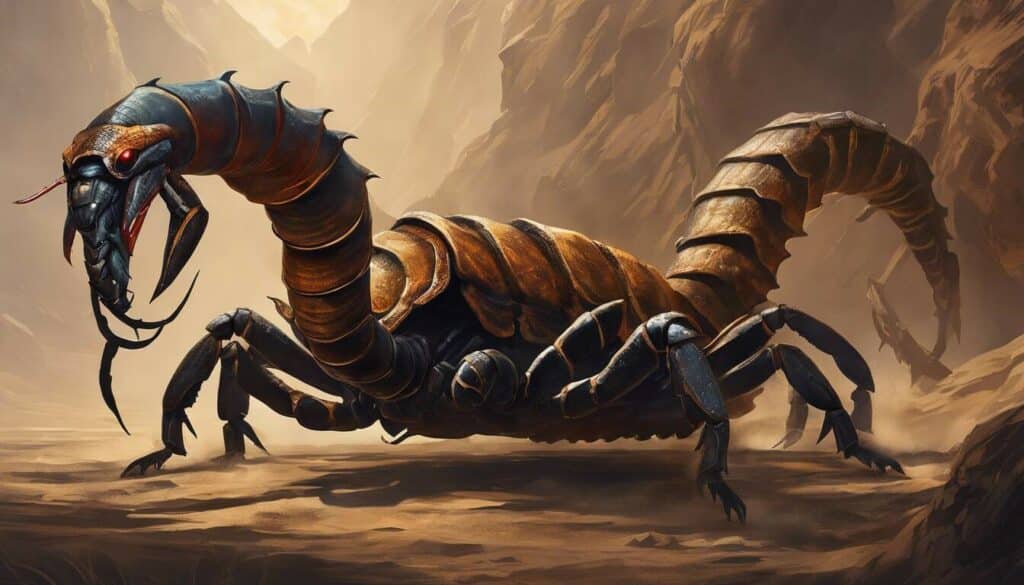
But unexpectedly, this monstrous beast’s might doesn’t end at offense; it possesses an Armor Class (AC) of 15 and a pool of 52 hit points, making it tough as nails. Digging deeper than its surface reveals a monster capable of grappling foes with its mighty claws, adding a layer of danger to encounters with it. Get ready, because this creature is tougher than you might think.
The Giant Scorpion in D&D 5E has an AC of 15, 52 hit points, and a challenge rating of 3. Its attacks include Claw (dealing 1d8+2 bludgeoning damage and potentially grapples the target) and Sting (dealing 1d10+2 piercing damage with a poison save for additional damage). This monstrous creature can be a formidable foe for low-level parties and adds thrilling encounters to any campaign.
Description of the Giant Scorpion in D&D 5E
The Giant Scorpion is a sight to behold, with its dark exoskeleton and imposing, predatory stance. Towering over its foes, this monstrous arachnid is a true force to be reckoned with, making it an iconic adversary in many D&D campaigns.
In addition to its intimidating physical presence, the Giant Scorpion possesses a venomous sting that inflicts significant damage on its targets. The potency of its poison is well-documented and rightly feared by adventurers across the realms, making combat encounters with the creature especially perilous and fraught with danger.
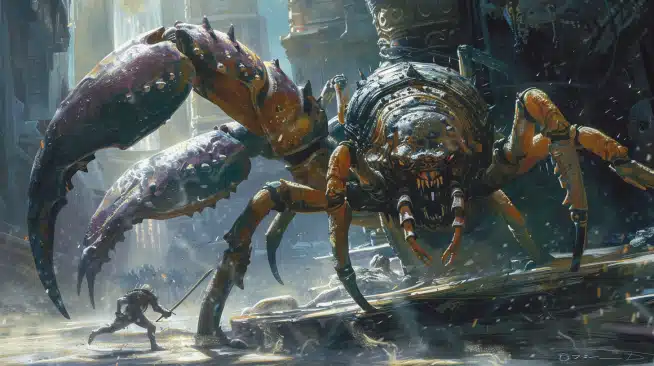
Moreover, its ability to grapple foes with its powerful claws further solidifies its reputation as a fearsome opponent. Once ensnared in the grip of the Giant Scorpion, escaping becomes a formidable challenge, leaving adventurers vulnerable to its deadly stinger attack.
Consider a scenario where brave adventurers find themselves confronted by a Giant Scorpion in the depths of an ancient tomb. As they prepare to face off against the ferocious beast, they keenly observe the glint of its razor-sharp claws and the sinister curve of its poisonous stinger, underscoring the palpable threat that lies before them.
With a challenging rating of 3, it’s no wonder that Dungeon Masters frequently incorporate the Giant Scorpion into their encounters to pose a formidable test for intrepid adventurers.
Whether guarding hidden treasures or stalking within dark caverns, the inclusion of this monstrous creature ensures an immersive and thrilling gameplay experience for all involved.
This detailed understanding of the Giant Scorpion’s physical characteristics and combat prowess establishes its prominent role as an iconic and formidable adversary in Dungeons & Dragons 5E adventures.
Extensive knowledge of the Giant Scorpion’s attributes sets the stage for an in-depth exploration of its fortitude and defensive capabilities in battles. It’s time to unravel the secrets of hit points and armor class in facing off against this formidable foe.
Examination of Hit Points and Armor Class
In the world of Dungeons & Dragons, understanding a monster’s hit points and armor class is crucial to determining its durability in combat. The Giant Scorpion, with an Armor Class (AC) of 15 and 52 hit points, stands out as a formidable adversary.
Armor Class (AC) is a measure of how challenging it is to land a successful attack on a creature. With an AC of 15, the Giant Scorpion presents a substantial challenge for adventurers to land their blows, making it an evasive foe.
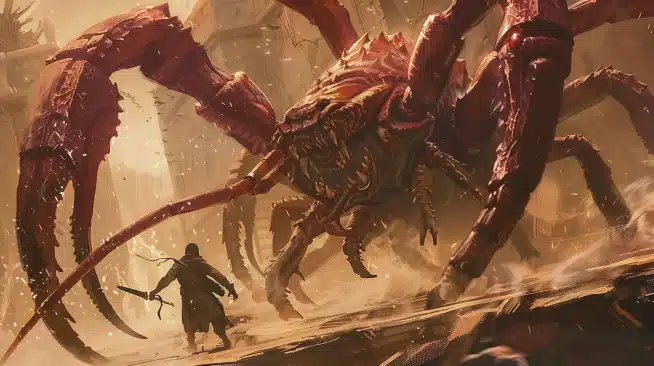
Hit points represent how much punishment a creature can withstand before succumbing to its injuries. With 52 hit points, the Giant Scorpion demonstrates exceptional resilience, enabling it to endure through battles, posing a significant threat to players.
Imagine an adventurer swinging their sword at the Giant Scorpion. Its tough exoskeleton and evasive movements make it difficult for the blade to find purchase, thanks to its high AC. Even if the attack lands, the scorpion’s substantial hit points ensure that it can weather multiple strikes before succumbing.
Understanding these attributes is crucial for Dungeon Masters when designing encounters. The Giant Scorpion‘s durability can challenge players and serve as an imposing obstacle in their adventures, requiring careful planning and resource management from both players and Dungeon Masters alike.
The interplay between the Giant Scorpion’s armor class and hit points underscores its formidable nature as an adversary in Dungeons & Dragons, demanding careful planning and resource management from both players and Dungeon Masters alike.
Analysis of Attack and Damage
When confronting a formidable creature like the Giant Scorpion, understanding its combat abilities is crucial for any party. The Giant Scorpion employs three main attack methods that can pose a significant threat to adventurers.
Claw Attack
The Giant Scorpion’s claw attack deals 1d8+2 bludgeoning damage and includes a grapple effect. This means that it deals damage while attempting to immobilize and restrain its target. Understanding this detail is crucial, as it highlights the Scorpion’s strategy of not just causing harm but also controlling the battlefield by limiting the movement of its opponents.
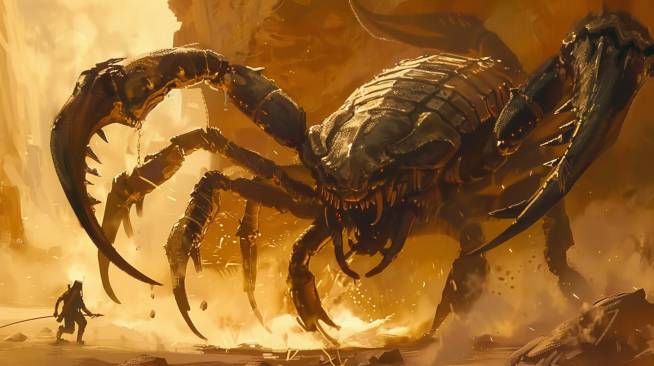
This type of attack can be particularly dangerous in confined spaces or when facing multiple enemies. Imagine a scenario where the party is attempting to navigate a narrow crevice or fighting in cramped quarters; the grapple effect can greatly hinder their ability to maneuver, making them more vulnerable to both the Scorpion’s attacks and other potential threats. This emphasizes the importance of understanding not just the damage potential of a creature’s attacks but also their strategic implications in different combat scenarios.
Multiattack
Next, we have the Giant Scorpion’s multiattack capability, which consists of two claw attacks followed by a venomous sting. This sequence of attacks showcases the creature’s versatility and adaptability in combat situations. By launching a series of aggressive strikes, it creates a persistent threat to its adversaries, demanding unwavering focus and defensive tactics from those engaging it in battle.
In practical terms, this multiattack pattern demands consistent monitoring and coordination from the party, ensuring that members are prepared to address multiple consecutive assaults while also remaining vigilant against potential follow-up actions from their monstrous adversary.
Venomous Sting
Finally, the Giant Scorpion’s sting constitutes a potent weapon, inflicting 1d10+2 piercing damage on impact. Moreover, the victim must succeed on a DC 12 Constitution saving throw to avoid being subjected to an additional 4d10 poison damage—a truly perilous outcome should they fail to resist its effects.
It’s vital for players to recognize that although poison resistance can mitigate the impact of this potent attack, failing to anticipate or counteract it can lead to dire consequences. Therefore, careful planning and preparation become necessary for navigating encounters with these menacing creatures.
By comprehensively understanding each facet of the Giant Scorpion’s offensive capabilities—its striking power, grappling capacity, and venomous attacks—players can effectively strategize and tailor their approach when confronting these daunting adversaries in their Dungeons & Dragons campaigns.
Understanding Special Powers and Abilities in Dungeons & Dragons creatures brings an added dimension to encounters. It allows players to develop more nuanced strategies and adapt to unpredictable challenges presented by various monsters.
Understanding Special Powers and Abilities
The Giant Scorpion isn’t just a big critter with sharp claws and a deadly stinger; it also possesses unique powers and abilities that make it a formidable opponent. Let’s break down how these abilities can impact combat encounters and what players need to watch out for when facing off against this creature.

One of the most notable abilities of the Giant Scorpion is its knack for grappling its targets with its powerful claws. This ability immobilizes its prey and restricts their movement, making it challenging for them to escape its grasp. The scorpion’s ability to grapple creates a tactical disadvantage for adventurers, as it limits their mobility and makes them vulnerable to subsequent attacks.
Moreover, the Giant Scorpion’s sting attack is not to be underestimated. The poison damage it inflicts can swiftly turn the tide of battle, posing a substantial threat to players. When faced with this creature, strategic planning and careful consideration are essential to mitigate the risk posed by its poisonous stinger.
Players must approach encounters with the Giant Scorpion with caution, factoring in the potential consequences of failing to resist its debilitating poison.
Understanding these special powers and abilities is crucial for Dungeon Masters when crafting encounters involving the Giant Scorpion. They play a pivotal role in shaping the dynamics of combat scenarios and can significantly impact the strategies employed by players.
Awareness of these unique capabilities equips DMs with the insight needed to create compelling challenges while ensuring a balanced and engaging gameplay experience for their players.
For instance, a party of adventurers may find themselves navigating tricky terrain heavily populated by Giant Scorpions. The creatures’ ability to grapple and deliver potent poison damage adds an element of urgency to the players’ decisions, requiring them to carefully assess their movements and tactics to avoid falling victim to the scorpions’ lethal attacks.
By gaining a comprehensive understanding of the special powers and abilities possessed by the Giant Scorpion, both players and Dungeon Masters can navigate encounters involving this creature with greater proficiency. These insights empower them to adapt their approaches, fostering more immersive and dynamic gameplay experiences within the world of Dungeons & Dragons.
As we continue our exploration into optimizing gameplay dynamics in Dungeons & Dragons, let’s now shift our focus to incorporating one of the Giant Scorpion’s signature moves—its venomous stinger attacks—into your adventures.
Implementing Stinger Attacks in Gameplay
The stinger attack of the Giant Scorpion isn’t just a regular strike; it’s a source of major tension and risk in the game. Players are forced to think on their feet, strategize, and use their character’s abilities wisely when faced with such a perilous attack.
As a Dungeon Master, it’s crucial to understand not only the statistical side of this attack but also its impact on the flow of combat and the overall gaming experience.
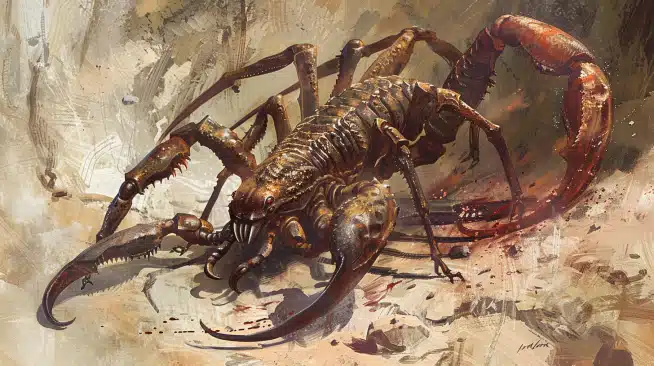
When implementing the stinger attack in your gameplay, it’s essential to consider its potential risk factor. The high poison damage that can result from this attack adds a layer of complexity to encounters with Giant Scorpions, requiring players not only to deal with physical damage but also to mitigate or withstand the potent effects of the poison.
Players need to make tactical decisions when engaging with enemies using this attack. This can lead to compelling and dynamic gameplay scenarios that require them to assess their resources, plan their actions carefully, and potentially take calculated risks when facing off against a Giant Scorpion.
Imagine a group of adventurers encountering a Giant Scorpion in the depths of a cave. As the scorpion lashes out with its stinger, there is an immediate shift in tactics as players weigh the risks of receiving substantial poison damage against their chances of successfully defeating or evading the creature.
Furthermore, the stinger attack introduces an element of unpredictability, adding excitement to encounters. It forces players to adapt to changing circumstances and consider unconventional strategies and improvised tactics to overcome this formidable threat.
As a Dungeon Master, integrating the stinger attack effectively into your campaign allows for engaging storytelling opportunities and provides players with thrilling challenges that require them to think strategically and work together synergistically to emerge victorious.
Mastering the implementation of the stinger attack in gameplay not only enhances the realism and tension of encounters but also fosters an enriching experience for both players and Dungeon Masters alike.
Now that we’ve explored how Giant Scorpions can greatly influence gameplay and create tense situations, let’s take a closer look at specific role-playing scenarios involving these formidable creatures.
Role-playing Scenarios with Giant Scorpions
When players encounter Giant Scorpions in the wild, it offers a unique opportunity for diverse and imaginative interactions. Instead of just relying on combat, Dungeon Masters can introduce scenarios that require creative problem-solving and strategic thinking from the players.
Consider a scenario where characters need to bypass a territory occupied by a Giant Scorpion. Through cunning planning and interactions, players might discover that the creature has a territorial aversion to certain types of rocks or gems, allowing them to navigate around the area without engaging in direct combat, thus showcasing the importance of environmental awareness.
The role-playing aspect extends beyond simple diplomacy. Players can utilize their surroundings to their advantage, incorporating storytelling and environmental tactics into their interactions with the Giant Scorpion. For instance, they may find ways to deter or distract the creature using light or fire, showcasing the versatility of problem-solving without relying solely on combat proficiency.
This kind of gameplay shift is akin to a puzzle – players analyze the situation, explore different options, and consider various solutions before proceeding with their chosen course of action. It’s an opportunity for the Dungeon Master and players alike to exercise creativity and imagination in a non-traditional gaming context.
Players now have more breathing space for character development and can re-evaluate their problem-solving strategies beyond brute force, adding depth and dynamism to the overall gameplay experience.
In crafting an enthralling gameplay experience for your players, tailoring encounters to suit their skills and preferences is crucial. Let’s explore how to tailor encounters involving Giant Scorpions to players’ abilities and inclinations.
Tailoring the Giant Scorpion Encounter to Players
Every group of players has different strengths and weaknesses. Some might excel at combat but be susceptible to deception, while others are adept at problem-solving. The key is to create a challenge that feels tough, but not insurmountable.
Here’s how you can tailor the Giant Scorpion encounter to fit your players’ unique abilities and provide an exciting and memorable experience.
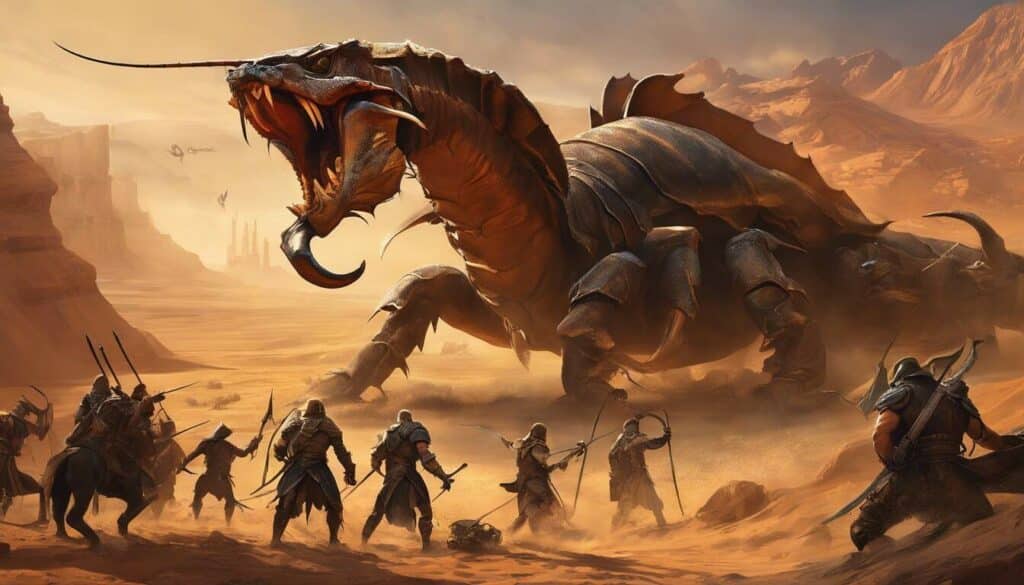
First, consider adjusting the number of Giant Scorpions. If your players are new or low level, facing multiple scorpions might prove too tough for them. Conversely, if they’re experienced or at a higher level, a group of scorpions will present a satisfying challenge for them to overcome.
Next, focus on the behavior of the Giant Scorpion. For a lower-level party, you might want the scorpion to be more predictable in its attacks, giving your players time to react and adapt. However, for higher-level parties, you could make the scorpion smarter and more cunning, employing tactics and strategies that keep the players on their toes.
Consider the environment as well. A larger, more open space will give your players room to maneuver and strategize during the encounter, which can be beneficial for lower-level parties. Conversely, a confined and treacherous environment might pose interesting challenges for high-level characters.
For example, if your players are venturing into a vast desert, they may face multiple scorpions roaming freely. The open terrain allows for ranged attacks and gives nimble characters an advantage in maneuvering around opponents. On the flip side, inside the narrow caverns of an underground dungeon, a single scorpion poses a significant threat due to confined spaces hindering movement and combat maneuvers.
Tailoring the encounter ensures that players are both challenged and engaged. At lower levels, it prevents them from feeling overwhelmed and frustrated, instilling confidence as they progress. For higher levels, it brings forth new elements that demand strategy and teamwork to overcome.
By thoughtfully customizing the number of adversaries, their behavior, and the environment in which they meet the giant beasts, Dungeon Masters can ensure that each encounter provides an appropriate level of difficulty that aligns with their player’s progression.
Successfully tailoring encounters is pivotal in ensuring an enthralling and balanced gameplay experience for Dungeons & Dragons adventurers. It is through this thoughtful customization that the game truly comes alive, offering players gratifying challenges and rewarding victories.