
The Notorious Bandit Captain: A Guide for D&D 5e

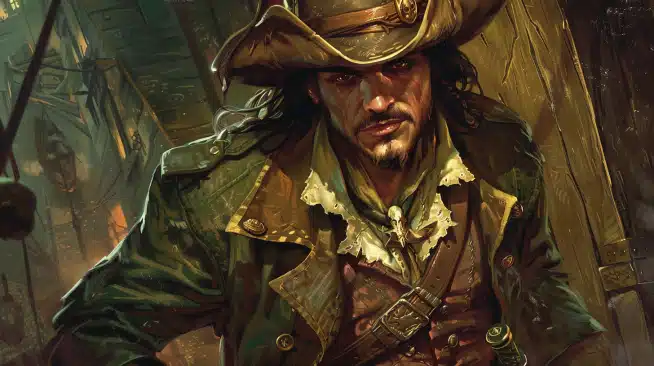
Have they seen a picture of a mean-looking character in leather armor brandishing a sword in a Dungeons & Dragons book? Maybe they have a scar across their eye or a wicked grin. Well, adventurers, that’s probably a bandit captain!
These aren’t exactly the cuddly type you’d find at a tea party. Bandit captains are the leaders of those pesky road gangs that try to steal your treasure (and maybe your lunch!). But in the world of D&D, they’re more than just random enemies to fight. They can be a fun challenge, a source of exciting loot, or even a stepping stone on your grand adventure!
This guide gives you the lowdown on everything bandit captain-related in D&D 5e, the most popular version of this fantastic game. Whether you’re a brand-new player or a seasoned dungeon explorer, you’ll learn about these scoundrels and how to deal with them.
So, grab your sword (or your trusty spellbook!), put on your adventuring hat, and dive into the exciting world of bandit captains!
The Role of Bandit Captains in D&D
In the Dungeons & Dragons (D&D) world, every character, creature, and even the seemingly insignificant NPC (Non-Player Character) has a role to play in the grand tapestry of your adventure. Among these, the bandit captain stands out as a figure that can add depth and excitement to your campaign.
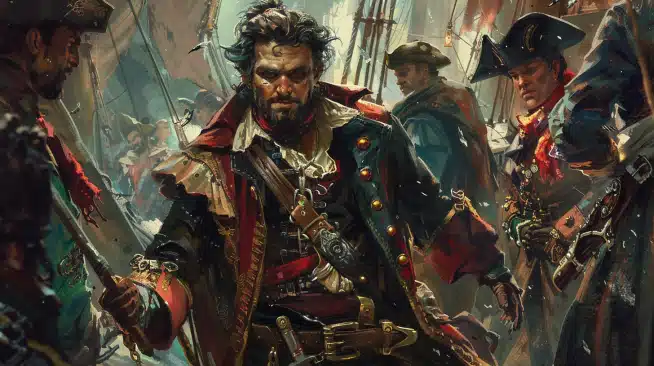
Let’s explore why bandit captains are more than just sword-swinging scoundrels.
Bandit Captains as Adversaries
Imagine you’re trekking through a dense forest, and suddenly, a group of rough-looking individuals blocks your path. At their lead is a charismatic, cunning individual – the bandit captain. As adversaries, bandit captains are not just random foes; they are the brains behind the brawn. They strategize, direct, and inspire their band of outlaws. This makes them a challenge in combat, wit, and tactics.
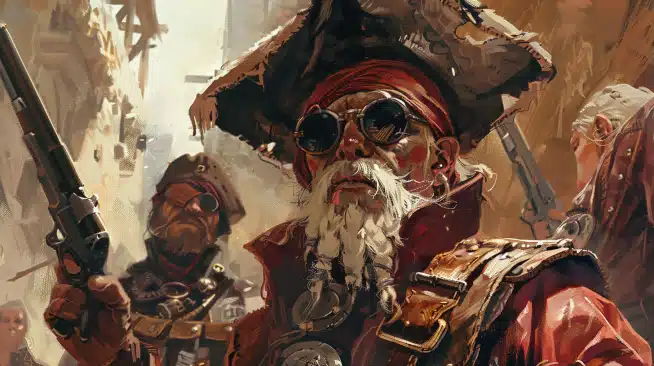
A bandit captain can be the mastermind behind a series of thefts plaguing a local town or the kidnapper holding a noble for ransom. They create a sense of urgency and danger, pushing players to think creatively. Will you fight, negotiate, or find another clever way to deal with the threat?
Bandit Captains as Potential Allies
Now, let’s flip the coin. Bandit captains can be someone other than the enemy. In D&D, characters are as complex as real people; sometimes, they can become valuable allies. Perhaps the bandit captain shares a common enemy with the players or has information that the players need. Maybe they’re rebelling against a tyrant, and their cause is just.
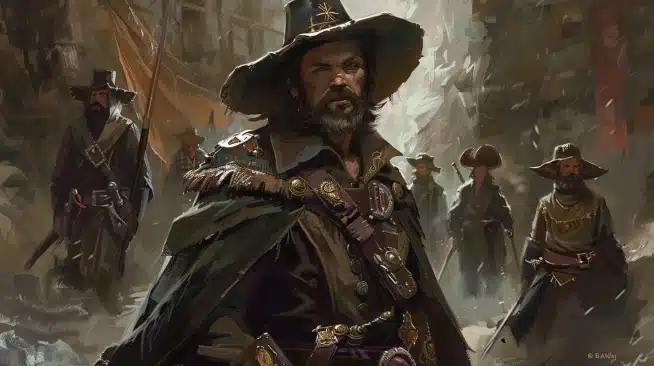
Players can access resources, safe havens, or insider knowledge by allying with a bandit captain. It adds layers to the story, showing that the line between ‘good’ and ‘bad’ is often blurred. It teaches players that sometimes, to achieve a greater good, you must work with those on the fringes of society.
The Core of the Bandit Captain
In Dungeons & Dragons (D&D), a bandit captain is not just another foe to defeat; they are leaders with cunning strategies and a knack for survival.
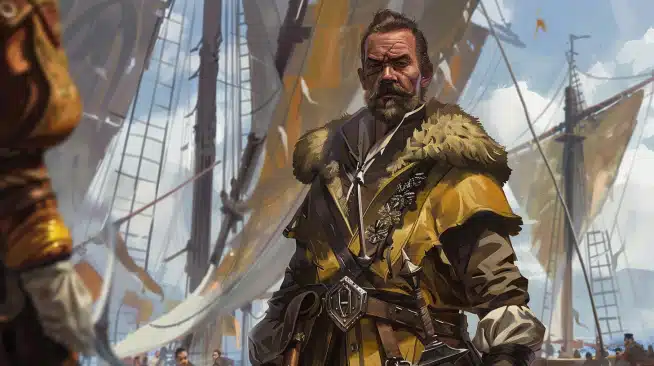
Exploring the essence of a bandit captain involves dissecting their stat block and grasping their role beyond mere numbers.
Stat Block Breakdown
A bandit captain’s stat block is like their resume; it tells you what they’re good at and what they might struggle with in a fight.
Here’s a simple breakdown:
- Strength (STR) and Dexterity (DEX): These numbers are pretty good, sitting at 15 and 16, respectively. This means they’re quite strong and very agile, which helps them in combat.
- Constitution (CON): With a score of 14, they’re tough enough to take a few hits.
- Intelligence (INT) and Charisma (CHA): Both scores are 141. They’re bright and have strong personalities, making them good leaders.
- Combat Skills: They can attack three times in one turn – twice with their scimitar and once with their dagger3. They’re also good at defending themselves with a reaction called Parry, adding 2 to their Armor Class (AC) against one attack.
Beyond the Numbers
But a bandit captain is more than their ability to swing a sword. They’re the brains of the bandit operation, who make the plans and keep their crew in line. They are not merely bosses; they are leaders with eloquent speech and a relentless mind.

- Leadership: They know how to manage their band of misfits, rewarding those who follow orders and punishing those who step out of line.
- Personality: They’re known for being charismatic and intimidating. They can inspire loyalty or fear, depending on what the situation calls for.
- Infamy Over Treasure: Although they cherish loot, their greater desire is for a reputation that echoes before them. They aspire to be notorious and feared throughout the lands.
In essence, a bandit captain in D&D is a complex character. They are not solely characterized by their stats; they are leaders with depth, ambition, and the skills necessary for their role.
Grasping their complexities can enrich and invigorate your gameplay, whether you confront them in battle or integrate them into your narrative.
So next time you encounter a bandit captain, remember, there’s more to them than meets the eye. They’re not just a collection of stats; they’re characters with goals, fears, and desires, leading their crew on infamy and treasure.
The Many Faces of the Bandit Captain
In the wild and woolly world of bandits, the captain stands out. They’re the head honcho, the big cheese, and they didn’t just get there by chance. So, what makes a bandit captain tick?
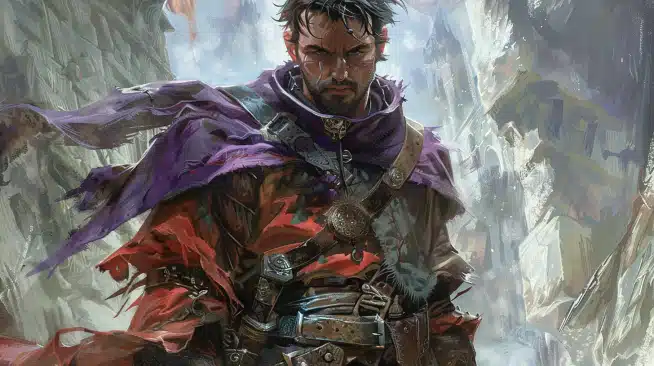
Let’s find out.
Motivations and Methods
First off, not every bandit woke up one day and decided to start robbing folks. No, each one’s got their own story. Some are greedy guts, wanting to fill their boots with gold.
Others might be out for revenge, settling a score with the world that did them dirty. And then there are those with a wonky sense of right and wrong, thinking they’re some twisted Robin Hood.
Now, how do they go about their bandit business? Well, some are fond of the classic ambush. They’ll hide out and jump unsuspecting travelers, catching them off guard. Others prefer the good ol’ highway robbery, stopping carriages and demanding a toll for safe passage. And then you’ve got the real bold ones who’ll take over a whole town, running it like they’re the law.
A Captain’s Toolkit
A bandit captain’s got to have a few tricks up their sleeve to keep the crew in line and the gold flowing. Some are natural-born leaders, charming and convincing. They can rally their gang with just a word. Others rule with an iron fist, using fear to keep everyone toeing the line.
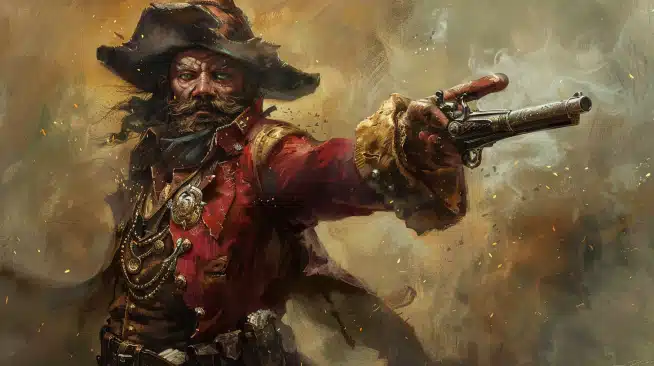
And it’s not all about muscle. Some captains are sneaky, using magic to confound and control. They might have a magic trinket that lets them talk to animals or a potion that makes them slippery like an eel. Then there are the gadget gurus, tinkering with traps and toys that can turn the tide of a tight spot.
So there you have it, the many faces of the bandit captain. They’re a mixed bag, but one thing’s sure – life’s never dull when they’re around!
Building Your Bandit Captain
Creating a bandit captain for your D&D campaign is an exciting opportunity to introduce a memorable adversary.
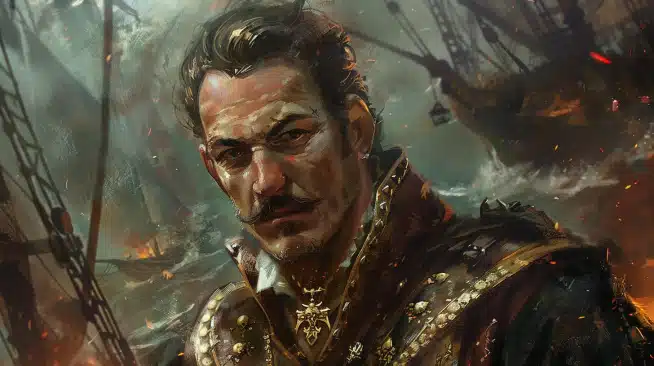
Here’s how you can build a bandit captain that stands out:
Customization Options: Every bandit captain starts with a base stat block, but the real fun begins when you start customizing. Please think of the base stats as your character’s skeleton; now it’s time to add some flesh and personality.
- Abilities: Consider what makes your bandit captain unique. Are they incredibly strong? Unusually cunning? They may have a magical ability that sets them apart. Adjust their ability scores to reflect these traits.
- Equipment: The standard dagger and leather armor are fine, but what if your captain wields a poisoned dagger or carries a shield with their logo? Tailor their equipment to add flavor to their character.
- Appearance: A bandit captain should look the part. Scars, tattoos, and unique clothing can all hint at their backstory. They may wear a particular color to signify their allegiance or have a distinctive hat that makes them easily identifiable.
Feats and Class Levels: Moving beyond the basics, you can make your bandit captain more formidable by adding feats and class levels.
- Fighter (Battle Master): Adding levels in Battle Master gives your captain strategic combat maneuvers. They could disarm an opponent or rally their allies, adding depth to combat encounters.
- Rogue (Mastermind): A few levels in mastermind turn your captain into a cunning adversary. They can manipulate others and have a network of spies, making them a threat beyond physical confrontations.
- Bard (College of Valor): Bards aren’t just entertainers; a Valor Bard can inspire their crew and demoralize their enemies. Your captain might sing a haunting shanty that strikes fear into the hearts of their foes.
Remember, the goal is to create a bandit captain that your players will love to hate. By customizing their abilities, equipment, and appearance and adding strategic class features, you’ll craft an antagonist that’s not just another stat block but a storied character who will enrich your campaign’s narrative. Happy building!
Encounter Design: From Roadside Thugs to Regional Threats
Creating an engaging and memorable encounter in a game like Dungeons & Dragons is an art. It’s not just about throwing a few bandits at your players; it’s about crafting a scene that stays with them long after the dice have stopped rolling.
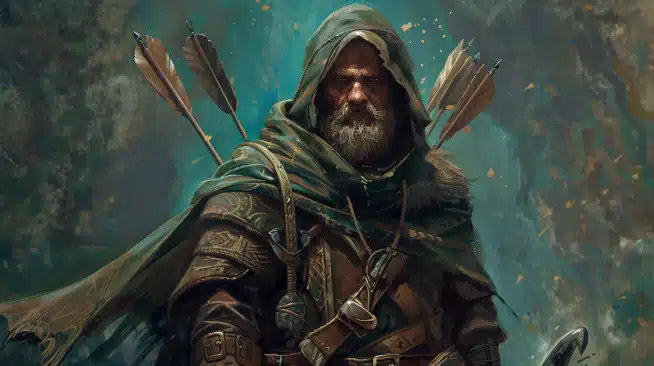
Explore how a mere roadside ambush can become a critical event with the potential to alter the future of the entire region.
The Classic Roadside Ambush
Imagine your players traveling a well-worn path through the forest when bandits suddenly leap out from behind the trees! This is the classic roadside ambush. But how do you make it more than just another fight? Here’s where you get creative.
First, think about the terrain. Is it a narrow path with cliffs on either side or a wide road with plenty of room to maneuver? Use the environment to your advantage. The bandits may roll boulders from above or use hidden pits to trap the heroes.
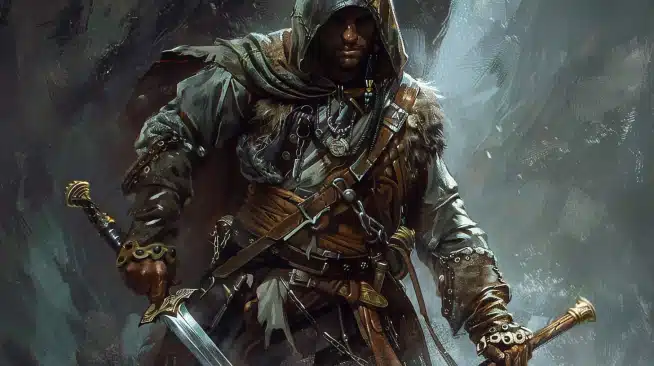
Next, consider the tactics. Bandits aren’t just brutes; they’re survivors. They might set up distractions, use hit-and-run tactics, or even take hostages. They know the land better than anyone, so they’ll use every trick in the book to get the upper hand.
And remember to incorporate the environment. A sudden rainstorm could turn the road into mud, making it difficult for players to chase after fleeing bandits. A nearby beehive could become a hazard for both sides if disturbed during the fight.
Beyond the Road
But what about the bandit captain? They’re the brains behind the operation and can be much more than a final boss in a roadside scuffle. Here’s how you can elevate their role:
Imagine the bandit captain as a regional threat. Maybe they control a network of spies and informants, influencing events from the shadows. They could have a hidden stronghold with traps and loyal followers, which could be a mini-dungeon for your players to tackle.
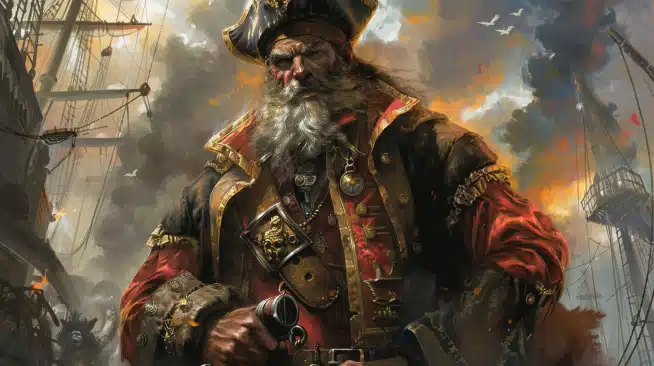
Or the captain is a pawn in a giant game. They could be working for a corrupt noble, helping to destabilize the region for their gain. This opens up opportunities for political intrigue and complex storytelling. Your players might even have to decide whether to take down the captain or try to turn them into an ally against a more significant threat.
The Bandit Captain’s Legacy
In the rugged terrains where the law is but a whisper, the bandit captain carved a name that echoed through the valleys. Though a relief to many, his demise left behind a tale of loot, rewards, and unforeseen consequences.
Loot and Rewards
What’s a tale without treasure? The bandit captain, notorious for his cunning and bravery, amassed a fortune to make any adventurer’s heart race. Imagine a chest brimming with gold coins, each a story of a raid or a daring escapade. But gold isn’t the only treasure. There are rewards beyond riches.
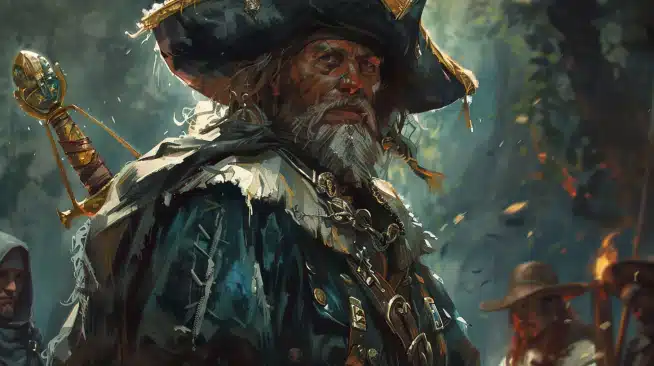
Sometimes, the valid reward is a life saved. Hostages taken by the bandit captain, now freed, return to their families, their joy immeasurable. Then there are the hidden maps, inked with secrets, leading to places untouched and treasures unfound. And let’s remember the possibility of secret alliances. The bandit captain, a connections master, may have left behind allies who could become valuable contacts or unexpected foes.
The Ripple Effect
The fall of a leader sends ripples across the pond. The bandit captain’s end is no mere closing of a chapter; it’s the start of a new narrative. Long under the shadow of his power, the region might breathe a sigh of relief or brace for turmoil as new contenders rise.
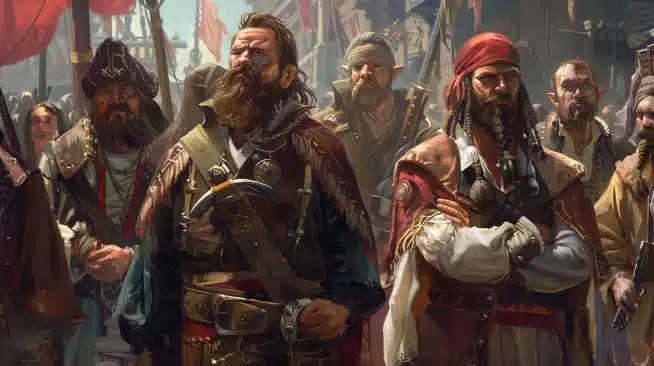
The bandit crew, now leaderless, faces a crossroads. Will they disband, seek vengeance, or find a new captain? And the adventurers, the bringers of the captain’s downfall, how will this victory shape their path? Will they be hailed as heroes, or will this act haunt them like specters?
The legacy of the bandit captain is a mosaic of fear, respect, and tales that will be told for generations. His treasure, a beacon for those daring enough to seek it, and his absence, a void that will shift the balance in ways yet to be seen.
The Summary
The bandit captain can be a springboard for further adventures. Their downfall could reveal a hidden network of corruption or their treasure map could lead to a forgotten dungeon. The players may take over the captain’s operations, facing leadership challenges in a lawless world.
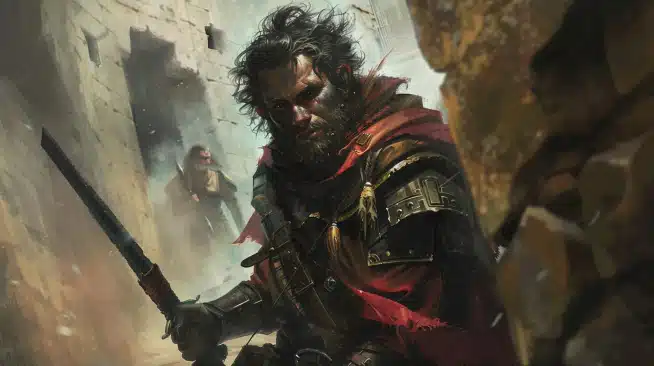
Remember, the most compelling bandit captains are more than just statistics on a page. They are individuals with their own stories, goals, and impact on the world. So, craft your captain carefully, and let them weave their unique brand of chaos into your D&D campaign.
FAQ
Is this a guide for players or DMs?
This guide is likely targeted towards Dungeon Masters (DMs) who want to incorporate a bandit captain into their D&D 5e campaign. While players might encounter a bandit captain, this guide would focus on helping the DM run that encounter.
What kind of information does this guide contain?
The guide could provide details on creating a compelling bandit captain character, including their:
- Combat Stats: This would cover hit points, armor class, attack damage, and any special abilities the captain might have.
- Personality & Background: This would help the DM flesh out the captain’s motivations, backstory, and quirks.
- Roleplaying Tips: The guide might offer suggestions on how to portray the captain during encounters with the players.
- Encounters: This could include ideas for different scenarios where the players might interact with the bandit captain, like combat, negotiation, or even an uneasy alliance.
Is the bandit captain a pre-made stat block or a template?
There isn’t a standard bandit captain in D&D 5e. This guide might provide a sample stat block for a bandit captain, but it could also be more of a framework to help DMs create their own unique captain.
Can the bandit captain be more than just a villain?
Absolutely! The guide might offer ideas for how the captain could be a complex character. Perhaps they have a hidden code of honor, a secret past, or even a grudging respect for the player characters.
Where can I find this guide?
There isn’t a single official guide called “The Notorious Bandit Captain” for D&D 5e. There are resources online, however, that discuss creating bandit encounters and fleshing out NPC characters like bandit captains. You can find these resources through a web search for “D&D 5e bandit captain guide” or “D&D 5e create memorable NPC.